
A Chinese podcast · Same story, 4 levels
X 上的新翻译:以前看不懂的话,现在都能看懂
AI Translation Rebuilds a Modern Tower of Babel
About this story
AI Translation Rebuilds a Modern Tower of Babel. HSK 2 Chinese listening practice.
This is an HSK 2 Chinese listening episode that runs about 4 minutes. The full Mandarin script is shown with tap-for-pinyin and a line-by-line English translation, so you can listen and read at once — comprehensible input in the sense of Stephen Krashen's i+1 theory. It teaches 12 key vocabulary words such as 今天、想、看 and walks through 4 grammar patterns, each explained in English with examples. The same news story is retold at 4 difficulty levels — use the level selector above to find the version that is challenging but still understandable for you.
Read at your level
原文Read the complete story in Chinese. Reveal pinyin and English only when you need them.
English transcript reference
Today we'll talk about a news story.
This news
is related to an app.
This app is called "X."
Have you heard of "X"?
"X" used to be called "Twitter."
It is a
huge social media app.
Worldwide,
hundreds of millions of people use it.
This April,
"X" did a big thing.
It added,
to all of its content,
automatic translation.
"Translate"
means turning one language
into another language.
"Automatic"
means you don't have to do it.
The app does it for you.
This feature
has actually been in use for several months.
But recently,
this matter,
on the Chinese internet,
has suddenly become extremely hot.
Why?
Because more and more
Chinese-speaking people
have started to notice:
Now on "X" I
can directly read
what Japanese,
Korean,
and Arabic-speaking people
are saying.
And the other way around,
they can also read
what Chinese says.
Sounds great,
right?
People all over the world
can chat directly.
But
things aren't so simple.
Netizens have given this matter
a name:
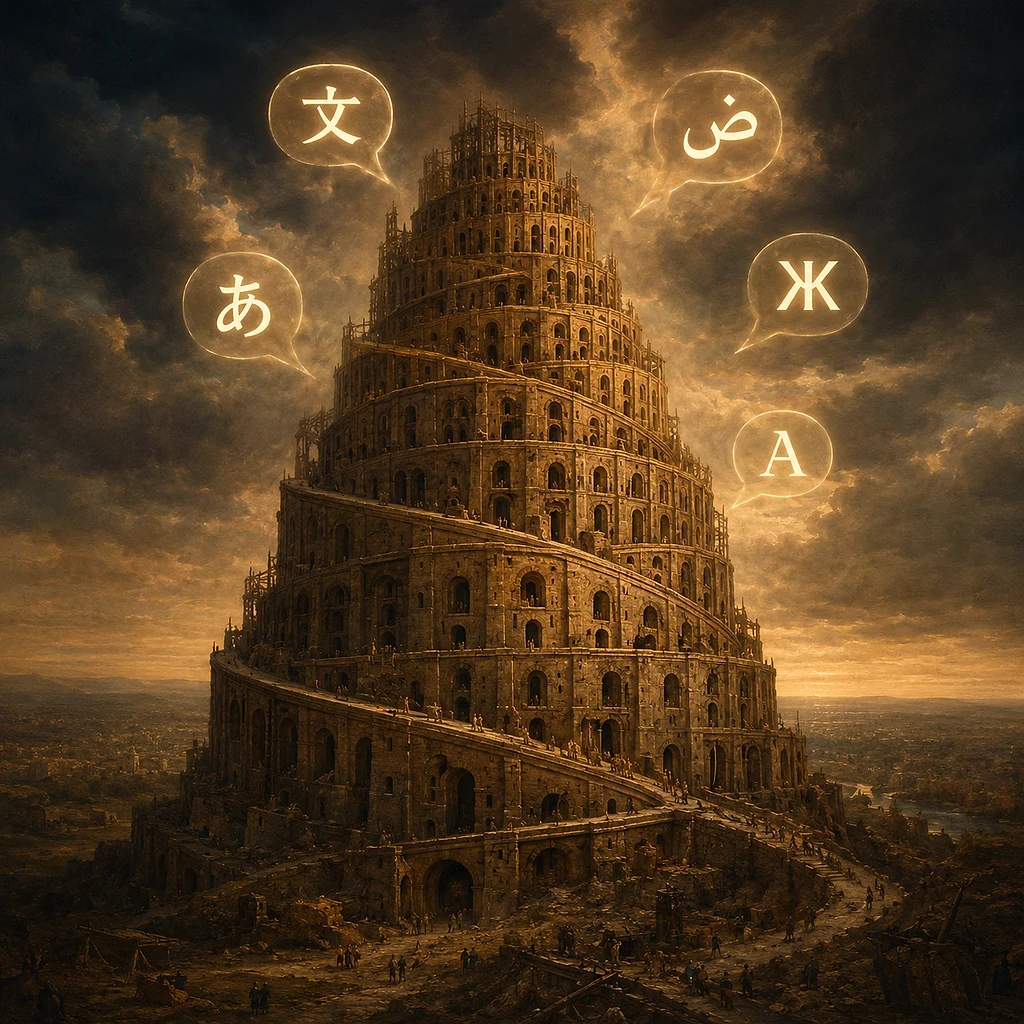
"Musk has built the Tower of Babel."
What is "the Tower of Babel"?
It is a story in the Bible.
The story goes:
in the past, all people
spoke the same language.
They wanted to build, together,
a
very, very tall tower
called "the Tower of Babel."
God was not pleased.
God made them
start speaking different languages.
They couldn't understand each other,
and the tower was never built.
Ever since,
people have had
different languages.
Now Musk's translation
lets everyone
understand each other again.
So they call it "building the Tower of Babel."
So,
after "the Tower of Babel" was built,
what happened?
There are things that make people happy,
and things that make people sad.
The happy things are:
people from different countries
have started joking around together.
For example,
Italians discovered
that Japanese people, online,
have a very strange way of making "Italian pasta."
The Italians said:
"What did we do wrong?
Everyone laughed.
But the sad things came too.
Some Japanese people,
in their own country in the past,
had said some things
that aren't nice about Chinese people.
They assumed
no Chinese people could see.
But now,
Chinese people can all see.
Chinese people are very angry.
Japan's previous image to the world
was "very polite,
"very cultured."
But this time,
many people saw
a Japan that wasn't quite the same.
And the other way too.
Some things Chinese people said,
foreigners can now also see.
I read this news,
and I thought of one thing.
In the past,
when we spoke,
we spoke to "our own people."
Now it's different.
Every sentence you say
can possibly be seen by the whole world.
This is a good thing,
and a new problem.
Finally I'll ask you:
If every sentence you say
can also be read by foreigners —
will you
be a little more careful?
Think about it.
Okay.
That's all for today.
Talk tomorrow.
Listen again
Try it without the transcript and notice what sounds clearer.
What vocabulary does this episode teach?
词汇Today. The narrator opens 今天我们说一个新闻 — 'today we'll tell a news story.'
To think. 我想了一件事 — 'I thought of one thing'; closing 你想一想.
To read. 现在我在"X"上,能直接看懂 — 'now on X I can directly read.'
To hear. 你听过"X"吗 — 'have you heard of X?'
News. The episode is built around a news story about X's auto-translate.
The same. The Babel story turns on this: 都说一样的话 — 'all spoke the same language' — until God scrambled them.
Translate. Beyond HSK2. The episode glosses it: 把一种语言变成另一种语言.
Automatic. Beyond HSK2. The episode glosses it: 不用你做,软件自己帮你做 — 'you don't have to; the app does it for you.'
App. Beyond HSK2. X is a 社交软件 — a social-media app — with hundreds of millions of users.
Netizen. Beyond HSK2. 网友们给这件事起了一个名字 — 'netizens gave this matter a name': 'Musk has built the Tower of Babel.'
Impression. Beyond HSK2. 日本以前给世界的印象,是"很有礼貌、很有文化" — Japan's previous impression on the world.
Polite. Beyond HSK2. Part of Japan's old global image — 很有礼貌 — that the translation feature has dented.
* beyond level超纲词
What grammar patterns appear in this episode?
语法越来越 + adj/verb
越来越 marks a steady, ongoing increase. The episode uses it for the growing wave of Chinese-speaking users noticing the feature.
越来越多,说中文的人,开始发现。
在中文网上,突然变得特别火。
把 A 变成 B
把 + A + 变成 + B describes a transformation. The episode uses it to define translation itself.
把一种语言,变成另一种语言。
反过来
反过来 marks a symmetric reversal. The episode uses it to balance the story — both Chinese users read foreigners, and foreigners read Chinese users.
反过来,他们也能看懂,中文写了什么。
反过来也是。
听起来 + adj,对不对?
听起来 + adj asks the listener to evaluate something that just sounds a certain way — often before the episode complicates it.
听起来很好,对不对?
但是事情没有这么简单。
Proper nouns
专有名词Free account
Keep learning from this story
Create a free account to keep saved words and your preferred level together.
- Keep words with their story context
- Remember your preferred level
- Build your vocabulary over time