
A Chinese podcast · Same story, 4 levels
AI 到二零三零年要赚三万亿美元,华尔街开始担心了
Can AI Earn $3 Trillion to Sustain the Boom?
About this story
As Anthropic eyes a $1.5 trillion IPO, Wall Street asks whether AI firms making $200 billion today can hit $3 trillion by 2030. HSK 3 Chinese listening practice.
This is an HSK 3 Chinese listening episode that runs about 3 minutes. The full Mandarin script is shown with tap-for-pinyin and a line-by-line English translation, so you can listen and read at once — comprehensible input in the sense of Stephen Krashen's i+1 theory. It teaches 12 key vocabulary words such as 收入、对手、工程师 and walks through 4 grammar patterns, each explained in English with examples. The same news story is retold at 4 difficulty levels — use the level selector above to find the version that is challenging but still understandable for you.
Read at your level
原文Read the complete story in Chinese. Reveal pinyin and English only when you need them.
English transcript reference
The first major pure-play AI company, Anthropic, is about to go public.
Its target valuation is as high as 1.5 trillion dollars.
If things go smoothly, it could enter the world's top 15 largest companies.
However, the company gave everyone an early warning in its filing.
It said it may spend huge sums in the future, not necessarily matching what investors expect.
This listing comes at a very tense moment for the AI industry.
Earlier, people had thought its valuation might exceed 2 trillion dollars.
There are plenty of reasons for worry, such as borrowing heavily to build data centers.
In the US midterm elections, quite a few AI-skeptical candidates won.
Nvidia boss Jensen Huang also became embroiled in a scandal.
Nvidia's stock price has already fallen roughly 30 percent from its recent peak.
Rival OpenAI also pushed its own listing back to next year.
Still, Anthropic's shares are reportedly still being snapped up eagerly by investors.
As soon as it goes public, Wall Street will watch closely whether AI can earn enough money.
University researchers calculated that by 2030, AI needs to take in 3 trillion dollars.
Only with revenue that high will massive data center investments earn a normal return.
Right now, all AI model makers combined earn roughly 200 billion dollars a year.
Among them, Anthropic's annual revenue is about 81 billion dollars.
Its rival OpenAI earns roughly 50 billion dollars a year.
This 200 billion dollars has to support chip, memory, data center, and power companies.
In March last year, the independent firms earned only 10 billion dollars.
By now, they have climbed to 130 billion dollars.
Yet October spending data showed growth slowed sharply compared with the spring.
In the real world, outside software engineers, changes in other industries are still modest.
Spending data shows new tech firms spend 100 dollars per worker per month on AI.
Ordinary companies spend only around 10 dollars—a huge gap between the two.
In October, major bank Goldman Sachs barred non-engineers from using AI to write code.
Rival JPMorgan Chase, meanwhile, decided to keep increasing its AI investment.
Although Anthropic's gross margin reached 85 percent in the first half of the year,
an even bigger headache is that switching AI providers is far too easy for customers.
Every query also burns expensive chips and heavy electricity costs.
Cheaper models from Chinese companies trail US models by only just over half a year.
Price competition in the market is growing fiercer and fiercer.
Political headwinds have also become a problem: 41 local referendums nearly all voted to impose limits.
Texas, which accounts for a third of US construction, also elected a new governor.
New governor Gina Hinojosa campaigned on pausing data center construction.
Although her tone softened after winning, saying she does not hate data centers,
to keep Wall Street's patience, the AI industry will have to prove it can make big money.
Listen again
Try it without the transcript and notice what sounds clearer.
What vocabulary does this episode teach?
词汇HSK 3. Core financial metric across the script (年收入约两千亿美元).
HSK 3. Used for competing firms in 对手 OpenAI and 对手摩根大通.
HSK 3. Appears in 软件工程师 (software engineers) and 非工程师.
HSK 3. Introduces spending data in 消费数据显示.
HSK 3. Used in 这两千亿美元要支持芯片、内存、数据中心和发电公司.
HSK 3. Appears in 如果顺利 (if things go smoothly).
HSK 3. Appears in 价格竞争变得越来越大 (price competition is growing fiercer).
HSK 3. Closes the episode in 留住华尔街的耐心 (keep Wall Street's patience).
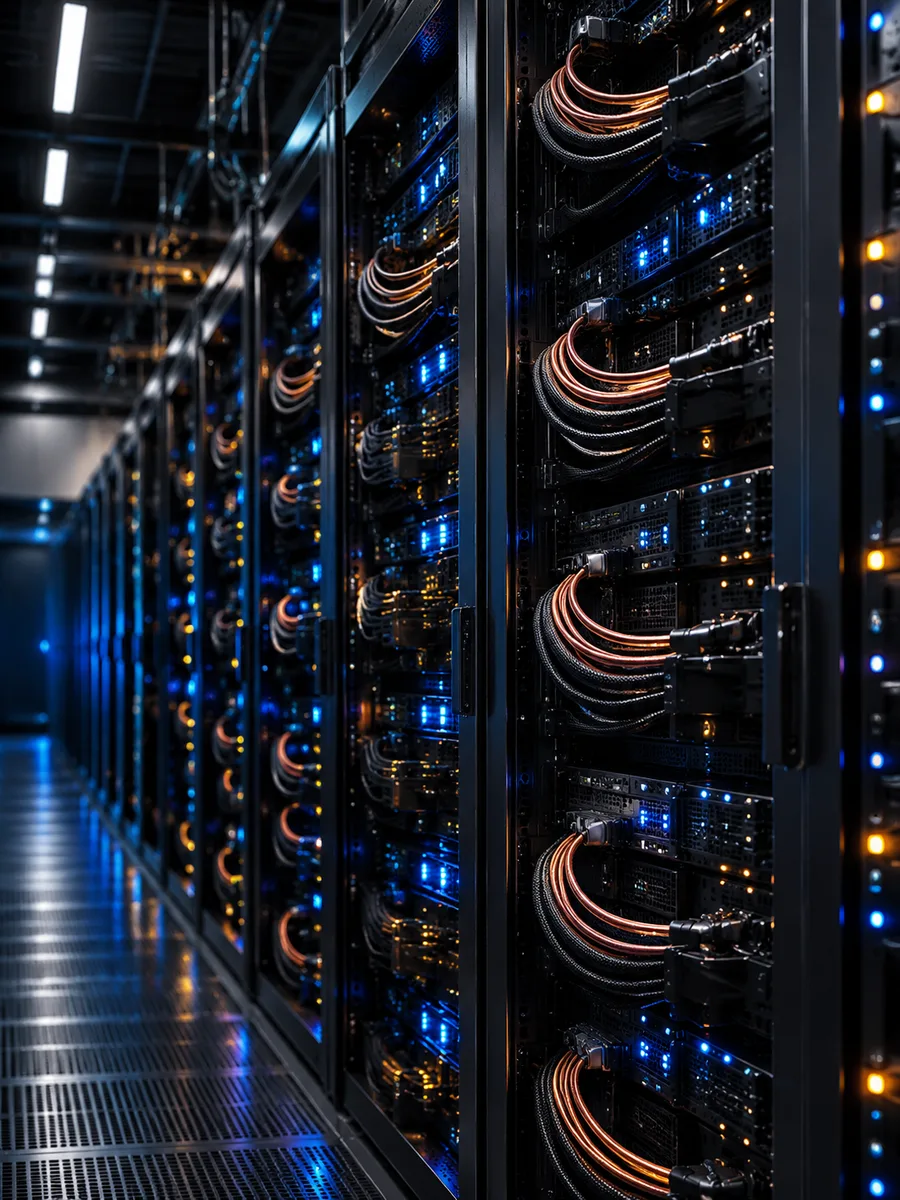
Cover keyword naming the power-hungry server complexes behind AI.
Stock-market term in Anthropic 马上就要上市了.
Financial term for a company's estimated market worth (目标估值高达一万五千亿美元).
Core AI hardware term in 用掉很贵的芯片 (burns expensive chips).
* beyond level超纲词
What grammar patterns appear in this episode?
语法只要一……,就……
Shows an immediate consequence triggered by an event ('the moment X happens, Y will follow').
只要一上市,华尔街就会看紧AI能不能赚够钱。
除了……,其他……
Excludes one group to highlight the rest ('apart from X, other...').
在现实里,除了软件工程师,其他行业变化还不大。
……却……
Sharp contrast between two opposing choices.
而对手摩根大通却决定继续加大对AI的投入。
马上就要……了
Signals an imminent event ('is just about to').
第一家专门做AI的大公司Anthropic马上就要上市了。
Proper nouns
专有名词Sources
来源Free account
Keep learning from this story
Create a free account to keep saved words and your preferred level together.
- Keep words with their story context
- Remember your preferred level
- Build your vocabulary over time