
A Chinese podcast · Same story, 4 levels
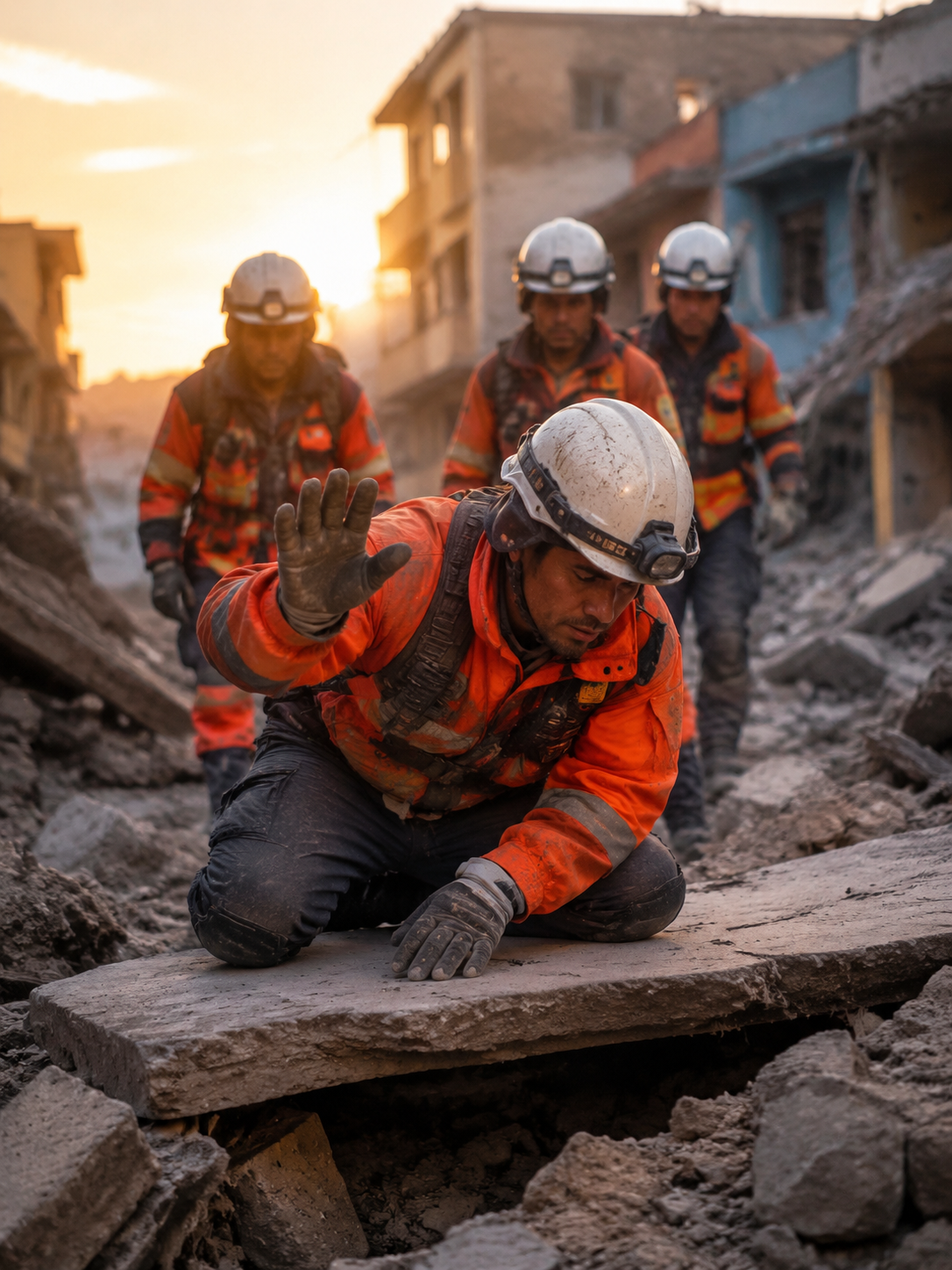
哥伦比亚西部遭7.4级地震重创,废墟下被困男子开口先报的不是自己,而是:我这里还有一个孩子。
Colombia Earthquake Rescue Finds Buried Baby
About this story
Colombia Earthquake Rescue Finds Buried Baby. HSK 5-6 Chinese listening practice.
This is an HSK 5-6 Chinese listening episode that runs about 2 minutes. The full Mandarin script is shown with tap-for-pinyin and a line-by-line English translation, so you can listen and read at once — comprehensible input in the sense of Stephen Krashen's i+1 theory. It teaches 16 key vocabulary words such as 初步、统计、示意 and walks through 3 grammar patterns, each explained in English with examples. The same news story is retold at 4 difficulty levels — use the level selector above to find the version that is challenging but still understandable for you.
Read at your level
原文Read the complete story in Chinese. Reveal pinyin and English only when you need them.
English transcript reference
On the tenth of August a magnitude 7.4 earthquake struck western Colombia, with its epicentre in a Chocó town of only a few thousand people.
Colombia’s geological service said it was the strongest quake the country has recorded this century, and several aftershocks followed.
Preliminary figures put more than sixteen hundred buildings damaged, at least sixty-one destroyed outright, and the death toll eventually passed two hundred.
But what really carried this story was a phone video a few dozen seconds long.
The video was shot at a collapse site between Pereira and Cali.
A group of rescuers stand on a fallen building with no heavy machinery, digging by hand, one piece at a time.
After a long stretch of this, one of them suddenly raises a hand and signals everyone to stop.
The site goes instantly silent.
They want to listen for whether anyone below is still making a sound.
Someone is.
A buried man is speaking.
The people above shout down through the gap: are you on your own?
The man answers: no, there is a baby down here with me.
The moment they hear it, five of them close in.
They shift the broken concrete one piece at a time, extremely slowly, afraid the whole pile will go again.
After a while, the baby comes into view.
A pair of hands reaches down and slowly lifts the child out through the gap.
The second the baby is out, all five shout to the outside for the medics.
Once the medics have taken the child, they break into a cheer on the rubble.
But this is not finished.
The man is still down there.
He is pinned in the rubble and cannot get out, and yet his two hands have been held up the whole time, cradling the baby above his palms.
When the people above ask his name, he does not answer about his own situation first.
What he speaks of first is the baby.
After the cheering, those five men turn around and go back to digging him out.
More than two hundred people did not come out of this earthquake alive.
But that morning, under that collapsed building, one man thought first of someone other than himself.
Think about it: in that one second, what exactly was going through his mind?
Listen again
Try it without the transcript and notice what sounds clearer.
What vocabulary does this episode teach?
词汇初步统计 = preliminary figures.
初步统计 = preliminary count.
示意所有人,停下 = signals everyone to stop.
现场,瞬间安静 = the site goes instantly silent.
爆发出一阵欢呼 = break into a cheer.
他没有先回答,自己的情况 = he does not answer about his own situation first.
继续挖他 = go back to digging him out.
震中在 Chocó 一个小镇 = the epicentre was in a Chocó town.
之后还有多次余震 = several aftershocks followed.
遇难人数最后超过两百人 = the death toll eventually passed two hundred.
一处废墟 = a collapse site.
对着缝隙喊 = shout down through the gap.
只能徒手一块一块地搬 = digging by hand, one piece at a time.
把婴儿托在掌心上方 = cradling the baby above his palms.
爆发出一阵欢呼 = break into a cheer.
把婴儿托在掌心上方 = holding the baby up on his palms.
What grammar patterns appear in this episode?
语法却
"and yet". Marks the gap between the state he was in and what he was doing with his hands.
他自己被压在废墟里出不来,两只手却一直举着。
之后 / 之前
"after / before X". Sequences a long stretch against a sudden break.
搬了很久之后,其中一个人忽然举起手。
……得最……
V + 得 + 最 + adj: "the most widely X-ed". Ranks the outcome of an action.
但这条新闻里传得最广的……
Proper Nouns
专有名词Sources
来源Free account
Keep learning from this story
Create a free account to keep saved words and your preferred level together.
- Keep words with their story context
- Remember your preferred level
- Build your vocabulary over time