
A Chinese podcast · Same story, 4 levels
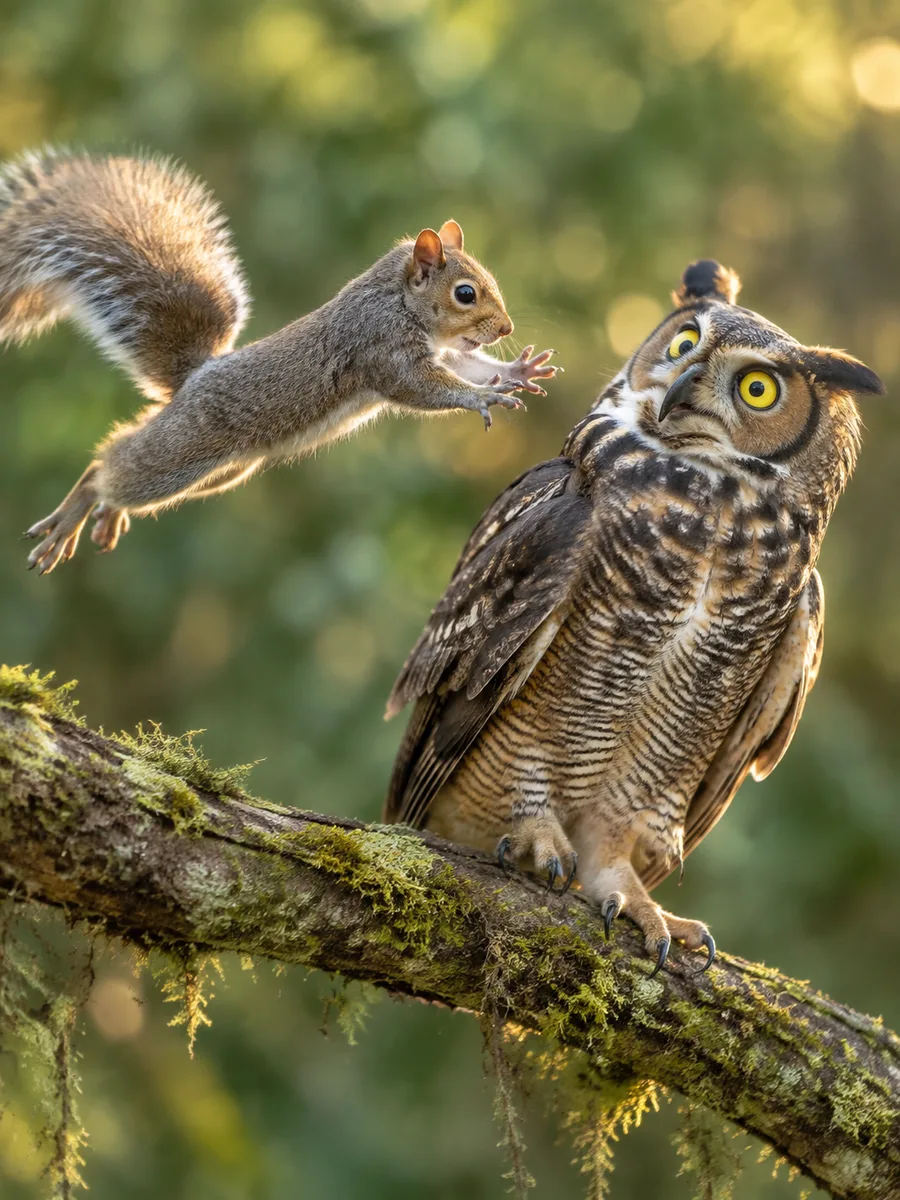
松鼠打猫头鹰、驼鹿打喷嚏:2026年最好笑的野生动物照片入围名单出炉
A Squirrel Attacks an Owl and a Moose Sneezes: The Funniest Wildlife Photos of 2026 Are In
About this story
The 2026 Comedy Wildlife finalists: a squirrel vs. an owl, a sneezing moose, and why humor helps conservation. HSK 3 Chinese listening practice.
This is an HSK 3-4 Chinese listening episode that runs about 3 minutes. The full Mandarin script is shown with tap-for-pinyin and a line-by-line English translation, so you can listen and read at once — comprehensible input in the sense of Stephen Krashen's i+1 theory. It teaches 16 key vocabulary words such as 简单、比赛、保护 and walks through 6 grammar patterns, each explained in English with examples. The same news story is retold at 4 difficulty levels — use the level selector above to find the version that is challenging but still understandable for you.
Read at your level
原文Read the complete story in Chinese. Reveal pinyin and English only when you need them.
English transcript reference
A squirrel is leaping straight at a great horned owl.
The great horned owl is a kind of owl that normally eats squirrels, but the owl in this photo has only one expression: are you serious?
This photo is called 'Are You Kidding Me?', taken by an American photographer in California.
It's one of the finalists in the 2026 Nikon Comedy Wildlife Awards.
The rules of this contest are simple: it must be wildlife, and it must be funny.
This year there were more than 10,000 entries from 112 countries, a record for the contest.
In the end, 56 entries made the shortlist: 40 single photos, 3 photos by photographers under 16, 4 photo series, and 9 videos.
Let's pick a few and 'look' at them with our ears.
In Germany, another squirrel crammed far too much grass into its mouth, so full its head looks twice as big; the photographer says it looks like a little movie monster.
In Canada, a photographer took a series of moose photos: in the first, the moose has a runny nose; in the second, it gives a huge sneeze; in the third, the moose seems to smile.
Smiling after a sneeze—this moose is exactly like us humans.
In Kenya, an elephant is giving a young elephant a 'bath,' except it's not water, it's dust.
Dust baths are normal for elephants, but this time the elephant scrubbed too hard, and the young one looks very unhappy.
The photographer who runs the contest says it has grown much bigger than they ever imagined.
The contest works together with a wildlife conservation organization.
Behind every funny photo is a message: these wild animals' homes are getting smaller and smaller.
After looking at the squirrel, the moose and the elephants and having a laugh, maybe you'll want to learn more about these wild animals, and protect them.
The final winners will be announced on December 8th, and two exhibitions in London are showing the entries now.
Do you think using humor to make people care about protecting animals works better than lecturing?
Listen again
Try it without the transcript and notice what sounds clearer.
What vocabulary does this episode teach?
词汇HSK 3. 这个比赛的规则很简单.
HSK 3. 这个比赛.
HSK 3/4. 保护野生动物.
HSK 1. 伦敦还有两个展览.
HSK 3. 野生动物.
HSK 3. 拍的必须是野生动物.
HSK 1. 打完喷嚏以后笑一笑,这只驼鹿和我们人一模一样.
HSK 2. 一起合作.
大雕鸮是猫头鹰的一种.
一位美国摄影师.
入围作品之一.
必须是野生动物.
打了一个大喷嚏.
用的是尘土.
一组驼鹿的照片.
伦敦还有两个展览.
* beyond level超纲词
What grammar patterns appear in this episode?
语法正朝着……扑过去
Is leaping toward….
一只松鼠,正朝着一只大雕鸮扑过去。
必须……,而且必须……
Must…, and must also….
拍的必须是野生动物,而且必须好笑。
只不过……
Except that; only….
只不过用的不是水,是尘土。
比……大得多
Much bigger than….
这个比赛已经变得比他们当初想的大得多。
Proper nouns
专有名词Free account
Keep learning from this story
Create a free account to keep saved words and your preferred level together.
- Keep words with their story context
- Remember your preferred level
- Build your vocabulary over time