
A Chinese podcast · Same story, 4 levels
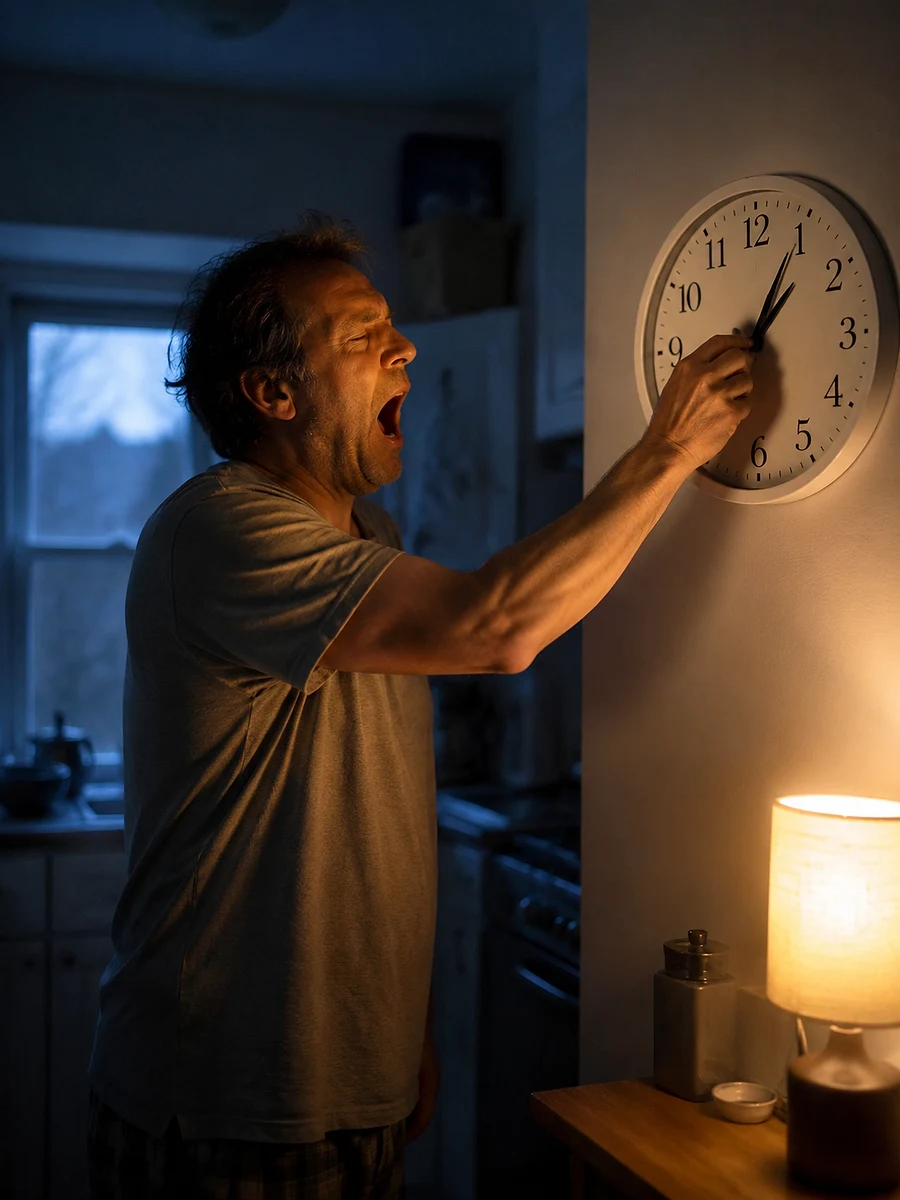
美国要不要不再调表?众议院投了票,Trump 也支持
House Votes on Permanent Daylight Saving Time
About this story
An easy Chinese listening story: the U.S. House voted to stop changing the clocks twice a year, Trump supports it, but bright evenings would mean dark winter mornings. HSK 3 Chinese listening practice.
This is an HSK 3 Chinese listening episode that runs about 2 minutes. The full Mandarin script is shown with tap-for-pinyin and a line-by-line English translation, so you can listen and read at once — comprehensible input in the sense of Stephen Krashen's i+1 theory. It teaches 12 key vocabulary words such as 快、慢、小时 and walks through 3 grammar patterns, each explained in English with examples. The same news story is retold at 4 difficulty levels — use the level selector above to find the version that is challenging but still understandable for you.
Read at your level
原文Read the complete story in Chinese. Reveal pinyin and English only when you need them.
English transcript reference
In many places, twice a year, everyone has to change the clocks.
Once, the clock goes forward an hour; once, it goes back an hour.
It seems like a small thing, but a lot of people really dislike it.
Because after the change, for a few days everyone sleeps an hour less and feels tired all day.
In America, this issue just saw a big change.
A few days ago, a very important body in America, the House of Representatives, held a vote.
Many voted "yes": from now on, stop changing the clocks.
In other words, America may soon stop changing the clocks all year and just keep summer time.
Trump says so too: this is good, I support it.
What's good about not changing the clocks?
The upside: in the evening it gets dark later, so there is more daylight outside.
After work, while it is still light, people can go out for a walk and have some fun.
But some people aren't happy.
Because if you keep summer time all year, on winter mornings it gets light very late.
In winter, kids have to leave for school very early, but it's still dark outside.
Adults drive to work in the dark too, which isn't very safe.
So for now, there is still one question people are arguing over fiercely:
Is it better to stop changing the clocks, or to just keep changing them like this?
This still needs another body in America to vote again before it is truly settled.
And you?
Where you are, do the clocks change too?
Listen again
Try it without the transcript and notice what sounds clearer.
What vocabulary does this episode teach?
词汇表快一个小时 = the clock goes an hour faster (forward).
表慢一个小时 = the clock goes an hour slower (back).
少睡一个小时 = to sleep one hour less.
有人不高兴 = some people are unhappy.
到了晚上 = when evening comes.
很早就要去上学 = have to leave for school very early.
一个很重要的地方 = a very important place/body.
投了"同意" = voted "yes" / in agreement.
我支持 = I support it.
不太安全 = not very safe.
动表 / 调表 = to change the clocks.
冬天的上午 = a winter morning.
* beyond level超纲词
What grammar patterns appear in this episode?
语法因为……
因为 introduces a reason: "because…".
因为动了表,那几天,大家都少睡了一个小时。
要是……,就……
要是 sets up a condition ("if…"), often paired with 就 for the result.
要是一年都用夏天的时间,冬天的上午,天会很晚才亮。
是 A,还是 B?
A choice question weighing two options.
是不动表好,还是就这样一直动下去好?
Proper nouns
专有名词Free account
Keep learning from this story
Create a free account to keep saved words and your preferred level together.
- Keep words with their story context
- Remember your preferred level
- Build your vocabulary over time