
A Chinese podcast · Same story, 4 levels
增强奥运会:第一届允许吃药的运动会
Enhanced Games Challenge Anti-Doping Rules
About this story
Enhanced Games Challenge Anti-Doping Rules. HSK 3 Chinese listening practice.
This is an HSK 3 Chinese listening episode that runs about 4 minutes. The full Mandarin script is shown with tap-for-pinyin and a line-by-line English translation, so you can listen and read at once — comprehensible input in the sense of Stephen Krashen's i+1 theory. It teaches 12 key vocabulary words such as 今天、想、知道 and walks through 4 grammar patterns, each explained in English with examples. The same news story is retold at 4 difficulty levels — use the level selector above to find the version that is challenging but still understandable for you.
Read at your level
原文Read the complete story in Chinese. Reveal pinyin and English only when you need them.
English transcript reference
Today we'll talk about a news story about a competition.
This competition
has one special thing about it:
you're allowed to take drugs.
Let's first talk about the background.
Do you know what the Olympics are?
The Olympics
is the world's biggest sports competition.
Running,
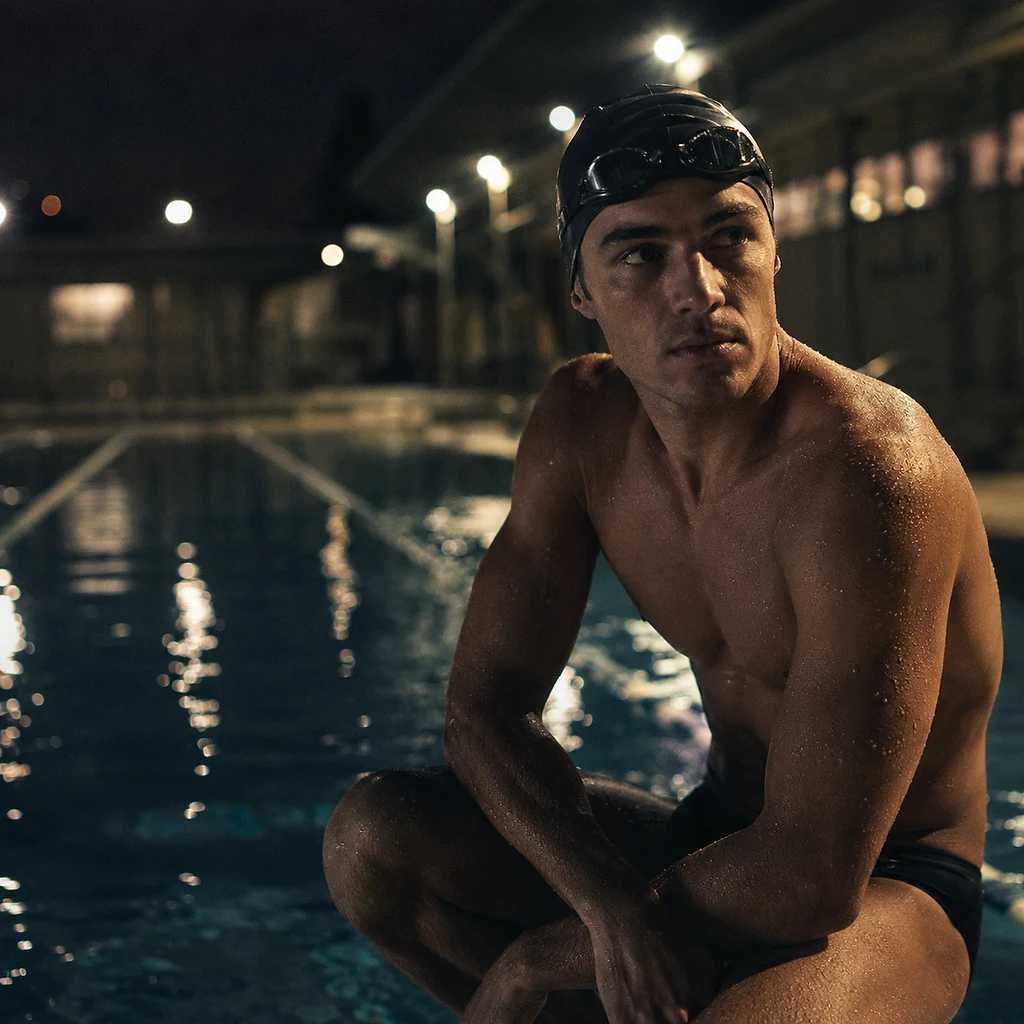
swimming,
weightlifting —
many events.
Once every four years.
At the Olympics
there is one very important rule:
athletes
may not take drugs.
The "drugs" here
are not ordinary medicine.
They are drugs that make people faster
or stronger.
We call them "performance-enhancing drugs" (兴奋剂).
If an athlete
takes PEDs,
they are banned from competing
and must also return
any medals they won before.
This rule
has existed for many years.
Everyone says:
competition must be fair.
You can win
because you, compared to others,
have practiced more.
But in recent years
some people
have started to ask a question:
"Why must doping be banned?
"If everyone is allowed to use it,
"isn't that also fair?
"And besides,
"maybe humans could
"run even faster
"and swim even farther.
The one saying this
is a man named
Aron D'Souza.
He's not an athlete.
He's a businessman.
He and some rich investors
created a new competition.
This competition is called
"Enhanced Games,"
in Chinese "增强奥运会."
Their rules,
compared with the Olympics',
are exactly opposite —
not only are you allowed to take drugs,
they will even encourage you to.
On May 24,
this competition,
in Las Vegas, USA,
was held for the first time.
There were 42 athletes
from 24 countries.
The competition had running,
swimming, and weightlifting.
What everyone was talking about
was a Greek swimmer.
His name is
Kristian Gkolomeev.
In the 50-meter freestyle
he swam 20.81 seconds.
This time
is faster than anyone
in the world had ever swum
before.
That is to say,
he broke the world record.
Because he broke the record,
he won one million US dollars.
But
things aren't that simple.
The real international swimming federation
will not recognize this record.
Because:
First,
he took drugs.
Second,
the swimsuit he wore
had actually been banned long ago.
As soon as the news broke,
the whole world was debating it.
The opponents say:
"This isn't sport.
"It's a show.
"Young people seeing this
"will think doping is no big deal.
"And the health issues —
"who's going to manage that?
The supporters say:
"This is a new kind of attempt.
"Adults have the right
"to decide what they themselves use.
"The Olympics
"have plenty of problems too.
The two voices —
neither can persuade the other.
I read this news,
and I thought of a question.
When we watch competitions,
what are we watching for?
Is it to see a new record?
Or is it to see
two roughly equal people
fairly compete against each other?
This question
has no simple answer.
Finally I ask you:
If there were a drug
that could let a person jump higher
and run faster,
but might
not be very good for the body —
would you let your child take it?
Think about it.
Okay.
That's all for today.
Talk tomorrow.
Listen again
Try it without the transcript and notice what sounds clearer.
What vocabulary does this episode teach?
词汇Today. The narrator opens 今天我们说一个比赛的新闻 — 'today we'll talk about a competition news story.'
To think, to want. The narrator and others all 想 — wonder, ask, propose.
To know. 你知道奥运会吗 — 'do you know what the Olympics are?'
The same. 都不一样 — 'are all different.' The Enhanced Games and the Olympics are not the same.
To think, to feel. 让他们觉得吃药没事 — 'making them think doping is no big deal,' a worry raised by critics.
Important. 一条很重要的规定 — 'one very important rule' (the no-PED rule that Enhanced Games challenges).
Fair. Beyond HSK2. The episode's central question: 那也是公平的啊 — 'isn't that also fair?'
Health. Beyond HSK2. The critics' top concern: 健康问题,谁来管 — 'and the health problem, who's going to manage that?'
To encourage. Beyond HSK2. The contrast: at Enhanced Games, you're not just allowed to dope — they 鼓励你吃 (encourage you to).
PEDs. Beyond HSK2. The episode's exact term — drugs that make people faster or stronger.
A record. Beyond HSK2. 他打破了世界纪录 — 'he broke the world record' — though the swim federation won't recognize it.
Openly, publicly. Beyond HSK2. The supporters' framing: he doped 公开地 — openly — not as a secret cheat.
* beyond level超纲词
What grammar patterns appear in this episode?
语法不只是 A,还/也 B
Expands beyond an initial point. The episode uses it to describe the Enhanced Games rule: not just allow doping — actively encourage it.
你不只是可以吃药,他们还会鼓励你吃。
不只是漳州,浙江也跟着卖不出去。
也就是说 restates a point in plainer terms. The episode uses it to translate the legal claim into a clear summary.
也就是说,他打破了世界纪录。
也就是说,这个"世界纪录",和我们说的世界纪录,不是一回事。
完全相反
完全 sharpens 相反 to mean 'directly opposed.' The episode uses it to contrast the Enhanced Games' rules with the Olympics'.
他们的规定,和奥运会,完全相反。
谁都 + 不 + verb
谁都 plus a negative says no one in the whole group does the action. The episode uses it for the stalemate of the debate.
两种声音,谁都说服不了谁。
谁都不知道答案。
Proper nouns
专有名词Free account
Keep learning from this story
Create a free account to keep saved words and your preferred level together.
- Keep words with their story context
- Remember your preferred level
- Build your vocabulary over time