
1:41
太平洋上的四十天:Kai Sato 如何在绝望中一次次选择活下去
Forty Days on the Pacific: How Kai Sato Chose, Again and Again, to Keep Living
An intermediate Chinese listening story on Kai Sato: his mast broke on a solo sail to Hawaii, and for 40+ days he drifted the Pacific, drinking condensation and eating fish, cried for a week, thought of giving up, but chose to survive until a ship found him.
This is an HSK 5-6 Chinese listening episode that runs about 2 minutes. The full Mandarin script is shown with tap-for-pinyin and a line-by-line English translation, so you can listen and read at once — comprehensible input in the sense of Stephen Krashen's i+1 theory. It teaches 10 key vocabulary words such as 完成、经历、选择 and walks through 3 grammar patterns, each explained in English with examples. The same news story is retold at 4 difficulty levels — use the level selector above to find the version that is challenging but still understandable for you.
有些故事,你听完会觉得,人真的可以比自己想象的更强。
Some stories, when you finish them, make you feel that people really can be stronger than they imagine.
三十九岁的 Kai Sato 来自加州。
Thirty-nine-year-old Kai Sato is from California.
今年六月七号,他从卡特琳娜岛出发,想完成自己的第一次单人航海,目的地是夏威夷。
On June 7th this year, he set out from Catalina Island to complete his first solo voyage, bound for Hawaii.
可大海很快就给了他一记重拳。
But the ocean soon threw him a heavy punch.
半路上,一场大风浪把船的桅杆折断了。
Partway there, a fierce storm snapped his boat's mast.
船瘫在海面上,既走不了,也回不去。
The boat lay dead on the water, unable to move forward or turn back.
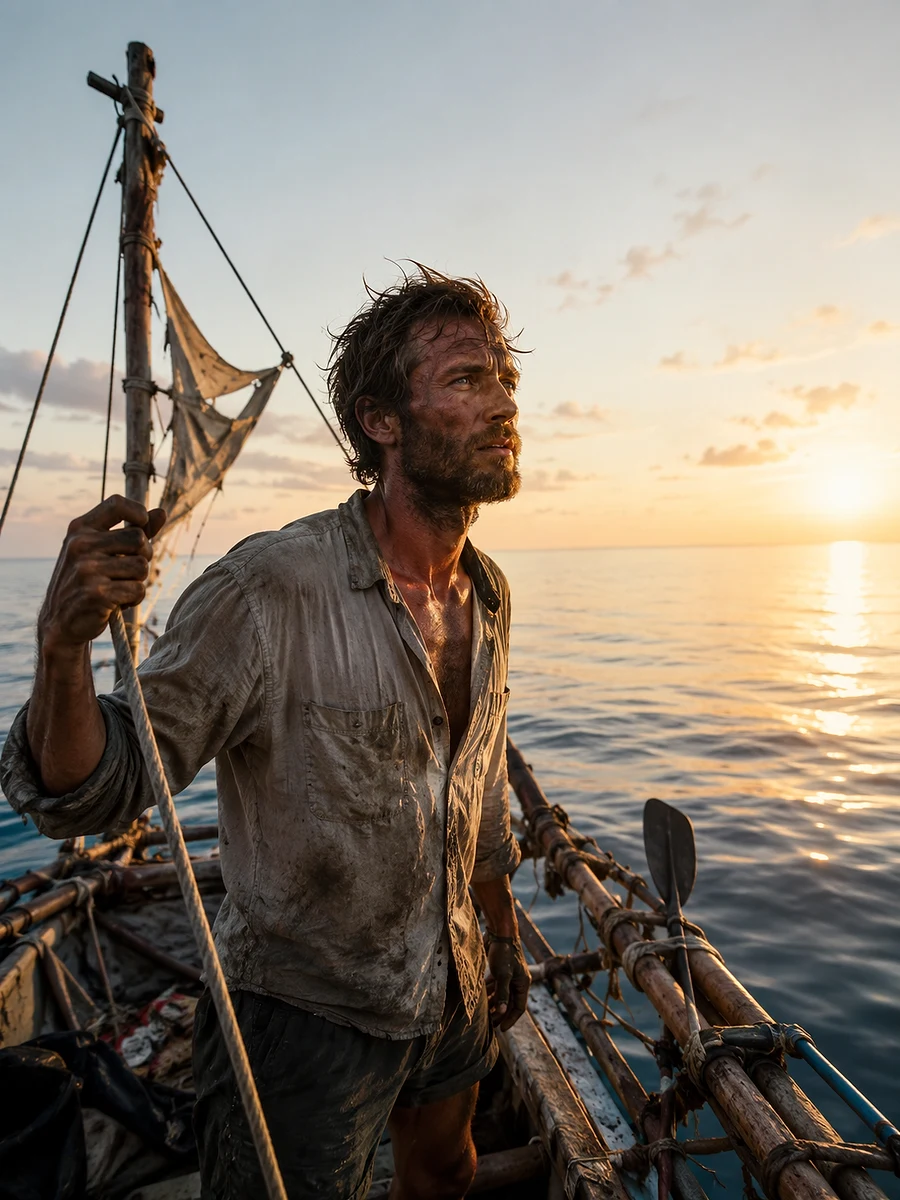
从那一刻起,他成了太平洋上一个孤零零的黑点,只能顺着洋流,一天天往南漂。
From that moment, he became a lone speck on the Pacific, drifting south day by day with the current.
真正的考验,是水和食物。
The real test was water and food.
七月七号,他随船带的淡水彻底喝光了。
On July 7th, the fresh water he'd carried aboard ran completely dry.
为了活命,他把塑料袋挂起来,收集空气中凝结的水珠,一点一点往嘴里送。
To survive, he hung up plastic bags to collect the moisture condensing in the air, sending it to his mouth bit by bit.
饿了,就靠一点燕麦,还有自己跳上甲板的鱼和鱿鱼充饥。
When hungry, he got by on a little oatmeal, plus the fish and squid that jumped onto his deck.
他决定为自己拼一次。
He decided to fight for himself.
他用管子和皮划艇的桨,给自己拼出了一面简易的帆,一寸一寸地,往有货船经过的航道挪。
Using pipes and a kayak paddle, he pieced together a makeshift sail and inched, foot by foot, toward the shipping lanes where cargo ships pass.
当然,人不是铁打的。
Of course, he was not made of iron.
他后来回忆说,自己曾经一连哭了一个星期,甚至动过就此了结的念头。
He later recalled that he once cried for a whole week straight, and even entertained the thought of just ending it.
但每一次,他都咬牙撑了下来。
But each time, he gritted his teeth and held on.
七月二十一号,在离夏威夷大约九百英里的航道上,一艘名叫"乔治三世号"的货船,终于发现了这条瘫痪的小帆船。
On July 21st, in a shipping lane about nine hundred miles from Hawaii, a cargo ship named the George III finally spotted the crippled little sailboat.
漂流四十多天之后,Kai Sato 终于活着回到了岸上。
After more than forty days adrift, Kai Sato finally made it back to shore alive.
他的经历之所以打动人,或许正是因为:在那片望不到头的绝望里,他一次又一次,选择了继续活下去。
What makes his story move people may be exactly this: deep in a sea of hopelessness with no end in sight, again and again, he chose to keep on living.
完成第一次单人航海 = complete his first solo voyage.
他的经历打动人 = his experience moves people.
选择了继续活下去 = chose to keep living.
比自己想象的更强 = stronger than he imagined.
真正的考验,是水和食物 = the real test was water and food.
把船的桅杆折断了 = snapped the boat's mast.
太平洋上一个孤零零的黑点 = a lone speck on the Pacific.
随船带的淡水彻底喝光了 = the fresh water aboard ran dry.
拼出了一面简易的帆 = pieced together a makeshift sail.
一艘...货船...发现了...小帆船 = a cargo ship spotted the little sailboat.
* beyond level超纲词
既……也……
既 A 也 B = "both A and B / neither ... nor" (here: neither move nor turn back).
船瘫在海面上,既走不了,也回不去。
之所以……,是因为……
X 之所以 Y,是因为 Z = "the reason X is Y is that Z".
他的经历之所以打动人,或许正是因为他一次又一次选择了活下去。
一……又……
一 X 又 X = "X after X, over and over".
他一次又一次,选择了继续活下去。
Free account
You just read the story — hear it next. A free account saves your level, the words you keep from this episode, and the line you stop at, so you can pick the story back up on any device.