
A Chinese podcast · Same story, 4 levels
飓风吹倒了夏威夷的牛油果树,一个小岛用掉在地上的果子办了场比赛,救下了自己的电台
A Hurricane Flattened Hawaii's Avocado Trees — So One Island Held a Guacamole Contest and Saved Its Own Radio Station
About this story
Hurricane Lowell knocked thousands of avocado trees down on Kauaʻi in September 2026, at the exact start of avocado season, and the island filled up with free fruit nobody could eat. In the same week its community radio station — the only thing still broadcasting through the outage — warned it was nearly out of diesel. On 17 September, twenty-five batches of guacamole and nearly two hundred people raised over $5,000, double the target, and kept it on the air. Chinese listening practice at four levels. HSK 2 Chinese listening practice.
This is an HSK 2 Chinese listening episode that runs about 3 minutes. The full Mandarin script is shown with tap-for-pinyin and a line-by-line English translation, so you can listen and read at once — comprehensible input in the sense of Stephen Krashen's i+1 theory. It teaches 12 key vocabulary words such as 名字、水果、担心 and walks through 3 grammar patterns, each explained in English with examples. The same news story is retold at 4 difficulty levels — use the level selector above to find the version that is challenging but still understandable for you.
Read at your level
原文Read the complete story in Chinese. Reveal pinyin and English only when you need them.
English transcript reference
In September, a big hurricane reached Hawaii.
Its name was Lowell.
Hawaii has many islands.
The first one this hurricane reached was a small island called Kauaʻi.
After the hurricane passed, the people on the island came out to look.
They saw that a great many trees had fallen.
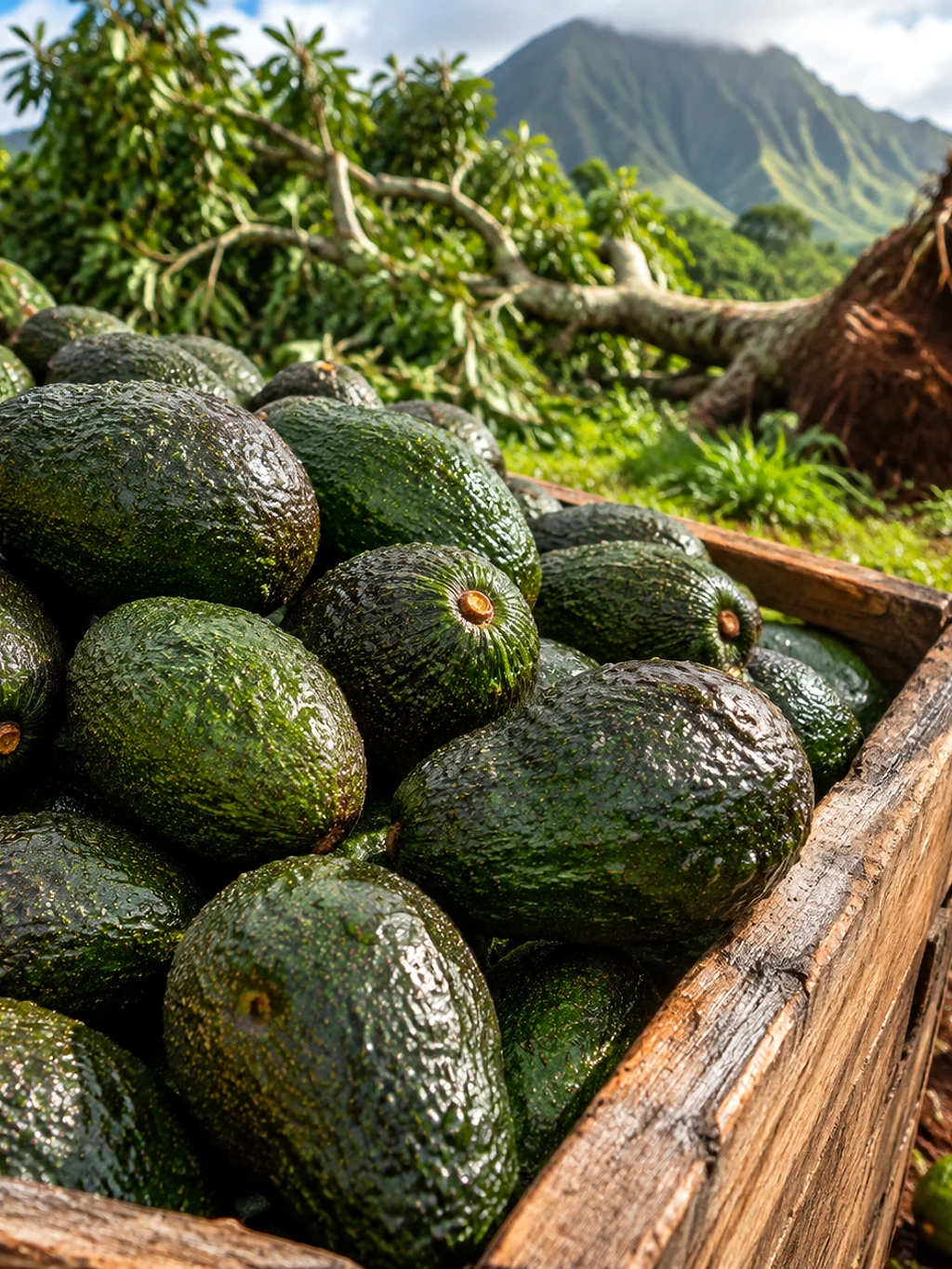
Among the fallen trees were a great many avocado trees.
The avocado is a kind of fruit.
It is not sweet, but it tastes very good.
In Hawaii, September happens to be when avocados are at their peak.
So the moment the trees went down, the ground was covered in avocados.
Not a few — thousands of them.
These avocados could not just stay on the ground.
Left too long, they spoil.
So the people on the island started carrying avocados home.
They could not carry them all, and they could not eat them all.
After that, things got interesting.
Walking down the road, you would see one big box after another.
The boxes were full of avocados.
The boxes sat in front of shops, at the roadside, and outside other people's front doors.
Every one of them had the same thing written on it: free, take some.
One local said it seemed like every neighbourhood had a bin of free avocados.
But there was something else on the island that worried people more.
Kauaʻi has a community radio station.
When the hurricane came, a lot of places had no power.
With no power, people listen to the radio.
The station tells everyone which roads are passable, whether the water is safe to drink, and where there is food.
But after the hurricane, the station itself had no money.
People at the station said they were nearly out of fuel.
With no fuel, the station would have to go off the air.
At that point, somebody had an idea.
There are so many avocados on this island — why not do something with them?
On the seventeenth of September, they held an event behind a small restaurant.
Everyone made guacamole together.
Twenty-five people came, and each of them made one batch.
People who came to eat had to pay, and all the money went to the radio station.
The organisers had thought a hundred people turning up would be a good result.
That day, close to two hundred came.
They had hoped to raise two thousand five hundred dollars.
In the end they took in more than five thousand.
The station did not go off the air.
The hurricane knocked down the island's avocado trees.
And then the avocados that fell off them kept the island's radio station alive.
If there were a box of free fruit outside your door, would you take some?
Listen again
Try it without the transcript and notice what sounds clearer.
What vocabulary does this episode teach?
词汇HSK 1. 它的名字叫洛厄尔 — hurricanes get names, which is how the episode makes one concrete.
HSK 1. 牛油果是一种水果 — the definition arrives immediately after the name.
HSK 2. 岛上还有一件事,大家更担心 — the pivot from the fruit to the radio station.
HSK 2. 电台告诉大家:路能不能走,水能不能喝 — what a radio station is actually for.
HSK 2. 每一个箱子上面都写着一样的意思 — different words, one message.
HSK 2. 很多地方没有电 — how the blackout is described without the word for power cut.
它不甜,可是很好吃 — defined by what it is not, because most fruit words imply sweet.
飓风 is the word for Pacific and Atlantic hurricanes; 台风 would be wrong for Hawaii.
没有电,人们就听电台 — the reason it matters is stated before the crisis arrives.
考艾岛有一个社区电台 — not a commercial station, which is why it could run out of money.
HSK 3. 办了一个活动 — 办活动 is the standard collocation; you 办 an event, you do not 做 one.
一个一个的大箱子 — the reduplicated 一个一个 makes the whole island visible in one phrase.
* beyond level超纲词
What grammar patterns appear in this episode?
语法A 一……,就……
The moment A happens, B follows immediately. Here it compresses the entire disaster into six characters.
所以树一倒,地上就全是牛油果。
不是……,是……
Corrects a figure the listener has probably under-imagined. Chinese states the wrong scale first, then the real one.
不是几个,是几千个。
V 不完
The 不完 complement means the action cannot be carried through to completion — not unwillingness, but sheer quantity.
他们拿不完,也吃不完。
Proper nouns
专有名词Free account
Keep learning from this story
Create a free account to keep saved words and your preferred level together.
- Keep words with their story context
- Remember your preferred level
- Build your vocabulary over time