
A Chinese podcast · Same story, 4 levels
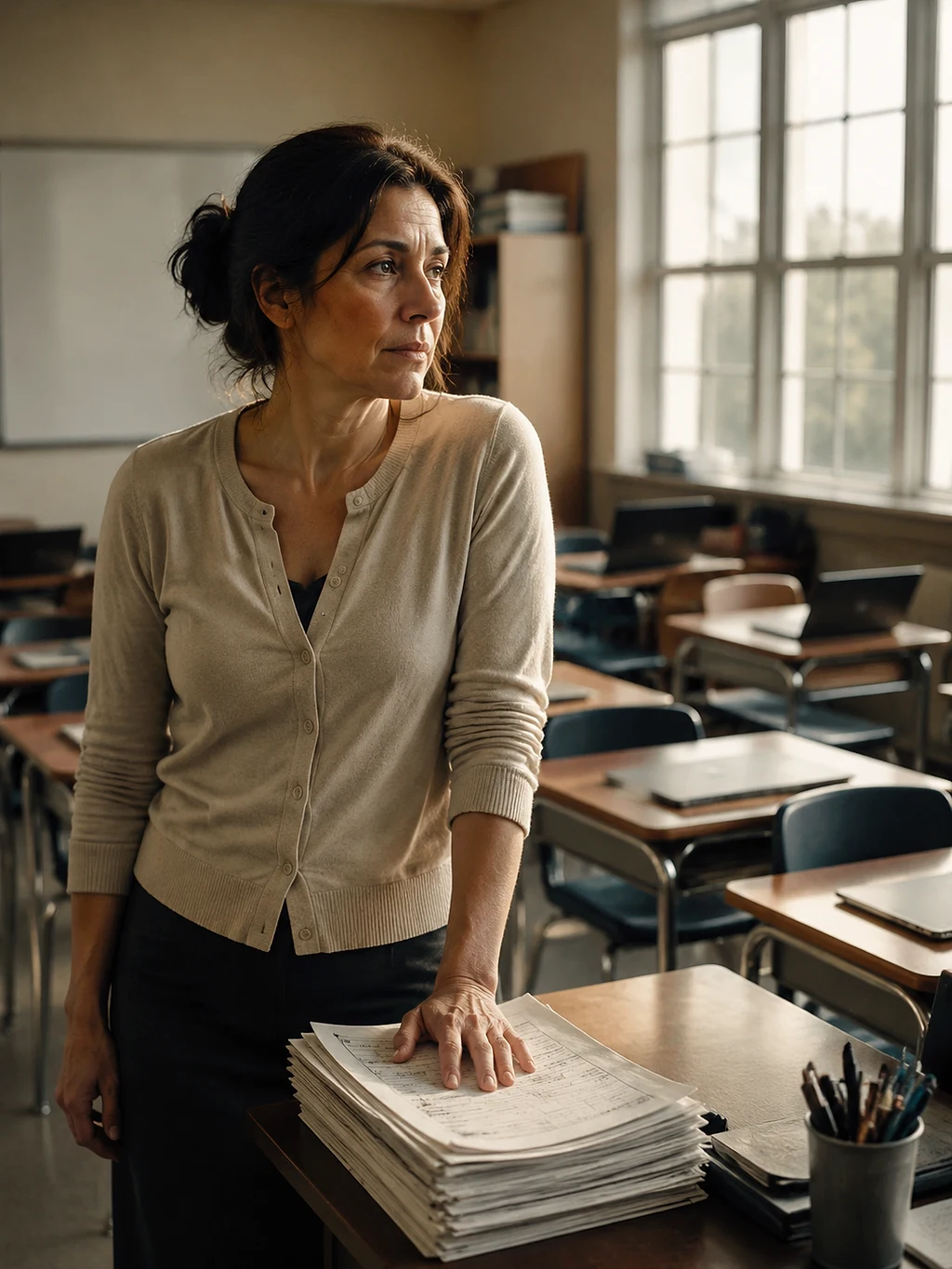
纽约禁止六十万中小学生在校用 AI:反对的人说,这还不够
NYC Bans AI in Schools for 600,000 Children
About this story
New York City, the largest school district in America, has banned generative AI for 600,000 students from pre-K through 8th grade — while letting teachers keep using it. The loudest objection is that one year is too short. Chinese listening practice at four levels. HSK 2 Chinese listening practice.
This is an HSK 2 Chinese listening episode that runs about 4 minutes. The full Mandarin script is shown with tap-for-pinyin and a line-by-line English translation, so you can listen and read at once — comprehensible input in the sense of Stephen Krashen's i+1 theory. It teaches 12 key vocabulary words such as 公司、相信、重要 and walks through 3 grammar patterns, each explained in English with examples. The same news story is retold at 4 difficulty levels — use the level selector above to find the version that is challenging but still understandable for you.
Read at your level
原文Read the complete story in Chinese. Reveal pinyin and English only when you need them.
English transcript reference
On September the second, New York did something a lot of people did not see coming.
New York has the largest school system in America.
Inside that system there are six hundred thousand primary and middle school students.
Starting this month, those six hundred thousand students may not use AI at school.
It is the biggest move of its kind in America so far.
Let's start with why this is such a big deal.
Over the last two years, AI in schools has grown and grown.
Some AI teaches children to read.
Some AI is a friend you can chat with — whatever a child wants to say, they say it to the machine.
And when a student is doing homework, they can just ask AI.
AI gives them the answer, and writes it up for them too.
A lot of companies say: this is the school of the future, it is coming whether you like it or not.
Now New York says: that is not how we see it.
The mayor of New York said one line that many people remembered.
He said: those companies want us to believe that small children learning with AI is both inevitable and necessary.
He said: we do not see it that way.
So what did New York actually do?
First, the AI tools the schools handed to students have all been switched off.
One reading-tutor AI had been in use for a long time; that has stopped too.
Second, AI that chats with students is not allowed on school computers at all.
Third, the time students spend looking at screens has to come down.
Eight to ten-year-olds: thirty minutes a day.
Eleven to thirteen-year-olds: forty-five minutes a day.
Younger children than that, even less.
And here is the part that is interesting.
Students may not use it, but teachers may.
What do teachers use AI for?
Teachers use AI to plan lessons and to make the handouts students will read.
What the students see is still what the teacher made.
Why is it fine for the teacher and not for the student?
New York's thinking runs like this.
A teacher already knows how to think; AI just does the busywork faster.
A student is still learning how to think.
When you are small, the most important thing is doing the thinking yourself.
If AI finishes a seven-year-old's homework, what has the seven-year-old learned?
Not every student is shut out.
Some students have disabilities, and AI helps them speak and helps them read.
Those students may use it.
Some students have just arrived in America and cannot speak English yet, and AI helps them.
Those students may use it too.
And older students studying computing, who may work in it one day, may use it as well.
New York says: this year, we are going to take a proper look.
Every piece of technology in the schools gets reviewed.
Anything students do not genuinely need gets dropped.
In a year, they will decide the next step.
And there is a last thing, which may not be what you expect.
What do the people who object actually say?
They say: one year is too short.
They say it is bad that high schools are still using AI at all.
What they want is longer, and stricter.
Think about it: when you were small, homework was hard.
You thought about it for a long time before you worked it out.
If back then there had been something that gave you the answer the moment you asked, would you still have done the thinking?
Listen again
Try it without the transcript and notice what sounds clearer.
What vocabulary does this episode teach?
词汇HSK 2. One side of the argument: 很多公司说:这是以后的学校。
HSK 2. Straight from the mayor: 那些公司想让我们相信……
HSK 2. The core claim: 学生小的时候,最重要的是自己想。
HSK 1. How the episode explains a companion chatbot: 一个可以聊天的朋友。
HSK 2. The habit the policy is trying to interrupt: 学生有问题,就问 AI。
HSK 2. The screen-time limits: 一天三十分钟 / 一天四十五分钟。
The concrete thing at stake: 一个七岁的孩子,AI 帮他写完了作业,他学会了什么?
What the banned companion bots do: 可以跟学生聊天的 AI。
The person who announced it, and whose line the episode quotes.
The word the argument rests on, repeated across the episode.
One of the exemptions: 有的学生刚到美国,还不会说英文。
HSK 3, above the floor. Used for the disability exemption: 有的学生身体不方便。
* beyond level超纲词
What grammar patterns appear in this episode?
语法第一……第二……第三……
Counting off points out loud. A host uses this so a listener can follow a list without seeing it written down.
第一,学校里给学生用的 AI,都关了。
第二,可以跟学生聊天的 AI,在学校的电脑上都不可以有。
第三,学生看电脑的时间,也要少。
为什么 A 可以,B 不可以?
Poses the contrast as a question and then answers it — a 设问句. It is how this episode introduces its most interesting point instead of just asserting it.
为什么老师可以,学生不可以?
那纽约做了什么呢?
越来越 + adjective
More and more of something, increasing over time.
这两年,学校里的 AI 越来越多。
Proper nouns
专有名词Sources
来源Free account
Keep learning from this story
Create a free account to keep saved words and your preferred level together.
- Keep words with their story context
- Remember your preferred level
- Build your vocabulary over time