
A Chinese podcast · Same story, 4 levels
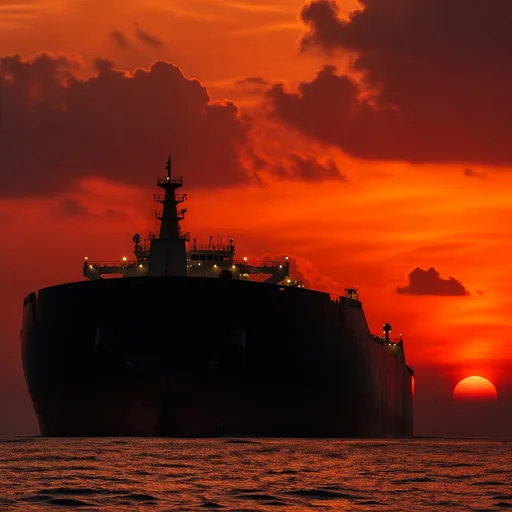
油价破百与霍尔木兹海峡危机
Oil Above $100 as Hormuz Crisis Deepens
About this story
Oil breaks $100 as Iran controls the Strait of Hormuz — how the crisis hits the US, Europe, China, and the world economy. HSK 3 Chinese listening practice.
This is an HSK 3-4 Chinese listening episode that runs about 10 minutes. The full Mandarin script is shown with tap-for-pinyin and a line-by-line English translation, so you can listen and read at once — comprehensible input in the sense of Stephen Krashen's i+1 theory. It teaches 17 key vocabulary words such as 价格、控制、经过 and walks through 5 grammar patterns, each explained in English with examples. The same news story is retold at 4 difficulty levels — use the level selector above to find the version that is challenging but still understandable for you.
Read at your level
原文Read the complete story in Chinese. Reveal pinyin and English only when you need them.
English transcript reference
Speaking of recent oil prices, let's see what happened.
Now the price of a barrel of oil has already exceeded 100 US dollars.
In the world, this is a very high price.
Why has oil become so expensive now?
Mainly because Iran has controlled the Strait of Hormuz.
Many people might not quite understand what this means.
Today we are going to have a good talk about this matter.
First we need to know how important oil is to us.
If you have a car, you need to get gas every day.
If the price of gasoline gets higher, you will have to spend more money.
One hundred dollars for a barrel of oil is much more expensive than before.
In the past, a barrel of oil might only cost sixty or seventy dollars.
Because oil has become more expensive, many things have become more expensive.
Not only has driving become more expensive, but buying things has also become more expensive.
Because delivery trucks also need to use very expensive gasoline.
This is why everyone is very concerned about the price of oil.
So what kind of place is the Strait of Hormuz exactly?
It is a very narrow but very important sea route.
This strait is in the faraway Middle East region.
A lot of the world's oil is in Middle Eastern countries.
These Middle Eastern countries sell oil to other countries.
How do they send so much oil over?
They must use very large ships to transport this oil.
These large ships must pass through the Strait of Hormuz.
You can think of it as a very narrow road on the sea.
Although this road is very narrow, it is very important.
Almost one-fifth of the world's oil has to pass through here.
If this road is blocked, the oil cannot get out.
Other countries won't be able to buy the oil they need.
This is like a main road you must take to go to work every day.
If this road is broken, you cannot go to the company to work.
The problem now is that Iran is right next to this road.
Iran is a very large Middle Eastern country.
Recently, some problems occurred between Iran and some Western countries.
There are many very unhappy things between them.
So Iran said they want to control this important strait.
Iran sent many warships to that place.
They blocked some important intersections.
They told other countries not to casually sail ships in.
If ships from other countries want to pass, they will feel very scared.
Because Iran might stop their oil tankers.
This makes many oil-selling bosses feel very worried.
They feel their large ships are very unsafe now.
If the ships are caught, they will lose a lot of money.
So some large ships don't dare to go through there now.
Because many ships don't dare to go, the oil on the market has become less.
This is a very simple economic principle.
There are still as many people needing to buy oil as before.
But the oil that can actually be sold has become less.
If things become fewer, their price will go up.
This is why the current oil price has exceeded one hundred dollars.
Everyone is afraid they won't be able to buy the oil they need tomorrow.
So everyone is now holding money and rushing to buy oil.
The more everyone rushes to buy, the more the price of oil goes up.
One hundred dollars a barrel really makes many countries feel they can't stand it.
If Iran keeps controlling this strait, the price will be even higher.
Some people say the oil price might rise to one hundred and fifty dollars.
If it really reaches that price, the world's problems will be even bigger.
This matter has a very big impact on the whole world.
Not only on the US and Europe, but the impact on Asia is also very big.
For example, Japan and South Korea, they have almost no oil of their own.
The oil they use is almost entirely bought from outside.
If oil remains this expensive, their factories will have to spend more money.
If factories spend more money, the things they make will become more expensive.
In the end, it is still the ordinary shoppers who pay for it.
Buying clothes, buying food, buying daily items, everything will go up in price.
This will make people's lives increasingly difficult.
Many businesspeople are having a big headache now.
They don't know what bad things will happen next.
They don't dare to make new plans, nor do they dare to spend more money.
What kind of impact does this have on our China?
China is a very large and fast-developing country.
We have many very large factories, and also many cars.
So we need to use a huge amount of oil every day.
Although China also produces some oil itself, it is not enough to use.
A very large part of our oil is bought from the Middle East.
This oil must also pass through the Strait of Hormuz.
If Iran blocks the strait, our ships won't be able to come back either.
This will cause China's oil prices to rise along with it.
When people go to the gas station, they will find the gas price is expensive again.
And if factory costs are high, things will also become more expensive.
So China is also very concerned about the development of this matter.
We hope they can sit down and have a good talk.
Everyone feels that fighting should not be used to solve the problem.
What are other countries doing now?
The US and European countries are very angry about this matter.
They told Iran that it absolutely cannot do this.
The US even sent its own warships to that strait.
They want to protect those merchant ships transporting oil.
They said if Iran dares to attack these ships, they will fight back.
This makes that place become very tense and dangerous.
Everyone is afraid they will really start fighting at sea.
If a war really breaks out, then it won't be a matter of one hundred dollars.
That strait might really be completely closed off.
This is a result that no one in the world wants to see.
Because war is of no benefit to any country.
Everyone is thinking of ways to see if it can be resolved peacefully.
Some countries are helping to mediate in the middle, hoping everyone will calm down a bit.
Because of this matter, many countries are also starting to think of other methods.
Everyone feels they cannot always rely on Middle Eastern oil.
If they always rely on them, they will encounter the same problems in the future.
So now many countries are working hard to make electric cars.
If everyone drives electric cars, not so much gasoline will be needed.
Not only can it help everyone save money, but it is also very good for the environment.
Besides electric cars, there is also wind energy and solar energy that can be used.
These are all new energies that do not need oil.
Many smart scientists are working hard to research these new technologies.
But these new technologies still need a long time to develop.
We can't possibly replace all cars by tomorrow.
At this current time, we still cannot do without oil.
So we still have to face the high oil price of one hundred dollars.
Let's look back again at why Iran wants to do this.
Actually, Iran also does it because they feel it is very unfair.
The US and Europe previously did not let other countries buy Iran's oil.
They wanted to use this method to make Iran listen to them.
Iran felt its country's economy suffered huge damage.
Ordinary people in Iran also need to make money to eat every day.
If others don't buy their oil, they will have no money.
So Iran decided to use the method of controlling the strait to fight back.
They felt, since I cannot sell oil, you shouldn't expect to have it easy either.
This is a very bad way of hurting each other.
This approach gives people all over the world a headache.
But from Iran's perspective, they feel they have no other choice.
This is a very complex major international problem.
This is not something that can be solved immediately in a day or two.
As long as the problems between them remain, that place will not be safe.
High oil prices are a very big blow to the global economy.
The economy of many countries is already not very good right now.
Everyone is trying hard to find ways to make the economy a bit better.
But high oil prices are like a basin of cold water poured over everyone's heads.
Because the oil price has gone up, the money in everyone's hands has become less.
People are then less willing to go to stores to buy other things.
If the things in the stores cannot be sold, the stores will close.
If stores close, many people will lose their jobs.
This is a very terrifying vicious cycle.
So many smart economists are warning everyone.
They say, if the oil price stays this high.
The world's economy might fall seriously ill.
Every day everyone is watching the news reports from the Middle East.
As long as there is a bit of good news, the oil price might drop a little.
As long as there is a bit of bad news, the oil price will fly up immediately.
The price changes back and forth every day, being very unstable.
Businesspeople watch the news every day, feeling very nervous in their hearts.
They hope this oil turmoil can pass quickly.
But judging from the current situation, it might still take a long time to wait.
Listen again
Try it without the transcript and notice what sounds clearer.
What vocabulary does this episode teach?
词汇A standard noun for price. Commonly used with verbs like 变高 (to become higher), 上涨 (to rise), or 掉下来 (to drop).
Verb meaning to control or dominate. Used here in the context of controlling a territory or situation.
Can be a verb meaning 'to pass by/through' a place, or a noun meaning 'process'. Used here as a verb.
Noun for economy. Used in expressions like 经济学 (economics) or 经济受到损害 (economy suffered damage).
Can be both a noun and a verb. In the script, it's used as a noun meaning impact or influence (对...有很大的影响).
Verb or noun referring to growth or development. Used to describe China as a fast-developing country and the development of new tech.
Verb used with problems or issues, e.g., 解决问题 (to solve a problem).
Verb meaning to depend on something or someone. Used here as relying on Middle Eastern oil.
Adjective describing something that is not simple. Used to describe the international problem.
The core topic of the script. Refers specifically to crude oil or petroleum.
A narrow passage of water connecting two larger areas of water. Here it refers to the Strait of Hormuz.
Military naval vessel. Composed of 军 (military) and 舰 (ship).
Verb meaning to close off an area, preventing anything from entering or leaving.
Verb used when someone responds to an attack or pressure with their own aggressive action.
Noun for solar power. Combines 太阳 (sun) and 能 (energy).
A four-character idiom/phrase describing a negative situation that feeds into itself, making things continually worse.
Literally 'wind and waves', used metaphorically to mean a crisis or major disturbance.
* beyond level超纲词
What grammar patterns appear in this episode?
语法不但...而且... (búdàn... érqiě...)
A conjunction pattern meaning 'Not only... but also...'. It connects two clauses that reinforce each other.
不但开车变贵了,而且买东西也变贵了。
不但能帮大家省钱,而且对环境也非常好。
越...越... (yuè... yuè...)
A structure meaning 'The more... the more...'. It indicates that a change in the first action/state causes a proportional change in the second.
越是大家抢着买,石油的价格就越是往上涨。
只要...就... (zhǐyào... jiù...)
A conditional structure meaning 'As long as... then...'. It introduces a sufficient condition for the result to happen.
只要他们之间的问题还在,那里就不会安全。
只要有一点好消息,油价可能就会掉下来一点。
只要有一点坏消息,油价马上就会飞上去。
既然...也... (jìrán... yě... / jìrán... jiù...)
A pattern meaning 'Since... then...'. It is used to draw a conclusion or make a decision based on a stated premise.
他们觉得,既然我不能卖石油,你们也别想好过。
把 (bǎ) Construction
The '把' structure brings the object before the verb to emphasize what is done to the object and the result of the action. Structure: Subject + 把 + Object + Verb + Result/Complement.
这些中东国家把石油卖给别的国家。
你可以把它想成一条很窄的海上马路。
他们把一些重要的路口都挡住了。
因为伊朗可能会把他们的运油船拦下来。
Proper nouns
专有名词Free account
Keep learning from this story
Create a free account to keep saved words and your preferred level together.
- Keep words with their story context
- Remember your preferred level
- Build your vocabulary over time