
A Chinese podcast · Same story, 4 levels
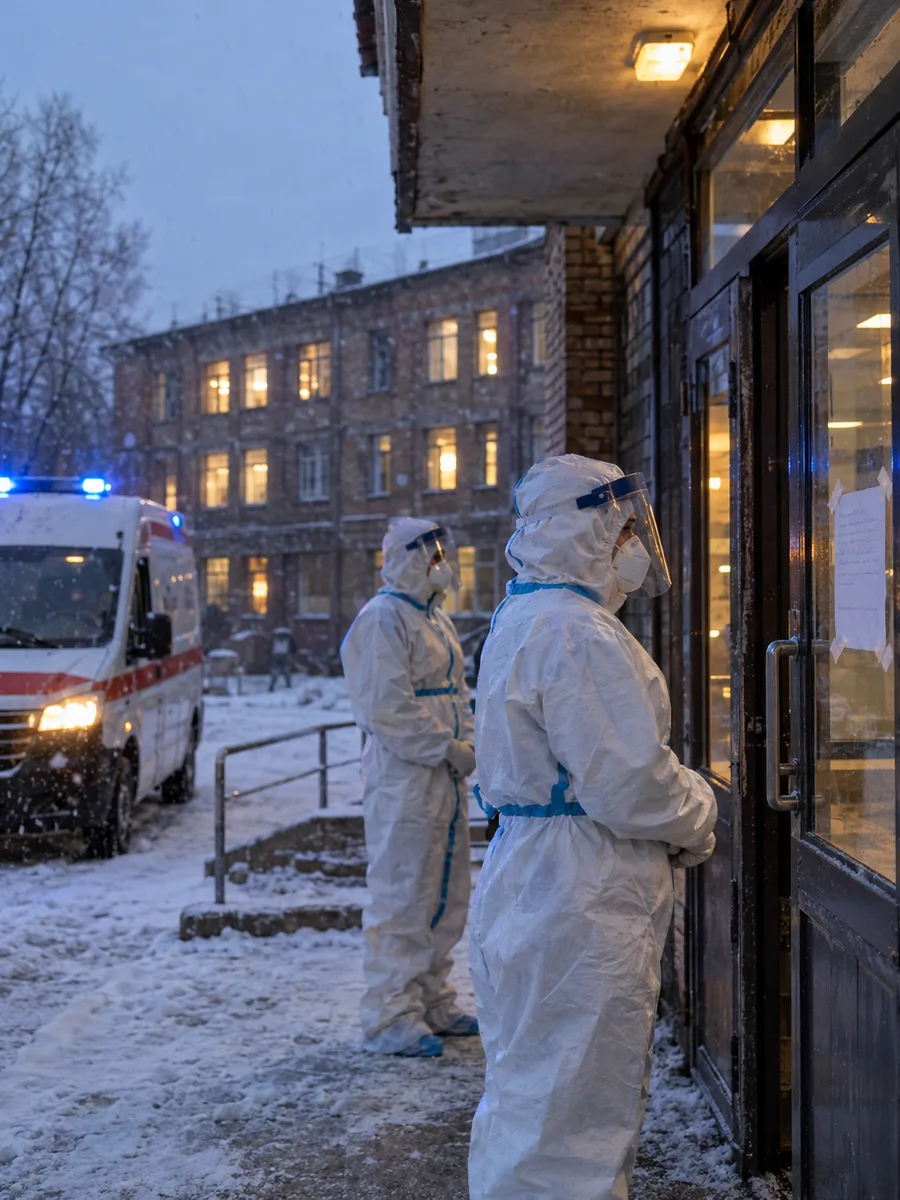
俄罗斯鼠疫研究所研究员实验事故后死亡,官方否认是鼠疫,却隔离了近两百人
A Russian Lab Worker Died After a Test Tube Broke at a Plague Institute. Russia Says It Wasn't Plague, but Quarantined 200 People.
About this story
The Irkutsk plague-lab death: Russia's denial, 200 quarantined, pneumonic plague, and why secrecy worries the world. HSK 3 Chinese listening practice.
This is an HSK 3-4 Chinese listening episode that runs about 3 minutes. The full Mandarin script is shown with tap-for-pinyin and a line-by-line English translation, so you can listen and read at once — comprehensible input in the sense of Stephen Krashen's i+1 theory. It teaches 16 key vocabulary words such as 危险、研究、医院 and walks through 6 grammar patterns, each explained in English with examples. The same news story is retold at 4 difficulty levels — use the level selector above to find the version that is challenging but still understandable for you.
Read at your level
原文Read the complete story in Chinese. Reveal pinyin and English only when you need them.
English transcript reference
On September 25th, in Irkutsk, Siberia, Russia, a test tube broke in a laboratory.
A week later, Darya, a 28-year-old researcher who worked at the lab, died.
The place she worked is called the Irkutsk Anti-Plague Research Institute.
You can tell from the name: this place specializes in plague.
Plague is the Black Death of history.
In the 14th century, the Black Death killed nearly a third of the people in Europe.
Today plague can be treated: as long as antibiotics are used early, most patients survive.
But untreated, the death rate can reach 30 to 100 percent.
There are several kinds of plague; the most dangerous is pneumonic plague.
Pneumonic plague is in the lungs; when a patient coughs, the pathogen flies out and infects people nearby.
So when local Russian media reported that the broken tube held pneumonic plague, many people got nervous.
The timeline: the tube broke on September 25th, Darya was hospitalized with severe pneumonia on September 29th, and she died on October 2nd.
But Russia's health authorities gave a completely different account.
They said Darya died of pneumonia of unknown cause, unrelated to her work, and tests found no pathogen linked to her research.
The problem is, the government says 'everything's fine' while doing something else entirely.
Nearly two hundred people who had contact with her were put under quarantine and observation.
More than sixty colleagues at the institute were shut inside the building and not allowed home.
Several hospitals in Irkutsk restricted access, including a maternity hospital.
One expert put it bluntly: to judge a country's attitude, don't just listen to what it says—watch what it does.
The story quickly became international news.
The White House said it was monitoring, the US formally asked Russia for information, and the WHO also wants to know the real cause of death.
So, how dangerous is the situation now?
One thing is reassuring: so far, none of the quarantined people has shown plague symptoms.
Among the contacts, tests found only two COVID cases and two common-cold viruses.
An American public health expert explained that plague's incubation period is short, usually just a day or two; if it had really spread, we'd already be seeing new cases.
So he thinks this will either blow over quickly or be contained locally.
What really worries people may be that Russia won't speak clearly.
In the Soviet era, Russia built many anti-plague institutes like this, all studying the world's most dangerous pathogens.
If something goes wrong in a lab, it's very hard for outsiders to learn the truth.
Do you think a country should tell everyone all the information right after a lab accident?
Listen again
Try it without the transcript and notice what sounds clearer.
What vocabulary does this episode teach?
词汇HSK 3/4. 最危险的叫肺鼠疫.
HSK 3. 这里专门研究鼠疫.
HSK 1. 住进医院.
HSK 3. 只查出了两例新冠.
HSK 1. 和她的工作没有关系.
HSK 1. 世卫组织也想知道真正的死因.
HSK 2. 把所有信息都告诉大家.
HSK 3. 世界上最危险的病原体.
Plague in the lungs; spreads by coughing.
早一点用抗生素.
被隔离观察.
The germ that causes a disease.
鼠疫的潜伏期很短.
十四世纪的黑死病.
传染给旁边的人.
鼠疫的症状.
* beyond level超纲词
What grammar patterns appear in this episode?
语法只要……,就/都……
As long as…, then….
只要早一点用抗生素,大部分病人都能活下来。
嘴上说 A,手上做的却是 B
Says one thing but does another.
问题是,政府嘴上说"没事",手上做的却是另一回事。
要么 A,要么 B
Either A or B.
他认为这件事要么很快过去,要么会被控制在当地。
不要只……,要……
Don't only…; you should….
判断一个国家的态度,不要只听它说什么,要看它做什么。
当……的时候
When….
所以,当俄罗斯当地媒体报道说,那个破了的试管里,装的就是肺鼠疫的时候,很多人都紧张了。
死于 + cause
To die of (formal).
他们说,达丽娅死于原因不明的肺炎。
Proper nouns
专有名词Free account
Keep learning from this story
Create a free account to keep saved words and your preferred level together.
- Keep words with their story context
- Remember your preferred level
- Build your vocabulary over time