
A Chinese podcast · Same story, 4 levels
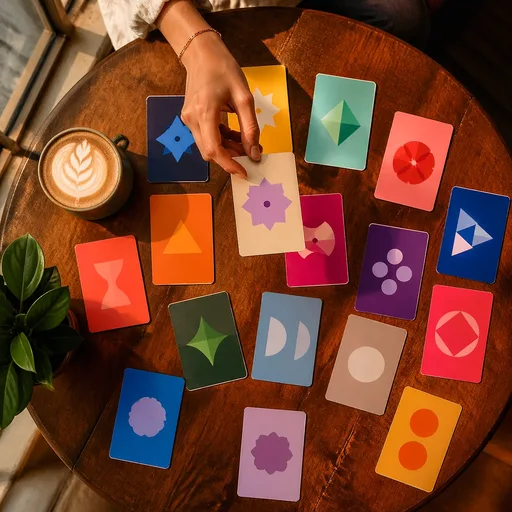
SBTI:当年轻人决定不再认真做性格测试
SBTI Personality Test Hits 40M Searches
About this story
Bilibili creator Zhurouerchuaner's SBTI parody mocks MBTI — Chinese youth stop taking personality tests seriously. HSK 3 Chinese listening practice.
This is an HSK 3-4 Chinese listening episode that runs about 7 minutes. The full Mandarin script is shown with tap-for-pinyin and a line-by-line English translation, so you can listen and read at once — comprehensible input in the sense of Stephen Krashen's i+1 theory. It teaches 11 key vocabulary words such as 世界、结果、原因 and walks through 4 grammar patterns, each explained in English with examples. The same news story is retold at 4 difficulty levels — use the level selector above to find the version that is challenging but still understandable for you.
Read at your level
原文Read the complete story in Chinese. Reveal pinyin and English only when you need them.
English transcript reference
Speaking of the hottest thing on the Chinese internet these days, it's not news or movies.
It's a personality test.
But not the kind of serious test you're thinking of.
It's a funny one.
A parody.
An intentionally not-serious test.
It's called SBTI.
If you're on Chinese social media.
You've definitely seen these four letters in the past few days.
WeChat Moments is flooded.
Weibo is flooded.
Xiaohongshu is flooded.
Douyin is flooded.
Everyone is saying "what's my SBTI type."
Let's first explain what this thing actually is.
SBTI's full name is "Silly Big Personality Test."
Translated it means "silly big personality test."
It's made by imitating MBTI.
You definitely know MBTI.
It's that personality test that gives you four letters.
INTJ is "The Architect."
ENFP is "The Campaigner."
In China MBTI is not just a psychology tool.
It has become a social language.
When you meet a new friend you ask "are you an I person or E person."
That's even more natural than asking "what's your name."
When looking for a job many companies want your MBTI type.
When going on blind dates they also check your MBTI.
Some people even decide whether to keep dating based on the other person's MBTI.
Against this backdrop.
SBTI appeared.
It says: MBTI is outdated.
SBTI is here.
But it's not really trying to replace MBTI.
It's making fun of MBTI.
Who made SBTI?
A Bilibili content creator.
Online name "Zhurouerchuaner."
The reason he made this test is hilarious.
He wanted to convince a friend to quit drinking.
So he made a personality test to trick that friend into taking it.
Inside he hid a "drunkard" result.
Then he thought this thing was pretty fun.
So on April 9th he posted a video.
The title was "I made a bootleg SBTI test and tricked people into taking it."
Then within one day.
The video got over 2 million views.
WeChat search index reached over 40 million.
Discussions across the internet exceeded 20 million.
The test website straight-up crashed.
Because too many people flooded in and the server couldn't take it.
Then a bunch of mirror sites appeared.
English versions even appeared.
This spread speed is extremely rare even on the Chinese internet.
So what's actually different about this test?
MBTI's questions are like "do you prefer being alone or socializing."
SBTI's questions are "you've been on the toilet for 30 minutes what do you do."
MBTI's results are "you are a visionary leader."
SBTI's results are "you are a Dead Person."
Dead Person means.
99 unread messages on your phone and you don't reply.
Playing dead.
Only saying "received" when the deadline arrives.
There's also one called "Mahou."
Mahou on the Chinese internet means "working person."
The kind who thinks the world is terrible.
But still drags themselves out of bed at 7 AM every morning to go to work.
Clearly depressed but doesn't give up.
There's also "Hottie."
The kind who thinks they look really good.
27 types in total.
Each one is an internet meme.
The SBTI test has 31 questions total.
Takes about one minute to finish.
The questions are intentionally absurd.
One question straight-up says "this question has no topic please choose randomly."
Another asks "most people are kind."
One of the options is "actually there are more evil hearts in this world than hemorrhoids."
See that's the style.
Not helping you understand yourself.
Making you laugh out loud.
After finishing, what does everyone do?
Screenshot.
Post to WeChat Moments.
"I'm a Mahou, what about you?"
Then a friend replies: "I'm also a Mahou hahaha."
That's how it spread.
A pure social currency.
You don't need to believe it.
You just need to share it.
But SBTI isn't completely without controversy.
Some people pointed out certain questions weren't designed well.
For example there's a question about a child giving you a lollipop.
Some people felt it was ambiguous.
Others said if you take it twice you might get different results.
Meaning the test's "results" are random.
The creator himself acknowledged this.
He said: "I didn't balance entertainment and professionalism well."
Later this video was deleted from Bilibili.
Related topics on Weibo and Xiaohongshu were also restricted.
The specific reason is unclear.
Maybe because it spread too fast.
Or maybe because some content was considered inappropriate.
But deleting it was useless.
SBTI already lives in everyone's screenshots and chat histories.
Why is SBTI so popular?
I think there are two reasons.
First, Chinese young people have developed fatigue toward MBTI.
MBTI went from being fun to being social pressure.
You "must" know what type you are.
You "should" behave like your type.
MBTI became another label.
Another tool demanding you "be the right person."
SBTI appeared.
It says: no need.
You're just a Mahou.
Accept it.
Second, the mentality of Chinese young people has changed.
Under the pressure of involution.
They don't want to "self-improve" anymore.
They want to make fun of themselves.
Want to laugh a little.
Want to tell friends "we're all just working stiffs."
SBTI perfectly captured this emotion.
It doesn't give you hope.
Doesn't tell you "you're a leader with potential."
It says "you're just a person who plays dead."
Then you laughed.
Because you know it's true.
This is SBTI.
A one-minute test.
Zero psychological basis.
But more real than MBTI.
Because it doesn't pretend to understand you.
It just makes you laugh.
Then you go back to being your Mahou self.
Listen again
Try it without the transcript and notice what sounds clearer.
What vocabulary does this episode teach?
词汇HSK 1-3. world.
HSK 1-3. result; outcome.
HSK 1-3. reason; cause.
HSK 1-3. news; message.
HSK 1-3. pressure.
HSK 1-3. to discuss.
A deliberate humorous imitation.
A shared way of communicating in social settings.
An arranged meeting between potential romantic partners.
The overall mood or character of something.
Content that has value for sharing in social contexts.
* beyond level超纲词
What grammar patterns appear in this episode?
语法Proper nouns
专有名词Sources
来源Free account
Keep learning from this story
Create a free account to keep saved words and your preferred level together.
- Keep words with their story context
- Remember your preferred level
- Build your vocabulary over time