
A Chinese podcast · Same story, 4 levels
星舰第一次进入轨道:放出二十六颗星链卫星,飞了三小时就提前返回
Starship Reaches Orbit for the First Time, Deploys 26 Starlink Satellites — Then Comes Home Early
About this story
On its 14th test flight on Sept. 28, 2026, SpaceX's Starship finally reached orbit despite losing an engine on the way up, and released 26 working Starlink satellites. SpaceX then cut the planned ten-hour mission to about three, splashing down north of Hawaii without saying why. What orbit means for reuse, NASA's moon plans and SpaceX's new shareholders. Chinese listening practice at four levels. HSK 3 Chinese listening practice.
This is an HSK 3-4 Chinese listening episode that runs about 3 minutes. The full Mandarin script is shown with tap-for-pinyin and a line-by-line English translation, so you can listen and read at once — comprehensible input in the sense of Stephen Krashen's i+1 theory. It teaches 12 key vocabulary words such as 紧张、发现、决定 and walks through 3 grammar patterns, each explained in English with examples. The same news story is retold at 4 difficulty levels — use the level selector above to find the version that is challenging but still understandable for you.
Read at your level
原文Read the complete story in Chinese. Reveal pinyin and English only when you need them.
English transcript reference
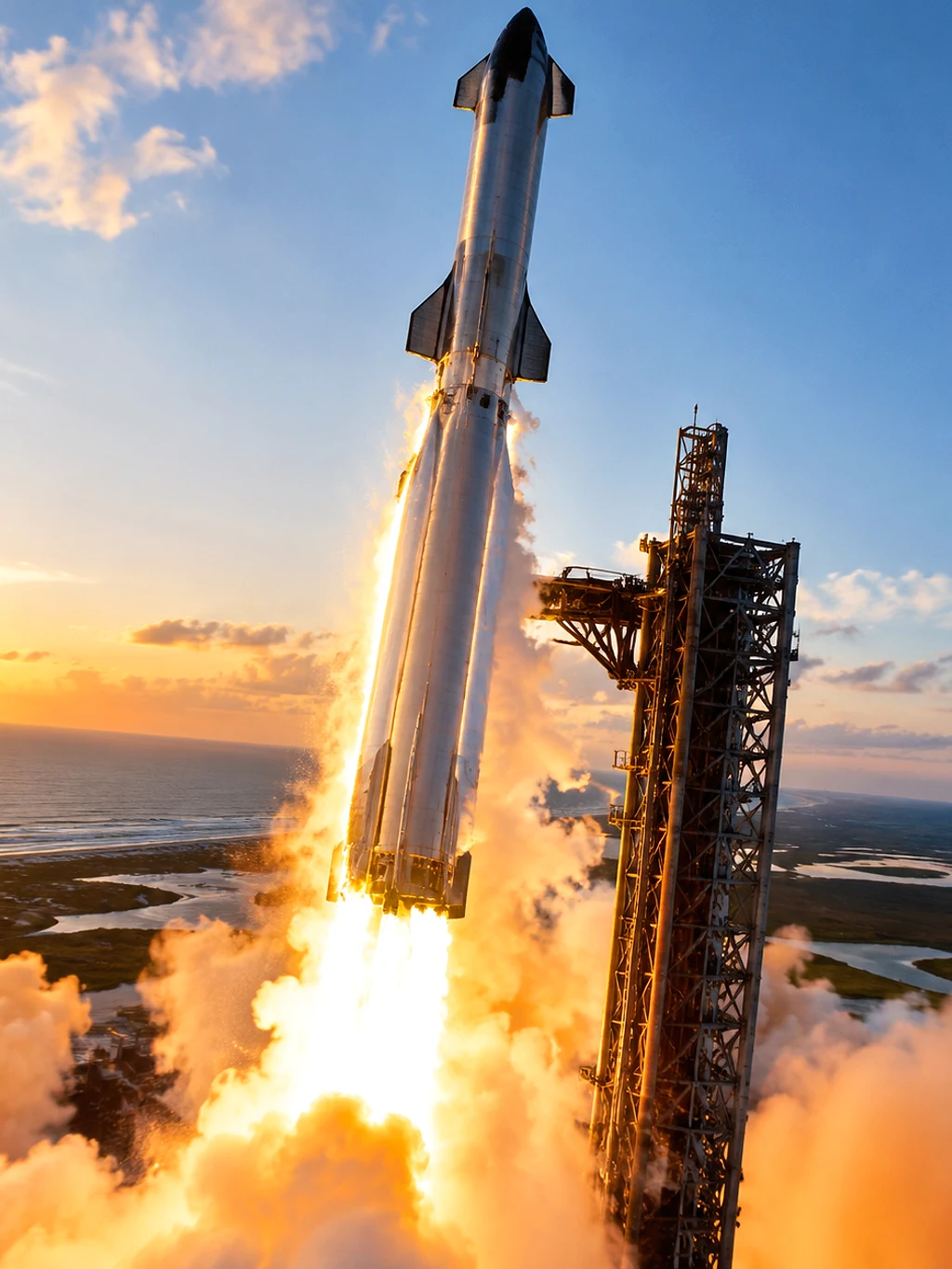
On Monday morning, September 28, SpaceX's Starship rocket lifted off from Texas.
It was Starship's fourteenth test flight, and the first time it entered orbit around the Earth.
Why does reaching orbit matter so much?
Because whether you're launching satellites or going to the moon or Mars, the first step is always to reach orbit.
On the previous thirteen test flights, Starship went up and soon came down in the Indian Ocean; it never truly circled the Earth.
After liftoff this time, everyone was nervous.
The ship on top of Starship has six engines, and one of them shut down early.
A company spokesperson even said at one point that it wouldn't go into orbit this time.
But a few minutes later, mission control found that the other engines had worked a little longer and made up for the problem, so it decided to carry on.
About twenty-five minutes later, the ship entered an orbit more than 270 kilometres above the ground.
Mission control announced: Starship is in orbit!
The company's boss, Musk, also said online: Starship's first orbital flight was a success!
After pushing the ship up, the big booster rocket came back about seven minutes later and landed in the sea in the Gulf of Mexico.
Once in orbit, the ship released twenty-six new Starlink satellites into space.
These satellites help people get online, and three of them carry cameras that can look back and photograph the heat-shield tiles on the ship.
According to the plan, the ship was to fly for almost ten hours, circle the Earth six times, and finally come down in the Pacific west of Chile.
But the company suddenly decided to bring the ship back early, and didn't say why.
About three hours after liftoff, the ship came back into the atmosphere, slowed down, and came down in the Pacific north of Hawaii.
Reports said the ship caught fire a few seconds after hitting the water.
Starship is more than 120 metres tall, the biggest rocket in the world.
The company hopes Starship will one day be like a plane: fly, come back, and quickly fly again.
NASA is waiting for Starship too, because it wants to use Starship to take astronauts to the moon.
But to do that, Starship will need to refuel in space, something nobody has done yet.
The company went public this June, and this success is good news for its investors too.
If you could ride Starship into space, what would you most want to see?
Listen again
Try it without the transcript and notice what sounds clearer.
What vocabulary does this episode teach?
词汇HSK 3. 大家都很紧张.
HSK 3. 控制中心发现.
HSK 3. 于是决定继续.
HSK 2. 进入轨道为什么这么重要?
HSK 3. 绕地球六圈.
HSK 3. 按照计划.
进入轨道 = to reach orbit.
飞 (fly) + 船 (ship).
控制中心宣布.
大气 (air) + 层 (layer).
在太空中加燃料 = refuel in space.
宇 (universe) + 航 (sail) + 员 (person).
* beyond level超纲词
What grammar patterns appear in this episode?
语法不管……还是……,都……
Whether… or…, always…
因为不管是发射卫星,还是去月球、去火星,第一步都要先进入轨道。
一度
At one point, for a while.
公司的发言人一度说,这次不进入轨道了。
从来没有 + verb
Never (has)…
以前的十三次试飞,星舰飞上去以后,很快就会落进印度洋,从来没有真正绕着地球飞。
Proper Nouns
专有名词Free account
Keep learning from this story
Create a free account to keep saved words and your preferred level together.
- Keep words with their story context
- Remember your preferred level
- Build your vocabulary over time