
A Chinese podcast · Same story, 4 levels
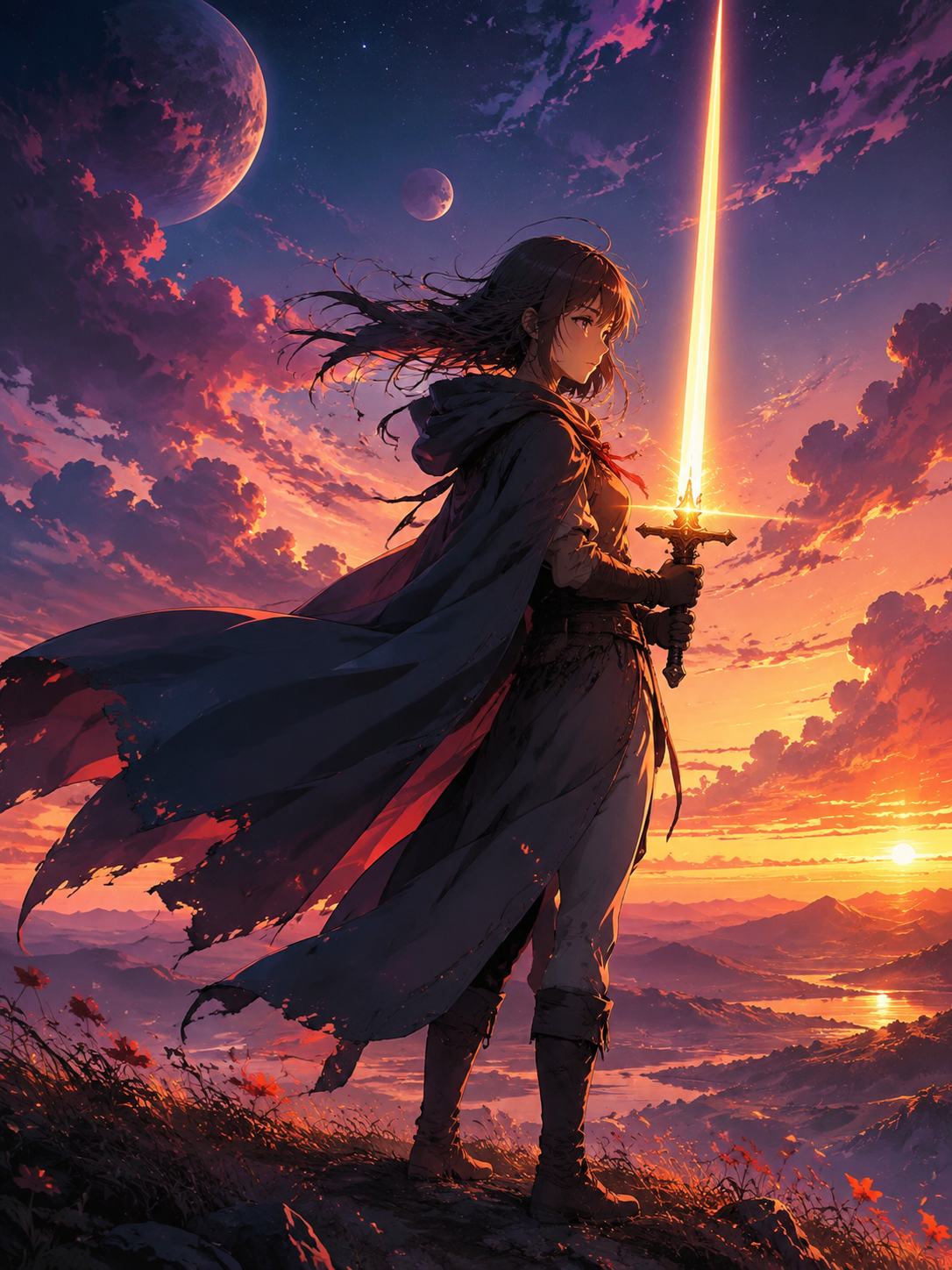
《第九个绝地》:星战交给日本工作室重新绘制的新番
Star Wars: The Ninth Jedi Gets New Anime
About this story
Star Wars: The Ninth Jedi Gets New Anime. HSK 5-6 Chinese listening practice.
This is an HSK 5-6 Chinese listening episode that runs about 3 minutes. The full Mandarin script is shown with tap-for-pinyin and a line-by-line English translation, so you can listen and read at once — comprehensible input in the sense of Stephen Krashen's i+1 theory. It teaches 13 key vocabulary words such as 授权、尝试、保守 and walks through 3 grammar patterns, each explained in English with examples. The same news story is retold at 4 difficulty levels — use the level selector above to find the version that is challenging but still understandable for you.
Read at your level
原文Read the complete story in Chinese. Reveal pinyin and English only when you need them.
English transcript reference
Eight episodes of animation, a smith's daughter, and a lightsaber not yet delivered to its owner.
On August 5th, Star Wars put something new on Disney — but it is neither a film nor a regular series.
It is called The Ninth Jedi, and it was made by a Japanese animation studio.
To explain why it is worth noticing, you first have to look at what Star Wars has been doing these past years.
The franchise turns nearly fifty this year.
Across those fifty years its problem has stayed the same: it keeps getting bigger, and it keeps getting more afraid to move.
Every new instalment has to line up with decades of established canon, and changing even a little gets you shouted at by longtime fans.
A few years ago Disney tried something different, called Star Wars: Visions.
The method: license the universe out to external animation studios, mainly Japanese ones, and let them tell their own stories.
The key condition is that these stories do not count as canon.
Not counting as canon means the creators do not have to carry decades of baggage. They can change whatever they like.
The result was a batch of shorts in Visions that looked nothing like Star Wars — and the response was unexpectedly good.
The Ninth Jedi grew out of one of those shorts, and is the first to be expanded into a full series.
It was made by Production I.G, directed by Kenji Kamiyama — both first-tier names in Japanese animation.
The protagonist is Kara, whose father is a smith who forges lightsabers.
At this point in the timeline, the Jedi have been almost entirely wiped out.
Someone wants to gather the survivors and rebuild the Order, so he commissions a batch of new lightsabers.
Kara is the one delivering those swords, and that is how she gets pulled in.
You can probably guess what comes next: she discovers she can sense that force too.
Yes — the setup really is old.
And that is exactly where the reviews split.
The side praising it says this is the best-looking Star Wars in years.
The framing of the duels, the texture of the blades, the use of colour — all far above the average for television animation.
More importantly, it dares to blur the line between Jedi and Sith, a line the official canon basically cannot touch.
The side criticising it says the visuals cannot carry the story.
Across eight episodes the pacing drags, and the skeleton is the most standard one there is: a young person unaware of their own gift, pushed forward by a larger event.
Both sides are describing the same thing from two directions: visually it is very free, narratively it is very conservative.
But pull the camera back, and the thing worth recording may be the method itself.
A commercial franchise this size, willing to hand creative control to a team in another country and to state outright "none of this is canon, change what you want" — that is not the Hollywood norm.
The more usual approach is to hold the IP in a death grip, where any deviation needs sign-off.
What the Visions line has now demonstrated is this: take the restrictions off, and creators produce things the main series cannot.
The price is that these things "do not count".
Think about it: if an old story you love were handed to someone else to retell, would you want them faithful to the original, or free to change it?
Listen again
Try it without the transcript and notice what sounds clearer.
What vocabulary does this episode teach?
词汇把这个宇宙授权给外部工作室 = license the universe out to external studios.
一个不太一样的尝试 = a rather different attempt.
在叙事上非常保守 = narratively very conservative.
这在好莱坞并不是常态 = that is not the Hollywood norm.
不用背几十年的包袱 = does not have to carry decades of baggage.
反响意外地好 = the response was unexpectedly good.
这部动画的口碑,分歧就出在这儿 = that is where the reviews split.
八集的篇幅 = across the length of eight episodes.
The order being rebuilt in the story.
The dark counterpart; the series blurs the line between the two.
The central concept: these stories deliberately do not count as canon.
打斗的分镜 = the shot composition of the fight scenes.
属于第一梯队 = they are first-tier.
* beyond level超纲词
What grammar patterns appear in this episode?
语法意味着……
"means that …" — draws out the consequence of a fact just stated.
不算正史,意味着创作者,不用背几十年的包袱。
把镜头拉远一点
A host's move: "zoom out" from the specific case to the bigger picture.
但把镜头拉远一点,真正值得记下来的,可能是这套做法本身。
A 的两面
"two sides of the same thing" — reconciles two opposing views.
两边说的其实是同一件事的两面。
Proper nouns
专有名词Sources
来源Free account
Keep learning from this story
Create a free account to keep saved words and your preferred level together.
- Keep words with their story context
- Remember your preferred level
- Build your vocabulary over time