
A Chinese podcast · Same story, 4 levels
《红粉联盟》里的女球员已经九十多岁,女孩子打棒球的时代终于来了
The Real 'League of Their Own' Players Are in Their 90s — and Girls' Baseball Is Finally Booming
About this story
From 1943 to 1954, more than 600 women played in the All-American Girls Professional Baseball League — then were forgotten, until the 1992 film 'A League of Their Own.' Only 22 are still alive, almost all in their 90s. This summer seven of them were cheered by hundreds of girls in Rockford, Illinois, the same weekend as Women's Baseball World Cup qualifiers and a girls' national tournament twice last year's size. 'We stand on your shoulders,' one organizer told them. Chinese listening practice at four levels. HSK 3 Chinese listening practice.
This is an HSK 3-4 Chinese listening episode that runs about 4 minutes. The full Mandarin script is shown with tap-for-pinyin and a line-by-line English translation, so you can listen and read at once — comprehensible input in the sense of Stephen Krashen's i+1 theory. It teaches 12 key vocabulary words such as 观众、普通、改变 and walks through 3 grammar patterns, each explained in English with examples. The same news story is retold at 4 difficulty levels — use the level selector above to find the version that is challenging but still understandable for you.
Read at your level
原文Read the complete story in Chinese. Reveal pinyin and English only when you need them.
English transcript reference
More than seventy years ago, a group of women played professional baseball in cities across the American Midwest, and people called them "the Girls of Summer."
They played in the All-American Girls Professional Baseball League, which started in 1943, ran for twelve seasons, and folded in 1954.
The league was founded during the Second World War, when many male players had gone off to fight.
But after the war ended and the men came back, interest in women's baseball slowly faded.
TV became more and more common, and fans preferred to stay home.
After the league folded, these players were quickly forgotten.
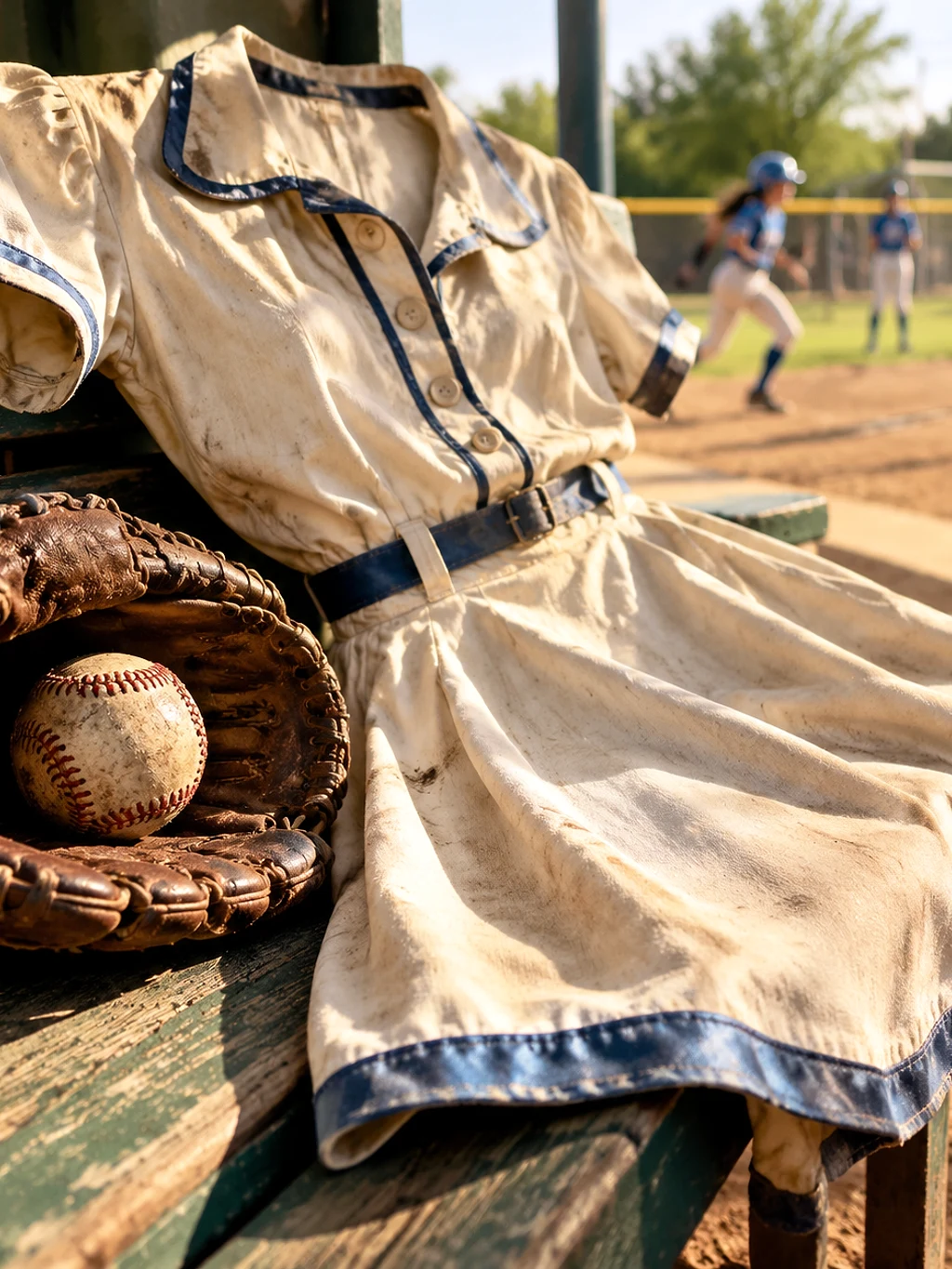
Many put their gloves and uniforms away in the attic and got on with ordinary life.
Ninety-four-year-old former player Mary Moore says that when you told people you'd played ball, they all assumed it was softball, so eventually she just stopped bringing it up.
Things changed in 1992.
That year the movie "A League of Their Own" came out, and America got to know these players all over again.
In 1988, the Baseball Hall of Fame held an exhibit for them; director Penny Marshall saw it and decided to turn their story into a film.
Since then the former players have appeared at all kinds of events, gaining a fame — and even income — they never had while playing.
This summer, seven former players came to an old ballpark in Rockford, Illinois, once the home of the Rockford Peaches.
They sat near home plate in their old teams' pink, light green and light blue jerseys.
Hundreds of girls playing in a national youth tournament sat on the infield, cheered for them, and lined up for autographs.
Ninety-one-year-old Gloria Rogers even threw out the ceremonial first pitch.
The same weekend, the city was also hosting Women's Baseball World Cup qualifiers, with six countries including Australia, Brazil and South Korea.
Nearby, the national girls' baseball tournament was almost twice last year's size.
The tournament's organizer, Justine Siegal, was the first woman to coach a men's professional baseball team.
She told nine hundred girls that coaches once tried to stop her from playing baseball, but that they would go further than she had.
Then she turned to the former players and said: we stand on your shoulders.
Why has women's baseball developed more slowly than other women's sports?
One reason is that for many years, girls were steered toward softball instead of baseball.
Now things are changing.
This spring, a woman at Brown University became the first female athlete to pitch in an NCAA Division I game.
Last month, a new professional women's baseball league began its first season, with four teams and sixty-eight players.
But the league got off to a rocky start: it averaged fewer than two thousand tickets per game, and an investor sued the league's chief.
Now, of the league's 639 former players, only twenty-two remain, most of them in their nineties.
One group is raising money in Rockford to build a permanent women's baseball center.
They say: we can't just keep having reunions — we need a home.
Do you think a single movie can change the fate of a sport?
Listen again
Try it without the transcript and notice what sounds clearer.
What vocabulary does this episode teach?
词汇HSK 3. 观众也更愿意待在家里.
HSK 3. 开始了普通的生活.
HSK 3. 改变发生在一九九二年.
HSK 3. 一个原因是,女孩子都被引导去打垒球.
HSK 3. 为什么女子棒球比其他女子运动发展得慢?
HSK 3. 人们对女子棒球的兴趣慢慢变小了.
一九五四年解散.
把手套和球衣收进阁楼.
棒球名人堂为她们办了一个展览.
女孩子都被引导去打垒球.
还有投资人起诉联盟的负责人.
想建一个永久的女子棒球中心.
* beyond level超纲词
What grammar patterns appear in this episode?
语法被 + verb (passive)
Something done to the subject.
联盟解散以后,这些女球员很快就被忘记了。
一个原因是,很多年来,女孩子都被引导去打垒球,而不是棒球。
比……+ verb + 得……
Compares how things develop.
为什么女子棒球比其他女子运动发展得慢?
不能只是……
Can't just keep… — a call for something more.
她们说:我们不能只是一直开聚会,我们需要一个家。
Proper Nouns
专有名词Free account
Keep learning from this story
Create a free account to keep saved words and your preferred level together.
- Keep words with their story context
- Remember your preferred level
- Build your vocabulary over time