
A Chinese podcast · Same story, 4 levels
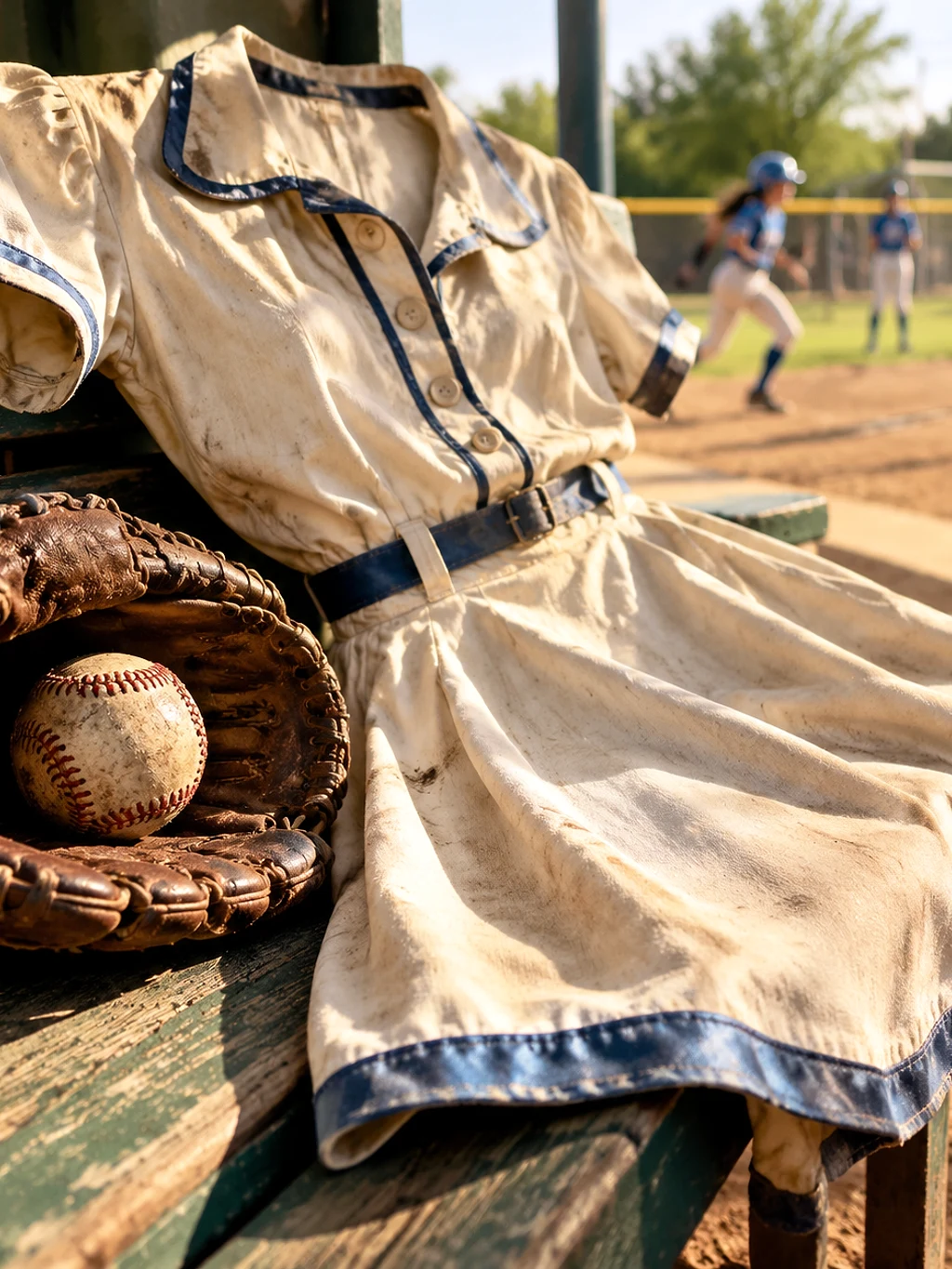
《红粉联盟》里的女球员已经九十多岁,女孩子打棒球的时代终于来了
The Real 'League of Their Own' Players Are in Their 90s — and Girls' Baseball Is Finally Booming
About this story
From 1943 to 1954, more than 600 women played in the All-American Girls Professional Baseball League — then were forgotten, until the 1992 film 'A League of Their Own.' Only 22 are still alive, almost all in their 90s. This summer seven of them were cheered by hundreds of girls in Rockford, Illinois, the same weekend as Women's Baseball World Cup qualifiers and a girls' national tournament twice last year's size. 'We stand on your shoulders,' one organizer told them. Chinese listening practice at four levels. HSK 5-6 Chinese listening practice.
This is an HSK 5-6 Chinese listening episode that runs about 5 minutes. The full Mandarin script is shown with tap-for-pinyin and a line-by-line English translation, so you can listen and read at once — comprehensible input in the sense of Stephen Krashen's i+1 theory. It teaches 12 key vocabulary words such as 历史、希望、收入 and walks through 3 grammar patterns, each explained in English with examples. The same news story is retold at 4 difficulty levels — use the level selector above to find the version that is challenging but still understandable for you.
Read at your level
原文Read the complete story in Chinese. Reveal pinyin and English only when you need them.
English transcript reference
More than seventy years ago, a group of women who played professional baseball in Midwestern cities were known as "the Girls of Summer."
Their league, the All-American Girls Professional Baseball League, began in 1943 and ran for twelve seasons; after it folded in 1954, they were quickly forgotten.
It wasn't until 1992 that the movie "A League of Their Own" reintroduced them to America.
Since then their story has moved many people, and some former players still appear at fan events, ball games and reunions, gaining a fame — and even income — they never had in their playing days.
This summer, seven former players came to Rockford, Illinois, once the home of the Rockford Peaches.
On a sunny morning they sat near home plate in their old teams' pink, light green and light blue jerseys.
In front of them was the sport's future: hundreds of girls who play baseball sat on the infield and cheered, then crowded around afterward for autographs and photos.
Ninety-one-year-old Gloria Rogers signed with the Peaches in 1953, but was called home before she could play in a game.
This time, she threw out the ceremonial first pitch.
Eighty-nine-year-old Dolly Vanderlip Ozburn, who pitched for the Fort Wayne Daisies and the South Bend Blue Sox, is one of the youngest of the former players.
The same weekend, across town, the group stage of the Women's Baseball World Cup was under way, with six nations including Australia, Brazil and South Korea competing for spots in next year's finals; thousands watched the US play Mexico.
And about thirty kilometers away, Baseball for All, the largest girls' baseball league, was holding its national tournament, nearly twice last year's size.
The whole weekend felt like a festival of women's baseball — as if the older generation were passing the baton to the new one.
Baseball for All's founder, Justine Siegal, was the first woman to coach a men's professional baseball team.
She told nine hundred girls her story: coaches once did everything they could to stop her from playing, and later injuries cut her career short.
She said these girls would go where she and the earlier generation of players could not.
She said she had always felt she was alone, but now she knew she wasn't.
Then she turned to the former players and said: we stand on your shoulders.
In recent years women's sports as a whole have been heating up; since 2024, ten new professional women's leagues have launched in the US.
But women's baseball has lagged behind, and one big reason is that for many years girls were steered toward softball.
In the past, women's pro baseball was either touring teams putting on shows, or a novelty act.
This spring, Olivia Pichardo of Brown University became the first woman to pitch in an NCAA Division I baseball game.
Last month, the new professional women's baseball league began an eight-week season with four teams and sixty-eight players, all its games played in Springfield, Illinois.
But the league's first season didn't go smoothly: it averaged fewer than two thousand tickets sold per game, and its games aired mainly on a paid streaming platform.
An investor also took the league's chief to court, saying he had mismanaged its money; the league said that wasn't true, and its chief said it still had millions of dollars in the bank and expected new investment soon.
The former players still hope that this time, professional women's baseball is here to stay.
Ninety-four-year-old Mary Moore, who played three seasons for two teams, said: I'm thrilled it's come so far, but it still needs to go further.
Looking back, she said, when you told people you'd played ball, they all assumed it was softball, so after a while you just stopped mentioning it.
In 1982, some of the former players held their first reunion; six years later, the Baseball Hall of Fame put on an exhibit in their honor.
Director Penny Marshall saw the exhibit and made up her mind to turn the story into a movie.
Today, of the league's 639 players, only twenty-two remain, almost all in their nineties; many walk with canes and need someone to help them.
An eleven-year-old girl who came with her parents from San Francisco said she wants to keep playing, and that the movie showed her girls can do what they want.
Kat Williams, co-founder of the International Women's Baseball Center, is raising money for a permanent center in Rockford, so this history can be preserved after the last of the original players is gone.
She said: we can't just keep having reunions — we need a home.
If you were building a memorial to this history, what would you most want to put inside?
Listen again
Try it without the transcript and notice what sounds clearer.
What vocabulary does this episode teach?
词汇HSK 2. 这段历史还能被保存下来.
HSK 2. 老球员们仍然希望,职业女子棒球这一次能留下来.
HSK 4. 得到了当年打球时从没有过的名气,甚至收入.
HSK 4. 很快还会有新的投资.
HSK 3. 她对着九百个女孩子讲起自己的经历.
HSK 3. 美国对墨西哥的比赛吸引了几千名观众.
“人人棒球”的创始人贾斯汀·西格尔.
第一个执教男子职业棒球队的女性.
她一直觉得自己是孤单的.
很多人走路要用拐杖.
正在为罗克福德的一座永久展馆筹款.
如果让你为这段历史建一个纪念馆.
* beyond level超纲词
What grammar patterns appear in this episode?
语法直到……,……
Not until…
直到一九九二年,电影《红粉联盟》让全美国重新认识了她们。
要么……,要么……
Either… or…
过去,女子职业棒球要么是到处表演的球队,要么只是让人觉得新鲜的表演。
好在……以后,……还能……
So that, even after X, Y can still happen.
国际女子棒球中心的联合创始人凯特·威廉姆斯,正在为罗克福德的一座永久展馆筹款,好在最后一批老球员离开以后,这段历史还能被保存下来。
Proper Nouns
专有名词Free account
Keep learning from this story
Create a free account to keep saved words and your preferred level together.
- Keep words with their story context
- Remember your preferred level
- Build your vocabulary over time