
A Chinese podcast · Same story, 4 levels
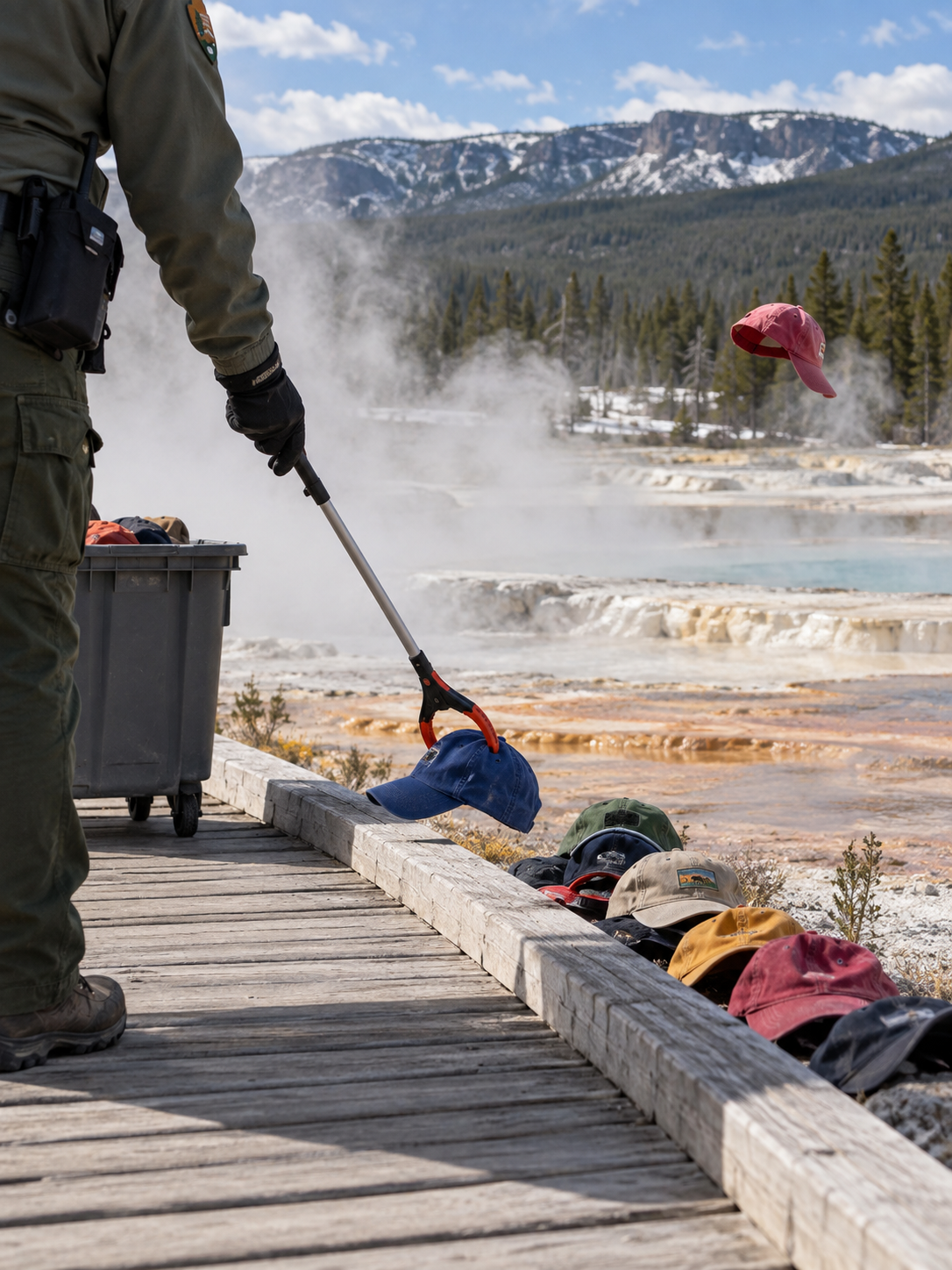
黄石公园热泉区清出280多顶帽子
Yellowstone Finds 280 Hats in Hot-Spring Areas
About this story
Yellowstone's geology team collected more than 20,000 pieces of trash, including over 280 hats, from hot-spring areas by early September 2026. HSK 3 Chinese listening practice.
This is an HSK 3-4 Chinese listening episode that runs about 2 minutes. The full Mandarin script is shown with tap-for-pinyin and a line-by-line English translation, so you can listen and read at once — comprehensible input in the sense of Stephen Krashen's i+1 theory. It teaches 8 key vocabulary words such as 公园、已经、所以 and walks through 3 grammar patterns, each explained in English with examples. The same news story is retold at 4 difficulty levels — use the level selector above to find the version that is challenging but still understandable for you.
Read at your level
原文Read the complete story in Chinese. Reveal pinyin and English only when you need them.
English transcript reference
Yellowstone's hot-spring areas have yielded more than 280 hats this year.
After visitors leave, the park's geology team still cleans up what they left behind.
By early September, they had removed more than 20,000 pieces of trash.
Besides trash, staff removed over 5,600 rocks and sticks.
By early September, those numbers had broken the cleanup record.
Seeing that number, you may ask: why are there so many hats in the hot-spring areas?
As visitors watch the springs, one gust of wind can blow a hat away.
A visitor taking photos might also accidentally knock off a hat.
So we cannot count every hat as deliberately discarded trash.
After the wind stops, the hat is still in the hot-spring area and park staff must retrieve it.
Besides hats, they found 36 pairs of sunglasses and 54 camera lens caps.
They also found coins, children's toys, and six retainers.
These objects vary in size, but the geology team must clear them safely.
The water can be extremely hot, so visitors must not enter a dangerous area for a hat.
The park reminds visitors not to throw money into the hot springs.
If hats can still be worn, staff wash them and donate them to local groups.
After washing, a hat may find a new owner.
A visitor sees one hat; a worker sees another cleanup job.
Next time you see Yellowstone's springs, will you hold your hat or put it in your bag?
Listen again
Try it without the transcript and notice what sounds clearer.
What vocabulary does this episode teach?
词汇游客走后,公园的地质团队还在清理他们留下的东西。
到九月初,他们已经收走两万多件垃圾。
所以,不能把每顶帽子都算成故意乱扔的垃圾。
游客拍照时,帽子也可能被人不小心碰掉。
黄石公园的温泉区,今年收走了两百八十多顶帽子。
游客站着看热泉,风一来,就能把帽子吹走。
到九月初,他们已经收走两万多件垃圾。
游客走后,公园的地质团队还在清理他们留下的东西。
* beyond level超纲词
What grammar patterns appear in this episode?
语法除了……还……
Use 除了 to add another category to an earlier one.
除了垃圾,工作人员还移走五千六百多块石头和树枝。
所以……
所以 introduces a consequence.
所以,不能把每顶帽子都算成故意乱扔的垃圾。
Proper Nouns
专有名词Sources
来源Free account
Keep learning from this story
Create a free account to keep saved words and your preferred level together.
- Keep words with their story context
- Remember your preferred level
- Build your vocabulary over time