
A Chinese podcast · Same story, 4 levels
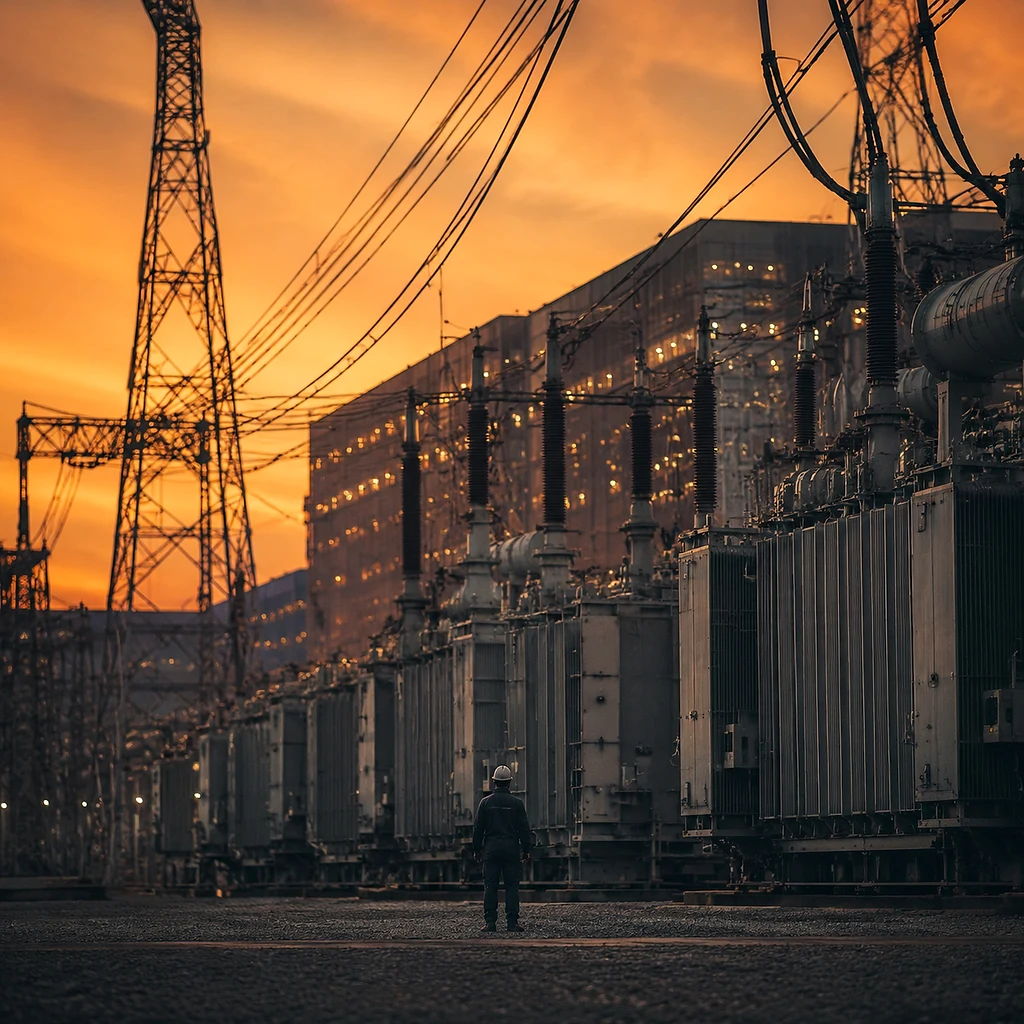
人工智能的大发展带来了短缺问题
AI Boom Drives Shortages of Chips, Electricians and Data Center Power
About this story
Washington Post's Shira Ovide on how the AI boom drains chips, electricians and power, pushing costs up everywhere. HSK 3 Chinese listening practice.
This is an HSK 3-4 Chinese listening episode that runs about 2 minutes. The full Mandarin script is shown with tap-for-pinyin and a line-by-line English translation, so you can listen and read at once — comprehensible input in the sense of Stephen Krashen's i+1 theory. It teaches 10 key vocabulary words such as 短缺、疯狂、投入 and walks through 3 grammar patterns, each explained in English with examples. The same news story is retold at 4 difficulty levels — use the level selector above to find the version that is challenging but still understandable for you.
Read at your level
原文Read the complete story in Chinese. Reveal pinyin and English only when you need them.
English transcript reference
Hello everyone, welcome to today's Chinese podcast.
Today we're going to discuss a very important piece of news.
This news comes from the famous Washington Post.
The author's name is Shira Ovide.
She tells us that artificial intelligence is changing the world.
But this change has also brought some big problems.
Right now, tech companies are spending money like crazy.
They have invested seven hundred billion dollars to develop AI.
Seven hundred billion dollars is an enormously huge number.
All this money has caused shortages in other areas.
This is the core topic we're going to talk about today.
First, we need to talk about construction and electricians.
Tech companies need to build many huge data centers.
Data centers contain a great many computers.
These computers need an enormous amount of electricity to run.
Therefore, building these centers requires many electricians.
Right now, it's very difficult to find available electricians in the market.
Because the electricians have all been hired by tech companies.
If you want to fix the lights at home, you might not be able to find anyone.
Or other construction projects have had to come to a halt.
This is all because AI has "snatched away" all the workers.
Next, let's talk about smartphone prices.
You may have noticed that phones are getting more and more expensive.
Why is that?
The reason is also related to AI.
AI development requires many advanced computer chips.
The factories that make chips are extremely busy right now.
Tech companies have bought up most of the high-end chips.
This has caused chip prices to become very high.
Because costs have gone up, phone prices have gone up too.
This situation could last for several years.
Third, let's look at the impact on innovation.
In the past, investors liked all kinds of new ideas.
But now, all the money is flowing toward AI.
Other innovative projects find it very hard to get investment.
It's as if the other projects have been "starved to death."
This is not good for the overall development of science.
We need progress in medicine, energy, and all other areas.
If only AI is developing, the world will become unbalanced.
Finally, let's summarize today's content.
The seven hundred billion dollars in AI spending is truly astonishing.
It has brought technological progress, but also shortages.
We've seen electrician shortages and phones getting more expensive.
We've also seen other innovative projects lacking funding.
This is a complex issue that requires our attention.
Hopefully, tech companies can find a better balance in the future.
Thank you all for listening to today's show. See you next time.
Listen again
Try it without the transcript and notice what sounds clearer.
What vocabulary does this episode teach?
词汇A lack or insufficient supply of something needed. Commonly used in economic and resource contexts.
Describes behavior that is wild or excessive. Here used to emphasize how aggressively companies are spending.
To commit resources (money, time, effort) into something. Used for both financial and personal investment.
A semiconductor chip used in electronics. One of the most important tech vocabulary words in modern Chinese.
A facility that houses computer systems and associated components. A key term in the AI infrastructure discussion.
A person who installs and maintains electrical systems. 电 (electricity) + 工 (worker).
The expense required to produce or acquire something. A fundamental business term.
Creating something new or improving existing methods. 创 (create) + 新 (new).
To go on without interruption. Used when describing ongoing situations or trends.
A state of even distribution or stability. Used both literally and figuratively.
What grammar patterns appear in this episode?
语法因为...所以... (yīn wèi... suǒ yǐ...)
The standard cause-and-effect structure in Chinese. 因为 introduces the reason, and 所以 introduces the result. In casual speech, one half can be omitted.
因为电工都被科技公司请去工作了,所以市场上很难找到有空的电工。
因为成本高了,手机的价格也就高了。
不仅...也/还... (bù jǐn... yě/hái...)
Means "not only... but also..." Used to add information or emphasize that something goes beyond expectations.
它带来了技术的进步,也带来了短缺。
就是 (jiù shì) for emphasis/definition
Used to define or emphatically identify something. Can mean "precisely is" or "that is to say."
这就是我们今天要讲的核心话题。
这些人叫电工。
Proper Nouns
专有名词Sources
来源Free account
Keep learning from this story
Create a free account to keep saved words and your preferred level together.
- Keep words with their story context
- Remember your preferred level
- Build your vocabulary over time