
A Chinese podcast · Same story, 4 levels
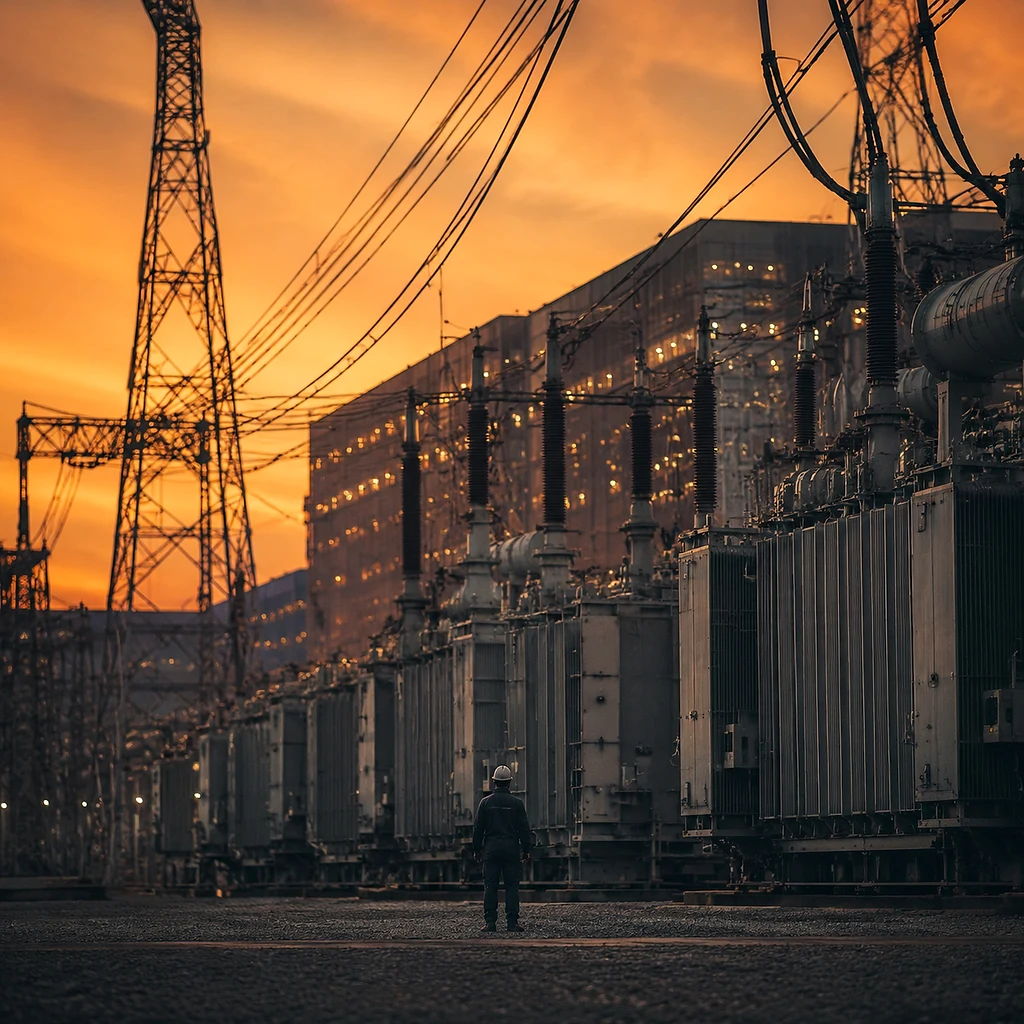
AI太火了,别的东西短缺了
AI Boom Sends Prices Up and Electricians Short — Other Projects Get Squeezed
About this story
The AI boom is so hot that electricians and projects are squeezed — easy talk on how AI growth crowds everything out. HSK 2 Chinese listening practice.
This is an HSK 2 Chinese listening episode that runs about 1 minute. The full Mandarin script is shown with tap-for-pinyin and a line-by-line English translation, so you can listen and read at once — comprehensible input in the sense of Stephen Krashen's i+1 theory. It teaches 8 key vocabulary words such as 流行、电工、芯片 and walks through 3 grammar patterns, each explained in English with examples. The same news story is retold at 4 difficulty levels — use the level selector above to find the version that is challenging but still understandable for you.
Read at your level
原文Read the complete story in Chinese. Reveal pinyin and English only when you need them.
English transcript reference
Hello everyone.
Welcome to the Simple Chinese Podcast.
Today we're going to talk about a big piece of news.
This news is about AI.
AI is very popular right now.
Big companies are all doing AI.
They have spent a lot of money.
This amount of money is seven hundred billion US dollars.
This is really a lot.
But this has brought problems.
First, we need to talk about workers.
AI computers need a lot of electricity.
We need many people to work on electricity.
These people are called electricians.
Now there are very few electricians.
Electricians are very hard to find.
A lot of work has stopped.
Building houses has also slowed down.
Next, we need to talk about phones.
Your phone might get more expensive.
Why would it get more expensive?
Because AI needs chips.
Phones also need chips.
There are not enough chips now.
If there are few chips, prices go up.
Buying a phone costs more money.
Also, we need to talk about investment.
This is about money.
Companies gave all the money to AI.
Other good projects have no money.
New ideas have no money.
This is actually not very good.
AI took away all the money.
Finally, we should think about it.
AI is developing very fast.
But our lives have changed.
Finding an electrician is hard.
Buying a phone is expensive.
This is a big deal.
Thank you all for listening.
See you next time.
Listen again
Try it without the transcript and notice what sounds clearer.
What vocabulary does this episode teach?
词汇Something that is widespread and fashionable. Can describe trends, diseases, or styles.
A worker who deals with electrical systems. 电 (electricity) + 工 (worker).
A planned piece of work with a specific goal. Used in business and everyday contexts.
The amount of money something costs. A fundamental word for shopping and economics.
To grow and become more advanced. Used for countries, technology, and personal growth.
A small electronic circuit used in computers and phones. A very important modern vocabulary word.
Using money to support a project or business, hoping to get more money back later.
Not having enough of something that is needed. 短 (short/lacking) + 缺 (deficient).
* beyond level超纲词
What grammar patterns appear in this episode?
语法因为...所以... (yīn wèi... suǒ yǐ...)
The most common way to express cause and effect. 因为 means "because" and 所以 means "therefore/so."
因为AI需要芯片,所以芯片不够用了。
如果芯片很少,价格就高。
越来越... (yuè lái yuè...)
Means "more and more..." Used to describe a trend that is increasing or intensifying over time.
手机变得越来越贵。
...也... (yě) for "also/too"
The adverb 也 means "also" or "too." It is placed before the verb, never at the end of the sentence like English "too."
手机也需要芯片。
我们的生活也变了。
Sources
来源Free account
Keep learning from this story
Create a free account to keep saved words and your preferred level together.
- Keep words with their story context
- Remember your preferred level
- Build your vocabulary over time