
A Chinese podcast · Same story, 4 levels
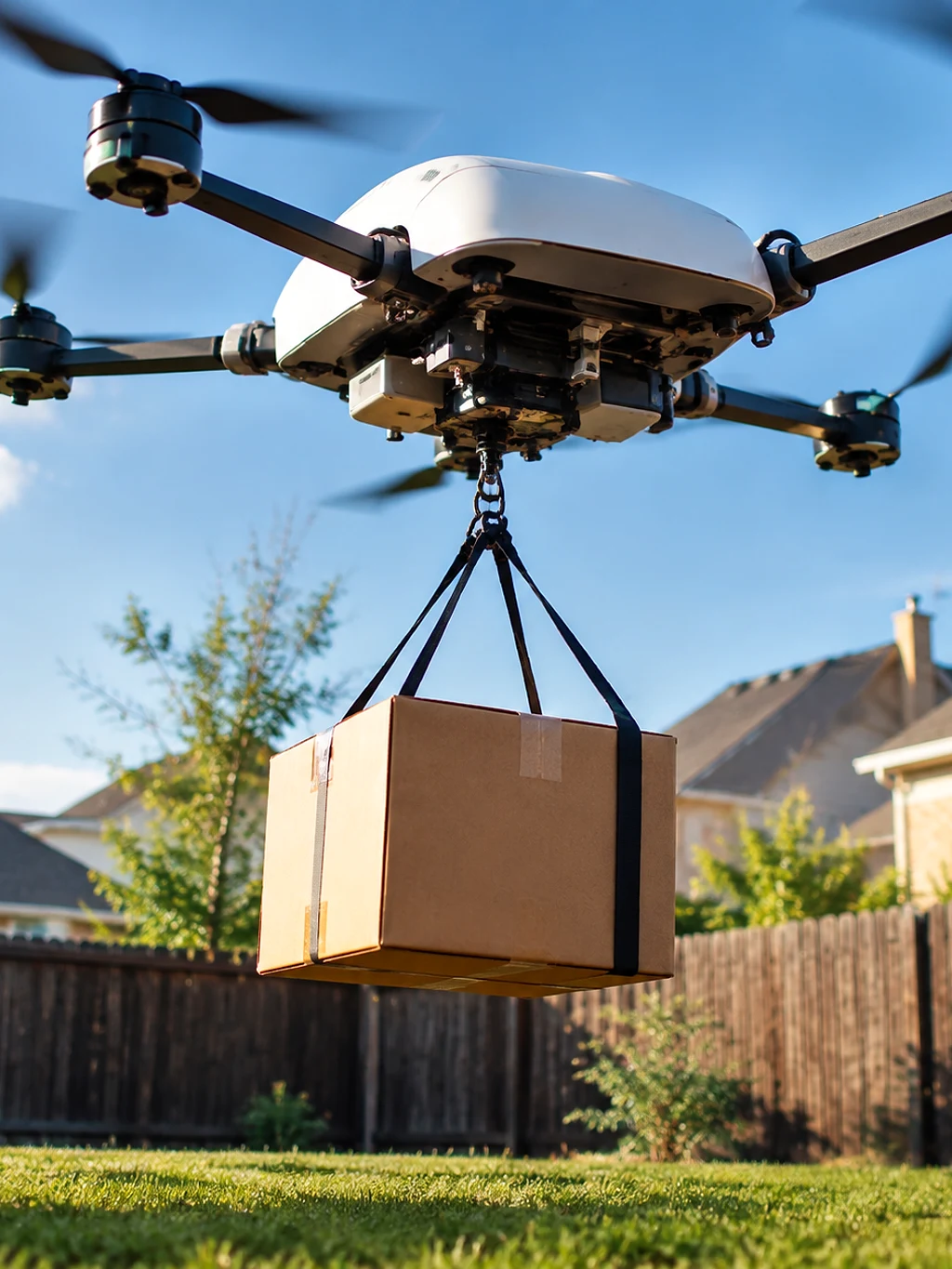
天上掉快递:亚马逊无人机让得州小城居民受不了
Boxes Falling From the Sky: Amazon's Delivery Drones Are Driving a Texas Suburb Up the Wall
About this story
Richardson, a Dallas suburb, is one of the first US cities where Amazon is testing Prime Air. Dozens of 83-pound drones a day hover over yards and drop boxes; one dropped a package in a pool, another hit an apartment building. Residents call it a 'drone highway' and hate the noise and cameras — while Amazon plans 100 more towns. Chinese listening practice at four levels. HSK 3 Chinese listening practice.
This is an HSK 3-4 Chinese listening episode that runs about 2 minutes. The full Mandarin script is shown with tap-for-pinyin and a line-by-line English translation, so you can listen and read at once — comprehensible input in the sense of Stephen Krashen's i+1 theory. It teaches 12 key vocabulary words such as 方便、安静、城市 and walks through 3 grammar patterns, each explained in English with examples. The same news story is retold at 4 difficulty levels — use the level selector above to find the version that is challenging but still understandable for you.
Read at your level
原文Read the complete story in Chinese. Reveal pinyin and English only when you need them.
English transcript reference
Do you buy things online?
How do the things you buy usually get to your home?
Usually, a delivery driver brings them.
But in a small city in Texas, in America, things arrive from the sky.
This small city is called Richardson, next to Dallas.
Amazon is testing drone deliveries here.
Every day, dozens of drones take off from a nearby warehouse and fly over one neighbourhood after another.
These drones are big: about one and a half metres tall, one and a half metres wide, and over thirty kilograms.
A reporter said that when one flies over, it sounds like lots and lots of bees flying together.
When it reaches your home, it slowly comes down and stops about four metres above the ground.
Then it opens a door and drops the box.
Sounds convenient, doesn't it?
But many residents here don't like it.
They say the sky over their homes has become a "drone highway."
One person who works from home said: I sit at the kitchen table working, and I can hear them flying past the whole time.
Another person said: it's not like someone coming to mow the lawn for twenty minutes and leaving, they fly all day long.
They don't like the noise, and they don't like seeing them.
Even more, they don't like something with cameras flying over their homes every few minutes.
One resident said: today is Sunday, can't we have one quiet day?
The drones have had problems, too.
A video caught one drone dropping a package into a swimming pool.
Another drone crashed into an apartment building.
Some residents went to city meetings and phoned Amazon, but it didn't help.
Now they're writing to other cities, calling it a disaster.
But Amazon says customer feedback has been very good.
It also plans to bring drone deliveries to a hundred more cities in the next few months.
Walmart is trying drone deliveries too.
Funnily enough, one woman who doesn't like the drones said her daughter was once in a hurry to make a sandwich and bought a pack of ham by drone.
If drones flew back and forth over your home every day, how would you feel?
Listen again
Try it without the transcript and notice what sounds clearer.
What vocabulary does this episode teach?
词汇HSK 3. 这个办法听起来很方便.
HSK 3. 我们能不能安静一天?
HSK 3. 让一百个城市也用上无人机.
HSK 3. 他们还计划.
HSK 3. 我坐在厨房的桌子旁边工作.
HSK 3. 把盒子扔下来.
几十架无人机 — drones take the measure word 架.
从附近的仓库起飞.
居 (to live) + 民 (people).
无人机高速公路 = "drone highway".
说这件事是一场灾难.
顾客的反馈非常好.
* beyond level超纲词
What grammar patterns appear in this episode?
语法听起来
Sounds…
这个办法听起来很方便,是不是?
每过 + time + 就……
Every (so often)…
他们更不喜欢,有带着相机的东西,每过几分钟就从自己家上面飞过。
急着 + verb
In a hurry to…
有意思的是,一位不喜欢无人机的女士说,她女儿有一次急着做三明治,就用无人机买了一包火腿。
Proper Nouns
专有名词Free account
Keep learning from this story
Create a free account to keep saved words and your preferred level together.
- Keep words with their story context
- Remember your preferred level
- Build your vocabulary over time