
A Chinese podcast · Same story, 4 levels
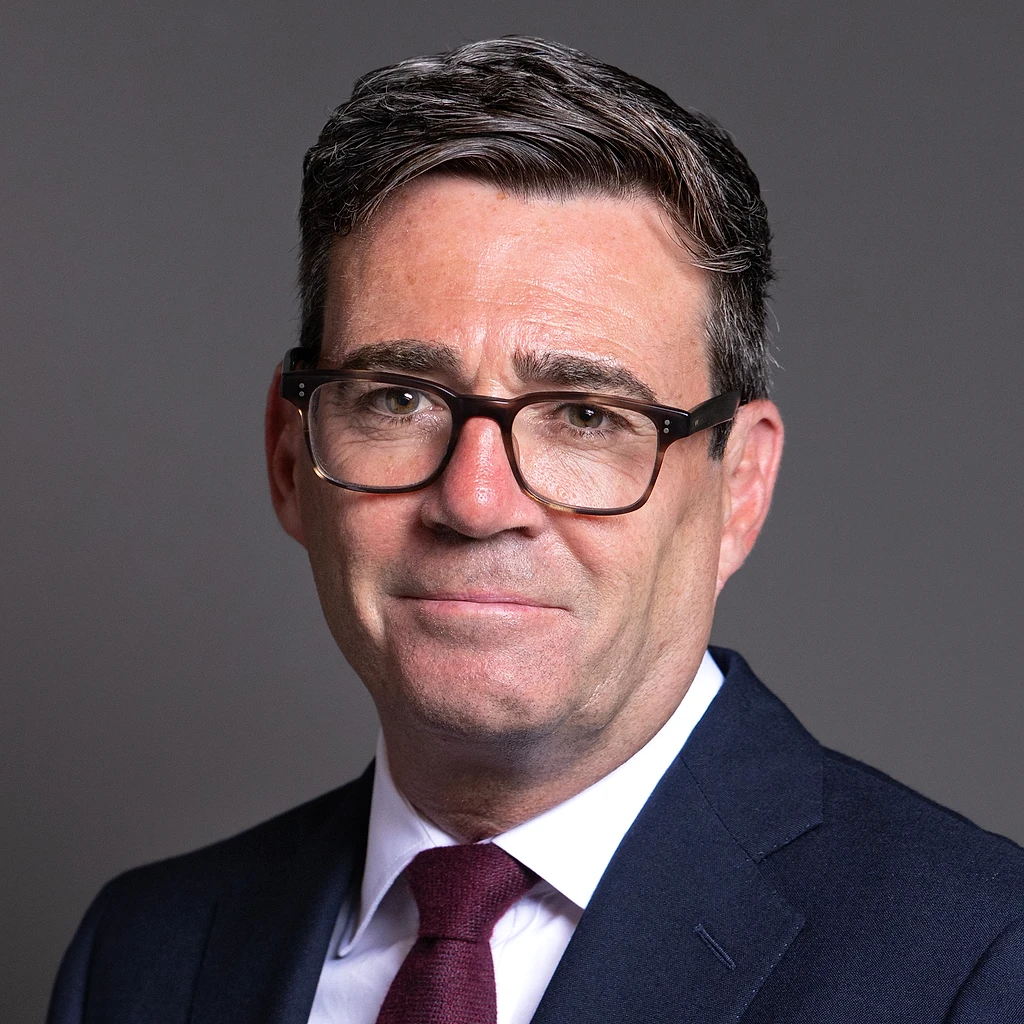
"北方之王"伯纳姆入主唐宁街:英国十年里的第七位首相
Andy Burnham Becomes Britain's Seventh PM in a Decade
About this story
Andy Burnham Becomes Britain's Seventh PM in a Decade. HSK 5-6 Chinese listening practice.
This is an HSK 5-6 Chinese listening episode that runs about 3 minutes. The full Mandarin script is shown with tap-for-pinyin and a line-by-line English translation, so you can listen and read at once — comprehensible input in the sense of Stephen Krashen's i+1 theory. It teaches 9 key vocabulary words such as 政治、政府、工业 and walks through 2 grammar patterns, each explained in English with examples. The same news story is retold at 4 difficulty levels — use the level selector above to find the version that is challenging but still understandable for you.
Read at your level
原文Read the complete story in Chinese. Reveal pinyin and English only when you need them.
English transcript reference
Today I want to talk about Britain's incoming Prime Minister, about to take office: Andy Burnham, a figure nicknamed the "King of the North."
Let's start with where that nickname came from.
Burnham was born in northern England, near Liverpool, into an ordinary family — his father a telephone engineer, his mother a clinic receptionist.
He later got into Cambridge University and made his way into politics.
In Britain, power and wealth have long been concentrated in London, in the south, while the north has always felt neglected.
Burnham, however, stood with the north from start to finish, fighting for ordinary people.
A few years ago, during the pandemic, the central government wanted to lock down his Greater Manchester region but wouldn't provide enough financial support.
Burnham publicly took on the central government, demanding a fair deal for his home region.
It was that moment that made his name, and the title "King of the North" spread from then on.
In fact, Burnham's political career has had its ups and downs for over twenty years.
Back in the 2000s, he served as Culture Secretary and Health Secretary.
He also ran for Labour leader twice, but sadly lost both times.
After that, he simply left Parliament and became Mayor of Greater Manchester, holding the post for several years.
No one imagined that, after all the twists and turns, he'd one day return to center stage.
This June, he first won a by-election and returned to Parliament.
Right after, Prime Minister Starmer announced his resignation, and Labour needed a new leader.
On July 17, Labour held a special conference and officially announced: Burnham had been elected the new leader.
Reportedly, over 370 Labour MPs backed him; as the only eligible candidate, he effectively won outright.
According to the plan, he'll soon officially move into 10 Downing Street and become Prime Minister.
Worth noting: he's Britain's seventh Prime Minister in a decade.
From Cameron to now, Britain has swapped Prime Ministers at a dizzying pace.
So many people feel both curious and a little worried about Burnham.
Once in office, he plans several big moves: restarting North Sea oil and gas drilling, and bringing Thames Water into public ownership.
He's also promised to devolve more power to local regions and revive British industry.
These proposals all aim to draw a clear line between him and his recent predecessors.
But ultimately, Britain's problems are deeply entangled, and one person alone will struggle to turn things around quickly.
Whether the "King of the North" can hold onto Downing Street, and what he'll bring Britain, we'll just have to watch and see.
OK, that's all for today — see you next time.
Listen again
Try it without the transcript and notice what sounds clearer.
What vocabulary does this episode teach?
词汇伯纳姆的政治生涯,起起伏伏了二十多年 — Burnham’s political career has spanned over twenty ups-and-downs years.
中央政府想封锁他所在的地区 — the central government wanted to lock down his region.
重新振兴英国的工业 — reviving British industry.
家境普通 / 为普通老百姓争取 — an ordinary background; fighting for ordinary people.
有三百七十多名工党议员支持他 — over 370 Labour MPs backed him.
Beyond HSK 1-4. 他是英国十年里的第七位首相 — he’s Britain’s 7th PM in a decade.
Beyond HSK 1-4. 工党召开特别会议 — Labour held a special conference.
Beyond HSK 1-4. 两次竞选工党党魁 — he ran for Labour leader twice.
Beyond HSK 1-4. 把更多的权力,下放给地方 — devolving more power to local regions.
* beyond level超纲词
What grammar patterns appear in this episode?
语法既... 又...
"both... and..." — two states or feelings holding at once.
很多人对伯纳姆,既好奇,又有点担心。
光靠... 恐怕很难...
"relying on X alone, it would be hard to..." — casts doubt on a single factor.
光靠一个人,恐怕很难在短时间里扭转。
Proper nouns
专有名词Free account
Keep learning from this story
Create a free account to keep saved words and your preferred level together.
- Keep words with their story context
- Remember your preferred level
- Build your vocabulary over time