
A Chinese podcast · Same story, 4 levels
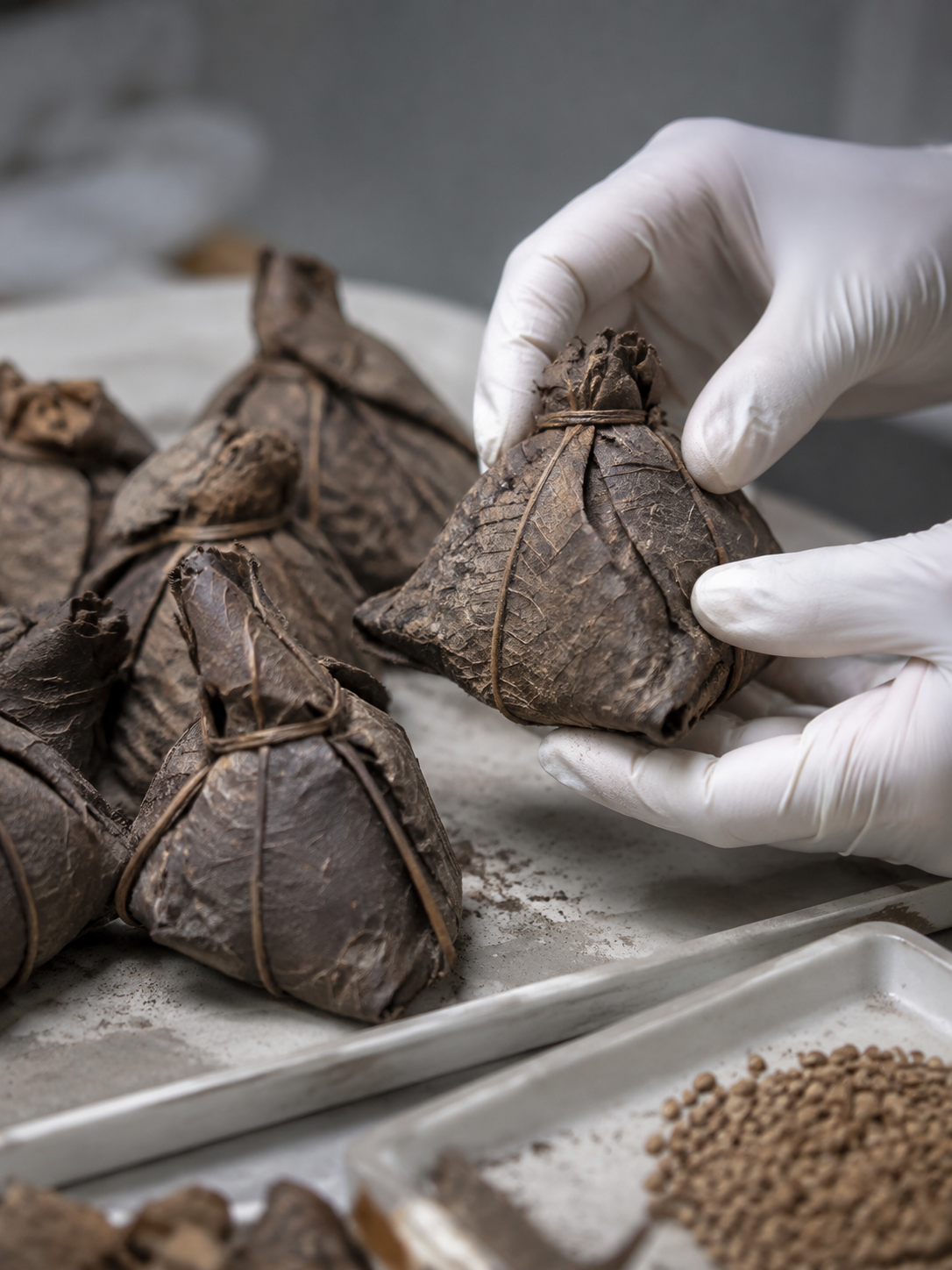
两千三百年前的粽子,从两座楚墓里挖了出来。一批素的,一批有肉——荤素之争比屈原还老。
2,300-Year-Old Zongzi Found in Chu Tombs
About this story
2,300-Year-Old Zongzi Found in Chu Tombs. HSK 1 Chinese listening practice.
This is an HSK 1 Chinese listening episode that runs about 2 minutes. The full Mandarin script is shown with tap-for-pinyin and a line-by-line English translation, so you can listen and read at once — comprehensible input in the sense of Stephen Krashen's i+1 theory. It teaches 6 key vocabulary words such as 吃、年、两 and walks through 2 grammar patterns, each explained in English with examples. The same news story is retold at 4 difficulty levels — use the level selector above to find the version that is challenging but still understandable for you.
Read at your level
原文Read the complete story in Chinese. Reveal pinyin and English only when you need them.
English transcript reference
In China there is a thing called zongzi.
What is zongzi?
You wrap rice in leaves — that is zongzi.
On one day of the year, a great many Chinese people eat zongzi.
Good. Now here is something new.
Some people found zongzi in the ground.
Very, very old zongzi.
How old?
Two thousand three hundred years.
Zongzi from two thousand three hundred years ago.
In one place, they found forty of them.
In one place, they found more than two hundred.
These two places are not together.
And between these two places there are also a hundred years.
What is inside these old zongzi?
In one place, the zongzi have only rice inside.
In one place, the zongzi have meat inside.
So two thousand three hundred years ago, there were already two kinds of zongzi.
One kind with meat, one kind without meat.
Chinese people today are still talking about this:
Should there be meat inside a zongzi?
This argument has been here for two thousand three hundred years.
Two thousand three hundred years is a very, very long time.
But this thing did not get bigger, and it did not get smaller.
Wrap rice in leaves — still, wrap rice in leaves.
Think about it:
Have you ever eaten zongzi?
What is inside yours?
Listen again
Try it without the transcript and notice what sounds clearer.
What vocabulary does this episode teach?
词汇On one day of the year, a great many people 吃粽子.
The number that carries this episode: 两千三百年.
Used before a measure word instead of 二. 两个地方, 两种.
What the rice is wrapped in. The whole story is about a leaf that survived 2,300 years.
米饭 is cooked rice; 米 on its own is the grain.
The thing the argument is about — with meat or without.
* beyond level超纲词
What grammar patterns appear in this episode?
语法用 A 包 B
Use A to wrap B. 用 marks the tool or material.
用叶子包米 — wrap rice in leaves
用纸包东西 — wrap something in paper
一种……,一种……
Lists two types side by side.
一种有肉,一种没有肉。 — one kind with meat, one without.
一种大,一种小。 — one kind big, one small.
Proper nouns
专有名词Sources
来源Free account
Keep learning from this story
Create a free account to keep saved words and your preferred level together.
- Keep words with their story context
- Remember your preferred level
- Build your vocabulary over time