
A Chinese podcast · Same story, 4 levels
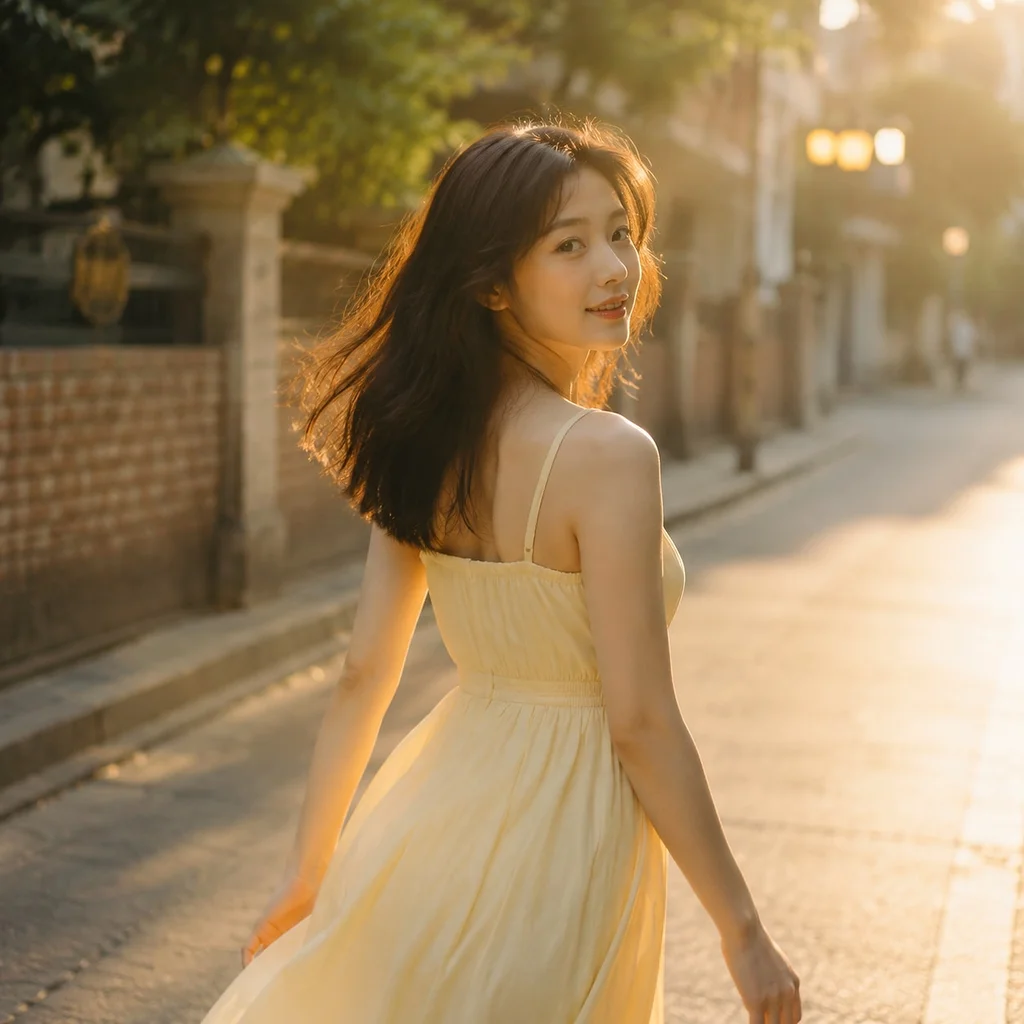
"彩色散步":年轻人在小红书上的新热潮
Color Walking Trend Hits 310M Views in China
About this story
Color walking — the Xiaohongshu trend where young Chinese walk, pick a color, and photograph only that color to feel calmer. HSK 2 Chinese listening practice.
This is an HSK 2 Chinese listening episode that runs about 6 minutes. The full Mandarin script is shown with tap-for-pinyin and a line-by-line English translation, so you can listen and read at once — comprehensible input in the sense of Stephen Krashen's i+1 theory. It teaches 20 key vocabulary words such as 朋友、颜色、累 and walks through 8 grammar patterns, each explained in English with examples. The same news story is retold at 4 difficulty levels — use the level selector above to find the version that is challenging but still understandable for you.
Read at your level
原文Read the complete story in Chinese. Reveal pinyin and English only when you need them.
English transcript reference
Today we're talking about something popular lately.
It's a new way to play.
Its name is "Color Walking."
In English: Color Walking.
It sounds simple.
And actually, it really is simple.
After listening, you can try it this afternoon.
First let me tell you how to play.
Before you go out today, pick a color.
Like yellow, like red, like blue.
Any color works.
Once you've picked, head out.
You can go to a park, or the street, or just walk near home.
Then do one thing — only look at that color.
Say you picked yellow.
You only look at yellow things.
Yellow flowers, yellow cars, yellow signs, yellow umbrellas.
When you see one, you take a photo with your phone.
Walk for an hour and you'll take a lot of photos.
When you get home, put the photos together.
Like a little picture book.
All filled with yellow things.
That's "Color Walking."
Sounds simple, right?
But this game is super popular in China right now.
Especially on Xiaohongshu.
Have you heard of Xiaohongshu?
It's a major Chinese social media app — lots of people share their lives on it.
On Xiaohongshu, the topic "Color Walking" already has over 300 million views.
There are more than 1.88 million posts — a huge number.
Why is it so popular?
Let me give a few reasons.
The first reason: it's simple.
No money needed, no buying, no long learning curve.
If you have eyes, you can play.
The second reason: young people today are very tired.
Are there people like this around you?
They work hard every day, very busy.
Come home, also tired.
They scroll phones at night, and after a while their heads feel even more chaotic.
They say their brains can't slow down.
Their attention is broken.
One moment thinking about this.
The next moment thinking about that.
And they can't do anything well.
Young Chinese call this feeling "fragmented attention."
It means your attention has turned into little pieces, unable to settle on one thing.
"Color Walking" is one solution.
You go out, only looking at one color.
Your brain slowly settles down.
Because you're only thinking about one thing — finding that color.
No work.
No thinking.
No deciding anything.
Just looking.
A lot of young people say after walking for an hour, they feel much better, and their heads aren't as messy.
The third reason: the photos look great.
The colors you took, put together, are genuinely beautiful.
You can post them on Xiaohongshu.
Friends see them and like them too.
Some people say: "Wow, this street is so beautiful — I never noticed."
Yes, normally when we walk, we stare at our phones.
Our eyes don't see the sky, don't see small things on the street.
"Color Walking" makes you lift your head, look at the road, look at the world.
Xinhua and People's Daily both reported on this.
They called it a young person's form of "emotional repair" — cheap, simple, useful.
Let me say more about how different colors feel.
Some say blue and green calm you.
Seeing those two colors, your heartbeat slows a little, your breath goes deeper.
So when feeling chaotic, many people pick blue or green.
Red and orange give you energy.
Seeing those two colors, you feel power.
So in the morning, when you have no energy, some pick red.
Yellow makes you happy.
Seeing yellow flowers, seeing yellow lights, you want to smile a little.
So when in a bad mood, many people pick yellow.
Every color is different, every season is different.
Spring has pink flowers, summer has blue seas, autumn has yellow leaves, winter has white snow.
So all four seasons, you can play, and it won't get boring.
Sounds great, right?
But some also say: is this just a passing fad?
Will no one play in a few months?
I think maybe so.
All trends pass.
But the meaning behind this trend won't pass.
What meaning?
It means — we're all too busy, we all need rest.
But real rest isn't lying in bed scrolling.
It's going out for a walk, looking at small things on the road, letting your eyes and brain relax.
"Color Walking" is just a beginning.
What matters isn't the color — it's going outside.
Finally, one suggestion.
If you've been feeling tired and chaotic, you can give it a try.
Today pick a color.
What color do you like?
Red?
Yellow?
Blue?
Then go out and walk.
Doesn't have to be far, doesn't have to be long, even half an hour is fine.
Only look at that color, take a few photos, then come home and look.
Maybe you'll find your city is much more beautiful than you thought.
OK.
Today's story ends here. We'll talk again tomorrow.
Listen again
Try it without the transcript and notice what sounds clearer.
What vocabulary does this episode teach?
词汇Someone close to you. 朋友看到,也很喜欢 = when friends see them, they like them too.
Red, blue, yellow — what things look like. HSK 2, but the central concept of this episode.
Feeling drained. 现在的年轻人很累 = young people today are tired. HSK 2.
手 (hand) + 机 (machine). The phone you carry. HSK 2.
让你抬起头 = makes you lift your head. A core HSK 2 verb.
Expressing an opinion or feeling. 我觉得也许会 = I think maybe so. HSK 2.
眼 (eye) + 睛 (eyeball). 只要有眼睛 = as long as you have eyes. HSK 2.
重 (heavy) + 要 (need). 重要的不是颜色 = what's important isn't the color. HSK 2.
你会想笑一下 = you'll want to smile a little. HSK 2.
Low cost. 便宜、简单、有用 = cheap, simple, useful. HSK 2.
Internet-era word — a specific way of doing/playing something. Not in HSK 1-4.
话 (talk) + 题 (subject). A topic of discussion — also the hashtag concept. HSK 5+.
Used for view counts on posts. 三亿浏览 = 300M views. HSK 5+.
An online post — text, photos, or video. Not in HSK 1-4.
注意 (HSK 2) + 力 (power). The capacity to focus. The compound is HSK 5+.
碎片 (fragment) + 化 (-ize). Used metaphorically about attention breaking into pieces. HSK 6+.
解 (untie) + 决 (decide). To resolve a problem. HSK 3 — beyond level for easy.
情 (feeling) + 绪 (state). Used here as 'emotional repair.' HSK 5+.
心 (heart) + 跳 (jump/beat). Not in HSK 1-4 lists.
散 (scatter) + 步 (step). A leisurely stroll. HSK 4 — and literally in the trend's name 彩色散步.
* beyond level超纲词
What grammar patterns appear in this episode?
语法听起来...
'Sounds like...' Used to express how something seems based on what you've heard.
听起来很简单。
听起来很好对吧?
比如...
'For example...' Used to introduce examples.
比如黄色,比如红色,比如蓝色。
第一个原因...第二个原因...第三个原因...
'The first reason... second reason... third reason...' Standard list format.
第一个原因,是因为简单。
第二个原因,是因为现在的年轻人很累。
你身边有没有...?
'Do you know anyone around you who...?' Engages the listener by referring to people they know.
你身边有没有这样的人?
看到...的时候,...
'When you see ..., ...' Time-clause structure.
心里乱的时候,很多人选蓝色或者绿色。
...对吧?
'..., right?' Used to invite agreement.
听起来很好对吧?
听起来简单吧?
不是...,是...
'Not X, but Y.' Common contrastive structure.
不是躺在床上看手机。是出去走一走。
如果...,你可以试试
'If..., you can try.' A gentle conditional invitation.
如果你最近觉得累,心里很乱,你可以试试。
Proper nouns
专有名词Free account
Keep learning from this story
Create a free account to keep saved words and your preferred level together.
- Keep words with their story context
- Remember your preferred level
- Build your vocabulary over time