
A Chinese podcast · Same story, 4 levels
古巴大停电:特朗普的石油封锁,如何一步步逼向一座海岛
Cuba Blackout Deepens Under Oil Blockade
About this story
Cuba Blackout Deepens Under Oil Blockade. HSK 3 Chinese listening practice.
This is an HSK 3-4 Chinese listening episode that runs about 4 minutes. The full Mandarin script is shown with tap-for-pinyin and a line-by-line English translation, so you can listen and read at once — comprehensible input in the sense of Stephen Krashen's i+1 theory. It teaches 12 key vocabulary words such as 医院、问题、严重 and walks through 3 grammar patterns, each explained in English with examples. The same news story is retold at 4 difficulty levels — use the level selector above to find the version that is challenging but still understandable for you.
Read at your level
原文Read the complete story in Chinese. Reveal pinyin and English only when you need them.
English transcript reference
Today, a rather heavy topic — about the Caribbean island nation of Cuba.
Lately, Cuba has been going through a very serious crisis.
Simply put, the whole country keeps suffering massive blackouts.
This July, in the span of a single week, Cuba had two nationwide blackouts.
Counting from the start of the year, there have already been four such nationwide blackouts.
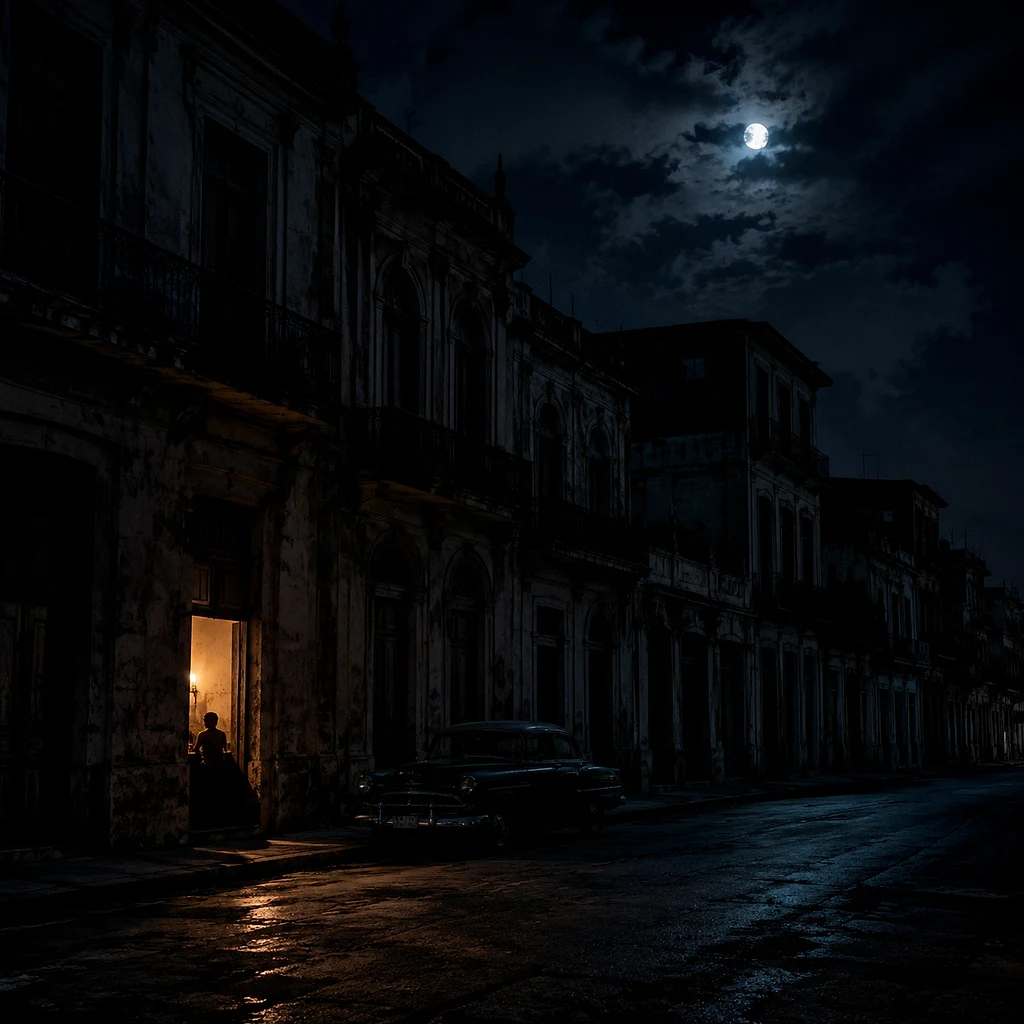
Each time the power fails, the whole island sinks into pitch darkness at night.
So the question is: how does a functioning country end up unable to even generate electricity?
At root, it's because Cuba has run out of oil.
Most of Cuba's electricity is generated by burning oil.
But it produces little of its own; more than half must be bought abroad.
And at exactly this critical moment, its oil was cut off from the outside.
The one doing the cutting is the US and the Trump administration.
In fact, the US and Cuba have been at odds for over sixty years; this oil blockade is just the harshest move in that old feud.
Early this year, Trump signed an order that amounts to an "oil blockade" on Cuba.
He declared: whoever dares sell oil to Cuba, the US will slap with steep tariffs.
Weighing the risk, many countries dared not offend the US and stopped selling oil to Cuba.
In the past, one country had long propped up Cuba: Venezuela.
But later, Trump moved on Venezuela too, driving out its president.
Venezuela, barely able to save itself, naturally could no longer look after Cuba.
With these lifelines severed, Cuba's oil dwindled until it ran completely dry.
From the start of the year until now, only one Russian tanker has delivered a single shipload of oil to Cuba.
And Cuba's power grid was already old — mostly left over from decades ago, long overdue for repair.
An old grid plus no oil — misfortune piled on misfortune.
Not to mention Cuba was never wealthy; tourists have dwindled year by year, and money is tight.
Now, with blackouts around the clock, even the last bit of tourism can hardly go on.
What truly wrenches the heart is the lives of ordinary Cubans.
Cuba is sweltering, but with no power, people can't even run a fan at home.
Come night, the whole city is pitch black — even the traffic lights are dead — and going out becomes dangerous.
Many can only light candles, and with no gas to cook, they burn firewood in the courtyard.
Most critical of all are the hospitals.
Without power, fridges stop, many medicines spoil, and equipment can't run.
A UN official said something grave: for lack of medicine, some children are dying.
Data shows, too, that in recent months Cuba's infant mortality has nearly doubled.
For this reason, the UN and many rights groups are criticizing the US, saying such tactics truly punish the innocent people, not the government.
So why is Trump so determined to push Cuba to this point?
Ultimately, through this maximum pressure, he wants to force Cuba's government to fall and replace it with a pro-US one.
Under the pressure, Cuba hasn't sat idle.
It has rolled out some of its boldest economic reforms in years and imported plenty of solar equipment from China, hoping to draw more power from the sun.
But none of this pays off overnight.
Through these grueling days, Cubans can only endure, day by day, in the dark and the heat.
On one side, a contest between two great powers; on the other, ordinary people for whom even a single lamp or fan has become a luxury.
The gulf between the two leaves a bitter taste.
Okay, that's where we'll leave this somewhat heavy story today; see you next time.
Listen again
Try it without the transcript and notice what sounds clearer.
What vocabulary does this episode teach?
词汇Hospital. 更要命的是医院 = most critical are the hospitals.
A question. 那问题来了 = so the question arises.
Serious. 一场很严重的危机 = a very serious crisis.
Dangerous. 出门都变得很危险 = going out becomes dangerous.
A city. 整座城市漆黑一片 = the whole city is pitch black.
A child. 一些孩子正在死去 = some children are dying.
Oil. 古巴没有石油了 = Cuba has run out of oil.
A blackout. 一次又一次地大停电 = massive blackouts, again and again.
A blockade. 这次的石油封锁 = this oil blockade.
A tariff. 加征很高的关税 = impose steep tariffs.
Venezuela — Cuba’s longtime oil supplier.
A crisis. 一场很严重的危机 = a very serious crisis.
* beyond level超纲词
What grammar patterns appear in this episode?
语法连...都/也...
"Even..." — stresses an extreme case.
家里连个风扇都转不起来。
连红绿灯都不亮。
正是...
"It is precisely..." — emphatic identification.
掐断它的,正是美国和特朗普政府。
不是...而是... / 真正...的,是...
"Not... but rather..." — corrects to the real point.
真正惩罚到的,是无辜的老百姓,而不是政府。
Proper nouns
专有名词Free account
Keep learning from this story
Create a free account to keep saved words and your preferred level together.
- Keep words with their story context
- Remember your preferred level
- Build your vocabulary over time