
A Chinese podcast · Same story, 4 levels
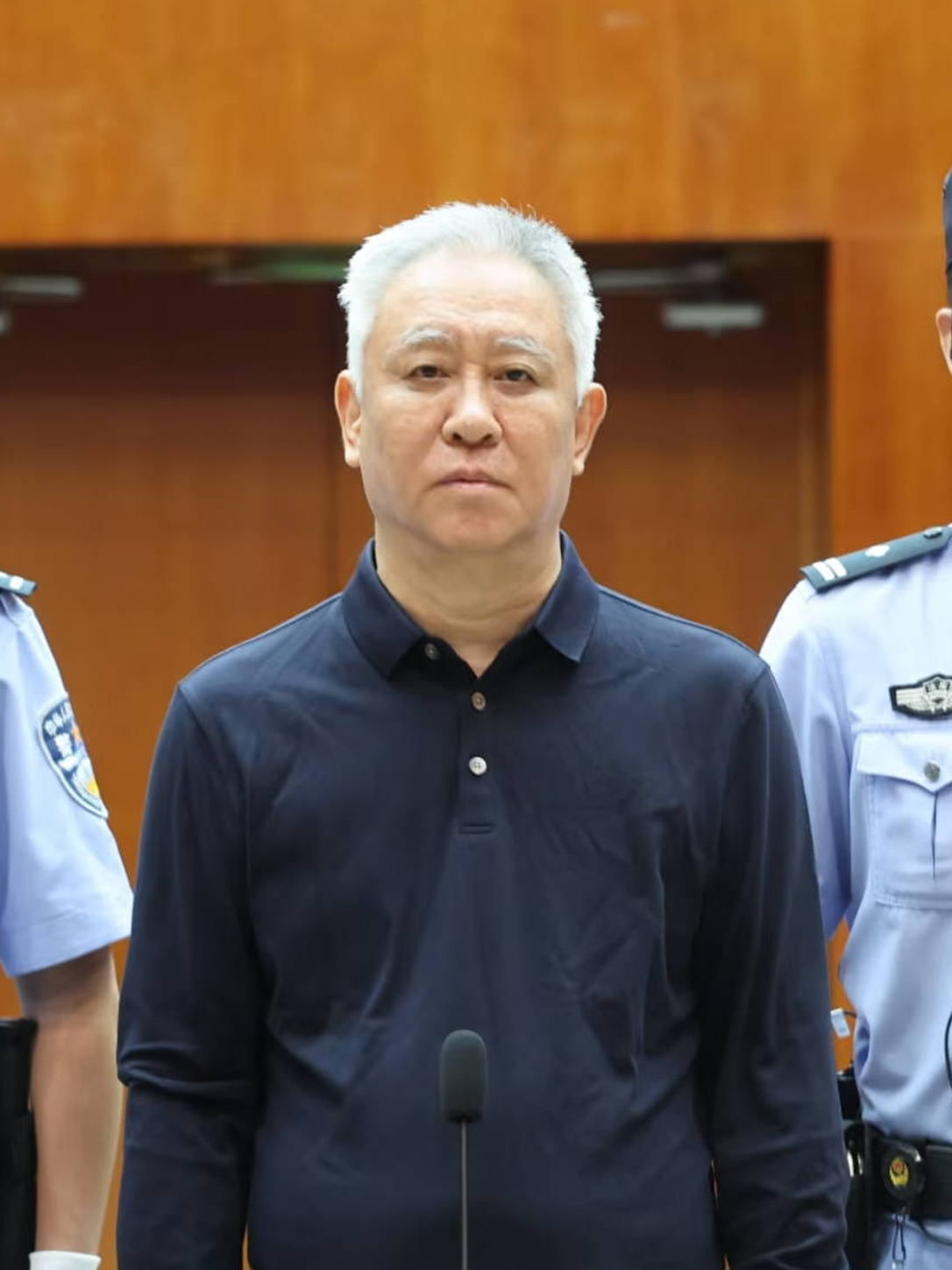
Photo: China News Service · CC BY 4.0
许家印被判无期。恒大留下一百六十二万套没盖完的房子,还有七十万套空着。
Evergrande Founder Gets Life Sentence
About this story
Evergrande Founder Gets Life Sentence. HSK 5-6 Chinese listening practice.
This is an HSK 5-6 Chinese listening episode that runs about 2 minutes. The full Mandarin script is shown with tap-for-pinyin and a line-by-line English translation, so you can listen and read at once — comprehensible input in the sense of Stephen Krashen's i+1 theory. It teaches 9 key vocabulary words such as 制度、相信、数字 and walks through 3 grammar patterns, each explained in English with examples. The same news story is retold at 4 difficulty levels — use the level selector above to find the version that is challenging but still understandable for you.
Read at your level
原文Read the complete story in Chinese. Reveal pinyin and English only when you need them.
English transcript reference
Remember a number first: 1.62 million apartments, never finished.
Behind one apartment stands one family; behind 1.62 million stand more than six million people.
They have one thing in common: the money was paid long ago.
Buying a home in China usually means buying off-plan: the building is still going up, you hand over the money, wait a year or two, then collect the keys.
That system turns on one thing only: you believe this company will finish the building.
Evergrande was the largest property developer in China at the time, and Hui Ka Yan had once been the richest man in the country.
Then the building stopped.
Where did the money go?
The period the court established runs from 2016 to 2021.
Across those five years the accounts did two things: where there were assets they were written larger — inflation; where there were debts they were written smaller — concealment.
As long as the numbers looked good the credit rating held, money could keep being borrowed, and off-plan flats could keep being sold.
So this was not a single lie. It was a machine that had to keep turning: borrow new money to build old towers, sell new towers to repay old debt.
In 2021, the machine came apart.
On the twentieth of August this year, the Shenzhen Intermediate People’s Court delivered its first-instance verdict in open court.
Evergrande Group, fined 8.82 billion yuan; Evergrande Real Estate, fined 7 billion.
Hui Ka Yan himself: life imprisonment, lifetime deprivation of political rights, and confiscation of all personal property.
The eight charges come down to three things: taking people’s money, falsifying the books, and moving company money into his own hands.
The news usually ends here; but for those six million people, nothing has ended.
Through the delivery programme more than 800,000 units have been completed and handed over these past years; the remaining 700,000 still stand empty.
Plenty of those buyers are still paying a monthly mortgage — on an apartment they have never once walked into.
The verdict deals with the past: who took the money, who is responsible. But what these people need is the future: when does that door open.
A court can sentence a man to life imprisonment. It cannot produce an apartment.
So the real ending is not in the courtroom. It is behind those 700,000 doors that have never been closed.
Think about it:
You paid first and the thing never arrives. How long would you wait?
Listen again
Try it without the transcript and notice what sounds clearer.
What vocabulary does this episode teach?
词汇这套制度能转起来,只靠一件事 — the whole system turns on one thing.
What the off-plan system runs on, and what broke.
数字一好看,评级就撑得住 — as long as the figures looked good…
借新钱盖旧楼,卖新楼还旧债 — the sentence that describes the machine.
把公司的钱挪成自己的 — moving the company's money into his own hands.
The state effort to get unfinished pre-sold homes completed and handed over.
剥夺政治权利终身 — lifetime deprivation of political rights.
What let the borrowing continue as long as the numbers looked good.
把公司的钱挪成自己的 — the third of the eight charges, in one word.
* beyond level超纲词
What grammar patterns appear in this episode?
语法不是……,是……
Replaces the expected description with the accurate one.
所以这不是一次性的谎,是一台必须不停转的机器。
归结起来是……
Boils a long list down to its essentials.
八项罪名归结起来是三件:骗钱,造假,把公司的钱挪成自己的。
处理的是……,要的是……
Sets what an institution does against what people need.
判决处理的是过去,可这些人要的是未来。
Proper nouns
专有名词Sources
来源Free account
Keep learning from this story
Create a free account to keep saved words and your preferred level together.
- Keep words with their story context
- Remember your preferred level
- Build your vocabulary over time