
A Chinese podcast · Same story, 4 levels
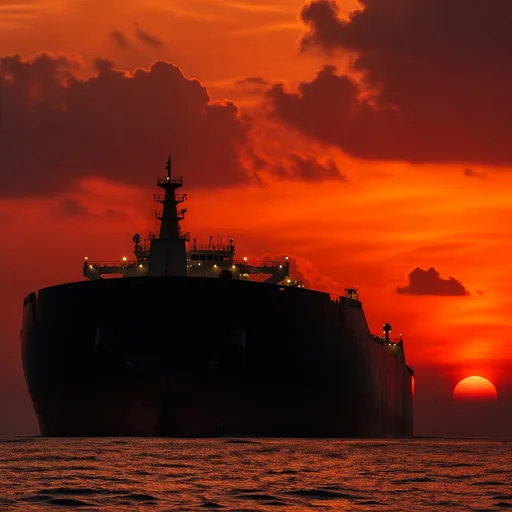
霍尔木兹海峡:油为什么变贵了?
Oil Above $100 as Hormuz Crisis Deepens
About this story
A simple story: Xiaoming sees expensive oil at the store, and learns about Iran and the Strait of Hormuz. HSK 1 Chinese listening practice.
This is an HSK 1 Chinese listening episode that runs about 9 minutes. The full Mandarin script is shown with tap-for-pinyin and a line-by-line English translation, so you can listen and read at once — comprehensible input in the sense of Stephen Krashen's i+1 theory. It teaches 15 key vocabulary words such as 贵、商店、走路 and walks through 5 grammar patterns, each explained in English with examples. The same news story is retold at 4 difficulty levels — use the level selector above to find the version that is challenging but still understandable for you.
Read at your level
原文Read the complete story in Chinese. Reveal pinyin and English only when you need them.
English transcript reference
Speaking of today's very expensive oil.
Let's look at Xiaoming's story.
Xiaoming has a car.
Xiaoming's car is very big.
Xiaoming likes his car very much.
Xiaoming drives every day.
He drives to work.
He drives to buy things.
He drives to see friends.
The car needs to eat things.
What does the car eat?
Does the car eat rice?
The car doesn't eat rice.
Does the car drink water?
The car doesn't drink water.
The car drinks oil.
What is oil?
Oil is black water.
A car can only go if it has oil.
A car cannot go without oil.
Today the car has no oil.
Xiaoming cannot drive.
Xiaoming wants to go buy oil.
Where does Xiaoming go to buy oil?
Xiaoming goes to the store to buy oil.
He walks to the store.
There is oil in the store.
Xiaoming is very happy.
Xiaoming asks the person at the store.
Xiaoming asks: 'How much is it?'
The person says: 'Very expensive.'
Xiaoming asks: 'How expensive?'
He says: 'One hundred kuai.'
One hundred kuai!
One hundred kuai is a lot.
Xiaoming doesn't have a lot of money.
Xiaoming is unhappy.
Xiaoming asks: 'Why?'
Why is oil so expensive?
Before, oil was not expensive.
Before, oil was very little money.
Why is it one hundred now?
He says: 'There isn't much oil.'
There is not much oil in the store.
Why isn't there much oil?
Because the oil is very far away.
The oil is in another country.
That country has a lot of oil.
We have to go there to buy oil.
How do we go?
We have to take the water route.
The water route is the ocean.
There is a small path on the ocean.
This small path is very small.
This small path is very important.
All the oil takes this path.
Now there is someone on the small path.
Who is this person?
This person is Iran.
Iran is next to the small path.
Iran says: 'You cannot go.'
Iran doesn't let the big ships go.
What is on the ship?
There is oil on the ship.
The ship cannot go.
The oil cannot go either.
We have no oil.
There is no oil in the store either.
The oil is very little.
The people are many.
People all want to buy oil.
Xiaoming also wants to buy oil.
So the oil is very expensive.
The oil costs one hundred kuai.
One hundred kuai buys a little bit of oil.
Xiaoming is very angry.
Xiaoming wants to drive.
That person says sorry.
You cannot drive without oil.
Xiaoming can only walk.
Walking is very slow.
Xiaoming does not like walking.
Xiaoming's friend also has a car.
The friend is named Xiaohong.
Xiaohong's car is very small.
Xiaohong's car is red.
Xiaohong also likes to drive.
Xiaohong drives every day.
Xiaohong goes to school.
Xiaohong goes to buy clothes.
Today the car also has no oil.
Xiaohong also goes to the store.
Xiaohong sees Xiaoming.
Xiaohong says: 'Hello.'
Xiaoming says: 'Hello.'
Xiaohong asks how much the oil is.
That person says one hundred kuai.
Xiaohong is also very angry.
Xiaohong says: 'Too expensive!'
Xiaohong doesn't have much money either.
Xiaohong doesn't buy oil.
Xiaohong and Xiaoming walk.
Let's talk about oil.
Where does oil come from?
Oil is underground.
There is a lot of oil underground.
People take the oil out.
People put the oil on ships.
The ship is very big.
The ship is extremely big.
The big ship goes on the water.
The water is blue.
The water is vast.
The big ship goes very slowly.
The big ship has to go very far.
The big ship has to go for many days.
Where is the big ship going?
The big ship is coming to us.
The big ship is coming to the store.
The big ship goes on the water.
There is a small path ahead.
Both sides of the small path are land.
The middle is water.
The big ship passes through the middle.
This small path is called a strait.
A strait is a path on the water.
This small path is very important.
Without this small path.
The big ship cannot come.
The big ship cannot come here.
We would have no oil.
Now there is a problem with the small path.
Next to the small path is Iran.
Iran is a country.
Iran is next to this path.
Iran is unhappy.
Iran says you cannot pass.
Iranians are on the small path.
They don't let the big ships pass.
The big ship has stopped.
The big ship cannot go.
The big ship waits on the water.
One day has passed.
Two days have passed.
The big ship is still waiting.
The people in the store are waiting.
They say why isn't the oil coming.
Xiaoming is waiting.
Xiaohong is also waiting.
Everyone needs oil.
Everyone wants to drive.
The weather is very cold.
Xiaoming wants to drive home.
Xiaohong wants to drive to eat.
But there is no oil.
The store only has a little oil.
Many people want to buy.
Xiaoming wants to buy.
Xiaohong wants to buy.
And many other people want to buy.
The person says: 'There is very little oil.'
People with a lot of money buy it.
Xiaoming says he will give fifty kuai.
Xiaohong says she will give sixty kuai.
Someone else says they will give eighty kuai.
In the end, it is one hundred kuai.
One hundred kuai to buy a little oil.
Too expensive.
Xiaoming is not buying.
Xiaohong is not buying either.
Xiaoming has no oil.
How does Xiaoming go to work?
Xiaoming takes the bus.
The bus is very big.
The bus has seats.
There are many people in the bus.
Xiaoming doesn't love taking the bus.
The bus is very slow.
How does Xiaohong go to school?
Xiaohong rides a bicycle.
The bicycle doesn't have oil.
The bicycle uses human power.
Xiaohong rides until she is very tired.
Xiaohong misses her car.
Xiaohong wants to drive her car.
Xiaoming asks the person at the store.
When will oil be cheap?
Cheap means not expensive.
That person says they don't know.
He says it depends on that path.
When will the small path be clear?
Will Iran let the ships go or not?
If the big ships come over.
Then there will be more oil.
When there is more oil, it won't be expensive.
Xiaoming says come quickly.
Xiaohong also says come quickly.
They are all waiting.
Everyone is waiting.
Oil for one hundred kuai is too expensive.
We don't like this.
What is the story talking about?
It is talking about international oil prices.
A barrel of oil is over one hundred US dollars.
Why is it so expensive?
Because Iran won't let the ships go.
That is the Strait of Hormuz.
If ships cannot go, oil becomes expensive.
Listen again
Try it without the transcript and notice what sounds clearer.
What vocabulary does this episode teach?
词汇Adjective used to describe high prices.
Noun for a place that sells goods. Measure word: 家 (jiā).
Verb-object compound meaning to walk on foot.
Adjective used to describe low prices.
Noun for public bus. Measure word: 辆 (liàng).
Noun for bicycle. Measure word: 辆 (liàng).
Adjective indicating a long distance.
Noun for a water vessel. Measure word: 艘 (sōu) or 条 (tiáo).
Noun referring to oil, gas, or fuel in this context.
Noun for a narrow passage of water connecting two larger areas of water.
Adjective describing something between nations.
Noun compound of 油 (oil) and 价 (price).
Measure word used here for barrels of oil.
Noun for the United States currency.
Noun referring to physical human effort.
* beyond level超纲词
What grammar patterns appear in this episode?
语法Place + 有 + Object
Used to indicate that something or someone exists in a certain place.
商店里有油。
大海上有一条小路。
怎么 + Verb
Used to ask how to do an action or by what means an action is performed.
我们怎么去?
小明怎么去工作?
因为... (yīnwèi...)
Used to explain the reason or cause of a situation.
为什么油不多?因为油在很远。
因为伊朗不让船走。
Subject + 把 + Object + Verb + Result/Direction
The 'bǎ' sentence focuses on the handling, disposing, or moving of a specific object.
人把油拿出来。
人把油放在船上。
才能 (cáinéng)
Expresses that an action can only happen if a certain prerequisite condition is met.
车有油才能走。
Proper nouns
专有名词Free account
Keep learning from this story
Create a free account to keep saved words and your preferred level together.
- Keep words with their story context
- Remember your preferred level
- Build your vocabulary over time