
A Chinese podcast · Same story, 4 levels
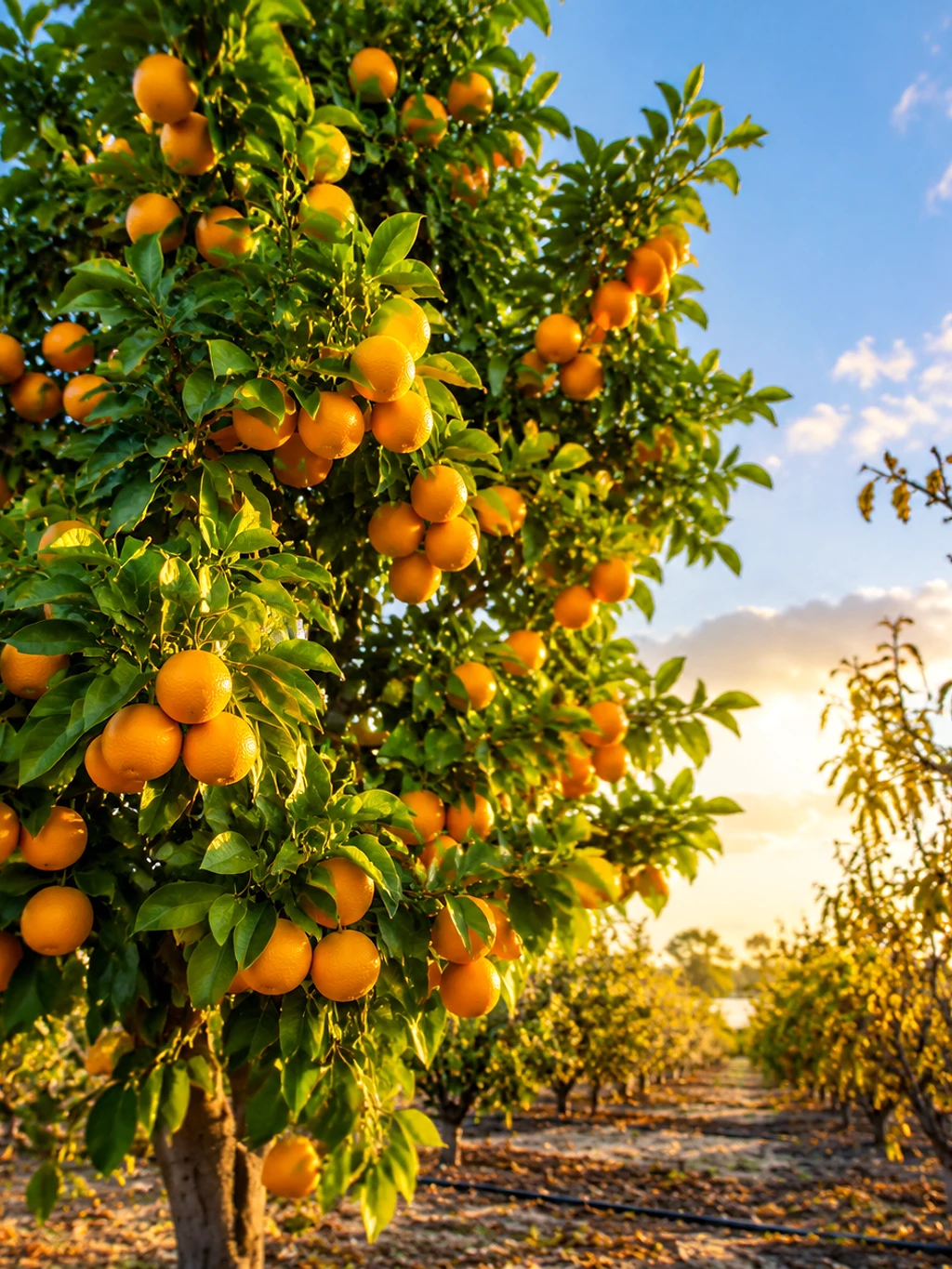
黄龙病毁掉了佛罗里达九成五的橙子,基因编辑能救回来吗?
Citrus Greening Wiped Out 95% of Florida's Oranges. Can Gene Editing Bring Them Back?
About this story
For 20 years citrus greening — huanglongbing, spread by an insect the size of a pollen grain — has gutted Florida's orange groves: production down 95%, four juice plants left out of 54. This year the EPA approved a Crispr-edited rootstock and a harmless virus that helps trees fight back, and growers have ordered hundreds of thousands of trees. The first juice oranges are two years away. Chinese listening practice at four levels. HSK 1 Chinese listening practice.
This is an HSK 1 Chinese listening episode that runs about 2 minutes. The full Mandarin script is shown with tap-for-pinyin and a line-by-line English translation, so you can listen and read at once — comprehensible input in the sense of Stephen Krashen's i+1 theory. It teaches 12 key vocabulary words such as 喝、茶、水 and walks through 3 grammar patterns, each explained in English with examples. The same news story is retold at 4 difficulty levels — use the level selector above to find the version that is challenging but still understandable for you.
Read at your level
原文Read the complete story in Chinese. Reveal pinyin and English only when you need them.
English transcript reference
What do you drink in the morning?
Some people drink tea, some drink water.
Lots of Americans like to drink orange juice in the morning.
Orange juice is made from oranges.
Lots of America's oranges come from Florida.
But now there are very few oranges in Florida.
Why?
Twenty years ago, Florida's orange trees caught a disease.
When a tree has this disease, the oranges are small, and many can't be eaten.
The oranges fall off while they're still small.
This disease is brought by a very, very tiny insect.
Twenty years ago, if Florida had a hundred oranges, now it has five.
Lots of people have stopped growing oranges.
Lots of places that made orange juice have stopped too.
There used to be fifty-four places making orange juice here; now there are four.
One man said: there used to be lots of people working here; now there aren't.
Now scientists have new trees.
Scientists have made a new kind of orange tree.
This new kind of tree isn't afraid of the disease.
Now America has said: you can plant these new trees.
Lots of people have bought the new trees, and they all want to plant them.
The new trees can have oranges in two years.
One man has worked here for twenty years.
He said: this is the first time in twenty years I've thought, we have hope.
Do you think Florida's oranges can come back?
Listen again
Try it without the transcript and notice what sounds clearer.
What vocabulary does this episode teach?
词汇HSK 1. 你上午喝什么?
HSK 1. 有的人喝茶.
HSK 1. 有的人喝水.
HSK 1. 以前,我们这里有很多人工作.
HSK 1. 一个先生说.
HSK 1. 很多人买了新的树.
橙 (orange) + 子 (noun suffix).
橙 (orange) + 汁 (juice).
橙子树 = orange tree.
树有了一种病.
一种很小很小的虫子.
我们有希望了.
* beyond level超纲词
What grammar patterns appear in this episode?
语法A 是 B 做的
A is made from B.
橙汁是橙子做的。
……的时候
When…
橙子很小的时候,都下来了。
能……吗?
Can… ? — asks whether something is possible.
你想,佛罗里达的橙子,能回来吗?
Proper nouns
专有名词Free account
Keep learning from this story
Create a free account to keep saved words and your preferred level together.
- Keep words with their story context
- Remember your preferred level
- Build your vocabulary over time