
A Chinese podcast · Same story, 4 levels
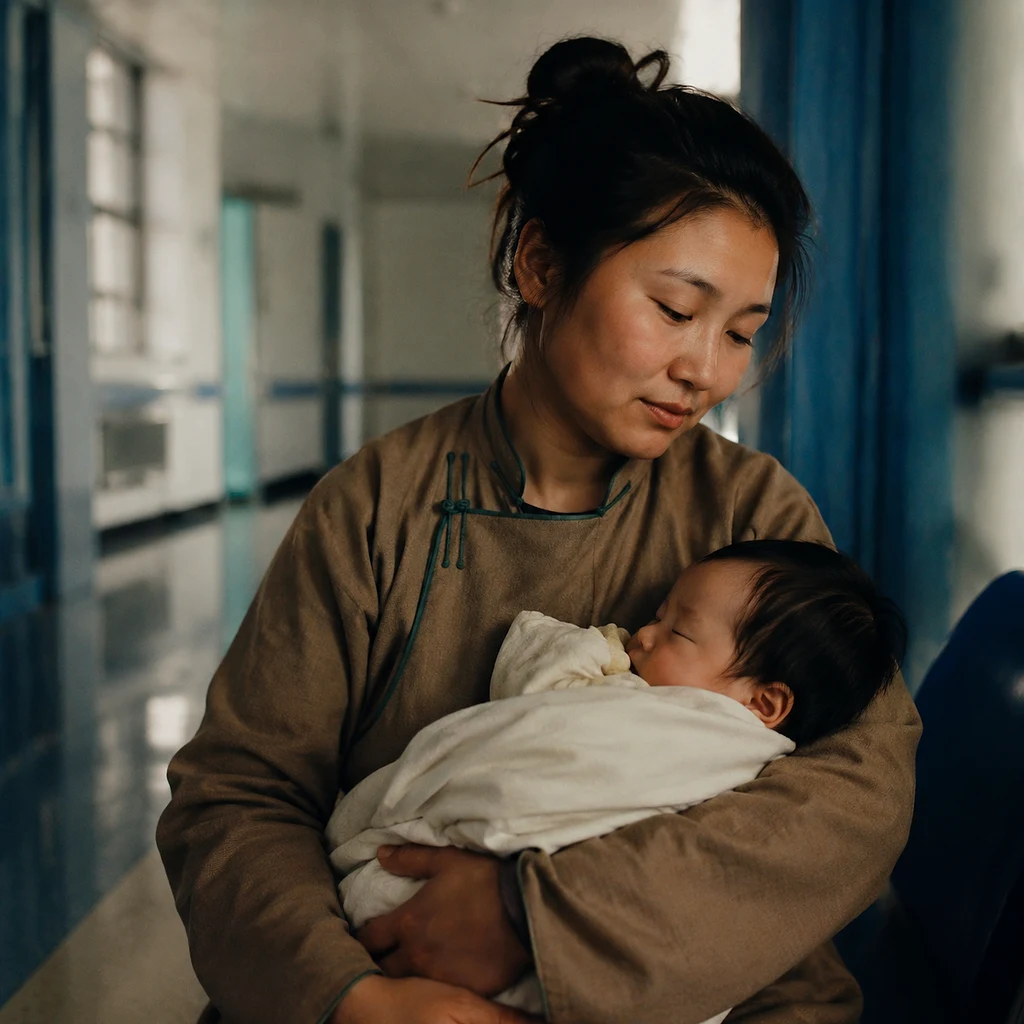
从蒙古婴儿的跨国求医路看中国医疗服务的全球化转型
From a Mongolian Infant in Shanghai to China's Medical-Services Export Engine
About this story
A Mongolian infant's Shanghai treatment reveals how China is scaling its medical-services export engine. HSK 5-6 Chinese listening practice.
This is an HSK 5-6 Chinese listening episode that runs about 8 minutes. The full Mandarin script is shown with tap-for-pinyin and a line-by-line English translation, so you can listen and read at once — comprehensible input in the sense of Stephen Krashen's i+1 theory. It teaches 15 key vocabulary words such as 犹豫、规模、奇迹 and walks through 5 grammar patterns, each explained in English with examples. The same news story is retold at 4 difficulty levels — use the level selector above to find the version that is challenging but still understandable for you.
Read at your level
原文Read the complete story in Chinese. Reveal pinyin and English only when you need them.
English transcript reference
Speaking of cross-border healthcare and the flow of global health resources, let's first turn our attention to a young couple from Mongolia who once faced the darkest moment of their lives.
When their son Shinebayar Enkhbadrakh, just days old, was diagnosed with biliary atresia, the entire family felt as though they had been plunged into an icy abyss.
This is an extremely dangerous rare disease in which the infant's bile ducts are blocked, preventing bile from draining properly. Toxins rapidly accumulate in the body, and without timely intervention, the consequences are unthinkable.
At that point, local doctors in Mongolia had no choice but to deliver a final verdict to the desperate parents: only a living-donor liver transplant could give this tiny life a chance of survival.
However, the reality they faced was cruel. As the child's mother, Khurelbaatar Nasantogtokh, later recalled, this was the child's only chance of survival,
but at the time, no hospital in Mongolia had the capability to perform such a highly complex surgery on such a young infant.
Time was of the essence. Driven by immense urgency, when doctors suggested they go to neighboring China for help, the family didn't hesitate for a moment and immediately set off for Shanghai.
Last September, they arrived at Shanghai Renji Hospital, one of the authoritative centers in China and globally for liver transplantation.
After a series of intensive pre-surgical examinations, doctors confirmed that the child's father met the donation criteria and could serve as the donor.
Then, a six-hour state-of-the-art surgery was carried out under intense conditions in Renji Hospital's operating room.
With their exquisite skill, the surgeons removed approximately 250 grams — about one-fifth — of liver tissue from the father and successfully transplanted it into little Shinebayar.
Although the total cost of the surgery and subsequent recovery was nearly 200,000 RMB — a significant expense for the family that required financial assistance from relatives, friends, and outside supporters — the child's remarkable improvement after the operation made them feel it was all worth it.
Before the surgery, severe liver failure had turned the infant's skin deep yellow, his abdomen was badly swollen, and even his stool was an abnormal grayish-white due to the lack of bile.
But shortly after the surgery, a miracle occurred: his jaundice rapidly subsided, his breathing became steady and strong, and his previously rigid, swollen abdomen returned to being soft.
The mother recalled with emotion that the child looked completely different — like a healthy baby who had never been sick.
Shinebayar's recovery story is actually just a microcosm of China's medical services moving toward internationalization.
Nowadays, more and more overseas patients, like Shinebayar, are choosing to cross national borders to seek medical treatment in China.
This group ranges from those seeking traditional Chinese medicine therapies to patients requiring complex cancer treatments, drawn by the efficiency, relatively low costs, and increasingly refined specialist expertise of China's medical system.
According to data from the National Health Commission, in 2025, major Chinese hospitals received approximately 1.28 million international patient visits, a figure that grew 73.6% compared to three years earlier.
Notably, the number of patients from developed regions such as Europe and North America doubled during the same period, indicating that China's medical appeal has broken through its regional geographic boundaries and begun to exert a "magnetic pull" on Western developed countries.
Beyond acute and critical cases like liver transplants, routine specialist care has also become an important factor attracting foreign patients.
A widely shared case on social media is particularly representative: a British citizen who goes by Amie had long suffered from persistent stomach pain.
In her home country, booking an appointment with a specialist for a detailed examination often required a lengthy wait — the queue measured in months left her physically and mentally exhausted.
Eventually, she decided to fly to China for medical treatment.
At a Chinese public hospital, she was amazed to find that all the examinations, diagnosis, and treatment plan formulation were completed in an extremely short time.
What surprised her even more was that the total cost of the entire process was only about 2,800 RMB — even lower than the price of seeking private medical services in the UK.
After Amie shared her experience online, it immediately resonated strongly. Many foreigners in China or people with similar experiences abroad commented, sharing their stories of benefiting from the efficient, convenient, and cost-effective services at Chinese hospitals.
This spontaneous word-of-mouth spread actually reflects that China's medical services have already developed significant international competitiveness in certain dimensions.
Perceptive policymakers have also caught on to this trend and begun to regulate and guide this "medical tourism" potential through pilot programs.
As early as 2019, Beijing launched an international medical services initiative, initially with only 7 hospitals participating, and that number has now grown to around 20.
Shanghai followed suit, launching pilot programs in 2023 covering multiple specialist fields including oncology, cardiology, and neurology across 13 top hospitals, and released the nation's first provincial-level international medical service standards the following year.
This marks China's international medical services transitioning from scattered individual case reception to a phase of standardized, institutionalized, high-quality development.
At the same time, different regions have developed differentiated service offerings based on their own geographic advantages and medical specialties.
For example, Heilongjiang Province on the northeastern border leverages its geographic location to offer traditional Chinese medicine rehabilitation and wellness services specifically targeting Russian tourists.
Meanwhile, Hainan, the tropical island province in the south, relies on the Boao Lecheng International Medical Tourism Pilot Zone to focus on promoting rehabilitation treatments for chronic diseases and clinical applications of specially approved drugs and medical devices.
Of course, to safeguard the fairness of domestic public healthcare resources, these international medical services are typically operated separately from regular public hospital services, with relatively higher fee standards.
According to domestic regulations, the scale of such premium or international services is strictly capped at 10% of a hospital's total service volume to ensure that public hospitals' public-welfare nature remains unshaken.
However, China's medical globalization is not limited to "bringing patients in" — it is also actively "going out."
While overseas patients are arriving in droves, Chinese hospitals and medical technology companies are exporting clinical expertise, digital hospital systems, and AI-assisted diagnostic tools to many countries across Asia, Africa, and the Middle East.
This trend signifies China's transformation from a mere manufacturer of medical products to an exporter of high-level medical services and management solutions.
Just last May, Shanghai-based startup Synyi AI launched a highly innovative pilot project in Saudi Arabia.
In this project, a virtual doctor named "Dr. Hua" began providing services to local patients.
This AI system can diagnose and prescribe treatments for 30 common respiratory diseases.
Its power lies in breaking through language barriers, communicating fluently in both English and Arabic, supported by a massive database of approximately 300,000 Arabic medical terms.
This kind of technology export not only addresses local medical resource shortages but also puts China's artificial intelligence technology in the spotlight on the international medical stage.
Public hospitals are equally eager to make their mark in this space.
Going back to the Shanghai Renji Hospital we mentioned at the beginning — they showcased an impressive "smart healthcare" system at the 2026 Dubai World Health Expo.
This system encompasses comprehensive solutions including digital operating rooms, AI-supported intensive care units (ICUs), internet-based hospital platforms, and anesthesia management tools.
Wang Chunming, head of Renji Hospital's smart healthcare division, explained that the system's results were immediate — reducing nursing workload by approximately 42,000 hours annually and decreasing safety incidents during shift handovers by 63%.
He emphasized that the system's core value lies in breaking through physical space limitations, enabling quality medical resources to serve any area with internet access.
This is not just a slogan but is backed by solid data.
Last year, Renji Hospital's internet hospital system handled nearly 700,000 consultations nationwide, and this powerful telemedicine capability has attracted widespread international attention.
Currently, multiple countries including Indonesia and Mongolia have expressed strong interest in adopting this system to serve their remote communities and address the uneven distribution of local medical resources.
Listen again
Try it without the transcript and notice what sounds clearer.
What vocabulary does this episode teach?
词汇To be undecided or pause before doing something.
Refers to the extent, size, or scope of something (e.g., an event, a project, or a service).
An extraordinary event or accomplishment that seems inexplicable by natural laws.
To return to a normal state, such as health after illness or order after chaos.
The ratio of useful work performed to the total energy expended or resources used.
To not have enough of something.
To identify the nature of an illness or other problem by examination of the symptoms.
HSK 1-4. society.
A rare disease of the liver and bile ducts that occurs in infants.
Medical procedure to move an organ or tissue from one body to another (e.g., 肝移植 - liver transplant).
Idiom literally meaning 'beating gongs and drums tightly'; implies intense preparation or activity.
A metaphorical term describing a strong power of attraction.
Idiom meaning to begin to show one's talent or capability; to make a mark.
Medical term for the person or organism providing an organ or tissue for transplant.
Idiom literally meaning 'set up a pole and see its shadow'; used to describe immediate effects.
* beyond level超纲词
What grammar patterns appear in this episode?
语法Meaning 'might as well' or 'there is no harm in'. It is used to make a suggestion politely.
说到跨境医疗和全球卫生资源的流动,我们不妨先将目光投向蒙古国的一对年轻夫妇
A conditional structure meaning 'Only if... then...'. It emphasizes that the first clause is the sole condition for the result.
只有进行活体肝移植手术,这个幼小的生命才有一线生机
A formal passive voice construction. '被' introduces the agent, and '所' precedes the verb. It translates to 'be [verb]ed by...'.
他们被中国医疗体系的高效率、相对低廉的成本以及日益精进的专科技术所吸引
Meaning 'not only... but also...'. It connects two clauses where the second clause reinforces or goes further than the first.
中国医疗的全球化步伐并不仅仅局限于“引进来”,更在积极地“走出去”
这种技术的输出,不仅解决了当地医疗资源短缺的问题,也让中国的人工智能技术在国际医疗舞台上崭露头角
Meaning 'to be worth' or 'deserving of'. It is often followed by a verb or a clause.
术后孩子病情的惊人好转让他们觉得一切付出都是值得的
值得注意的是,来自欧洲和北美等发达地区的患者数量在同一时期翻了一番
Proper Nouns
专有名词Sources
来源Free account
Keep learning from this story
Create a free account to keep saved words and your preferred level together.
- Keep words with their story context
- Remember your preferred level
- Build your vocabulary over time