
A Chinese podcast · Same story, 4 levels
他们把几千条内裤埋进二十五个国家的土里:这项研究拿了今年的搞笑诺贝尔奖
Buried Underpants Reveal Soil Health in 25 Countries
About this story
A team buried thousands of pairs of cotton underpants across 25 countries for two months, then dug them up to measure soil health — and won a 2026 Ig Nobel Prize, awarded in Zurich for the first time in 35 years. Chinese listening practice at four levels. HSK 3 Chinese listening practice.
This is an HSK 3-4 Chinese listening episode that runs about 4 minutes. The full Mandarin script is shown with tap-for-pinyin and a line-by-line English translation, so you can listen and read at once — comprehensible input in the sense of Stephen Krashen's i+1 theory. It teaches 12 key vocabulary words such as 研究、结果、办法 and walks through 3 grammar patterns, each explained in English with examples. The same news story is retold at 4 difficulty levels — use the level selector above to find the version that is challenging but still understandable for you.
Read at your level
原文Read the complete story in Chinese. Reveal pinyin and English only when you need them.
English transcript reference
Picture this first.
On the evening of September the third, fifteen hundred people were sitting in a hall in Zurich, Switzerland.
Every one of them had a paper aeroplane pinched between their fingers.
Each time a winner's name was read out on stage, the paper aeroplanes flew out together.
The people handing over the prizes were several genuine Nobel laureates.
The prize money is ten trillion — old banknotes from a country that voided them long ago, and today they would not buy a cup of water.
This is the Ig Nobel Prize ceremony.
The prize has exactly one rule: make people laugh first, then make them think.
It gives out ten awards a year; every one sounds absurd, and behind every one is real, published research.
The most talked-about one this year involves underpants.
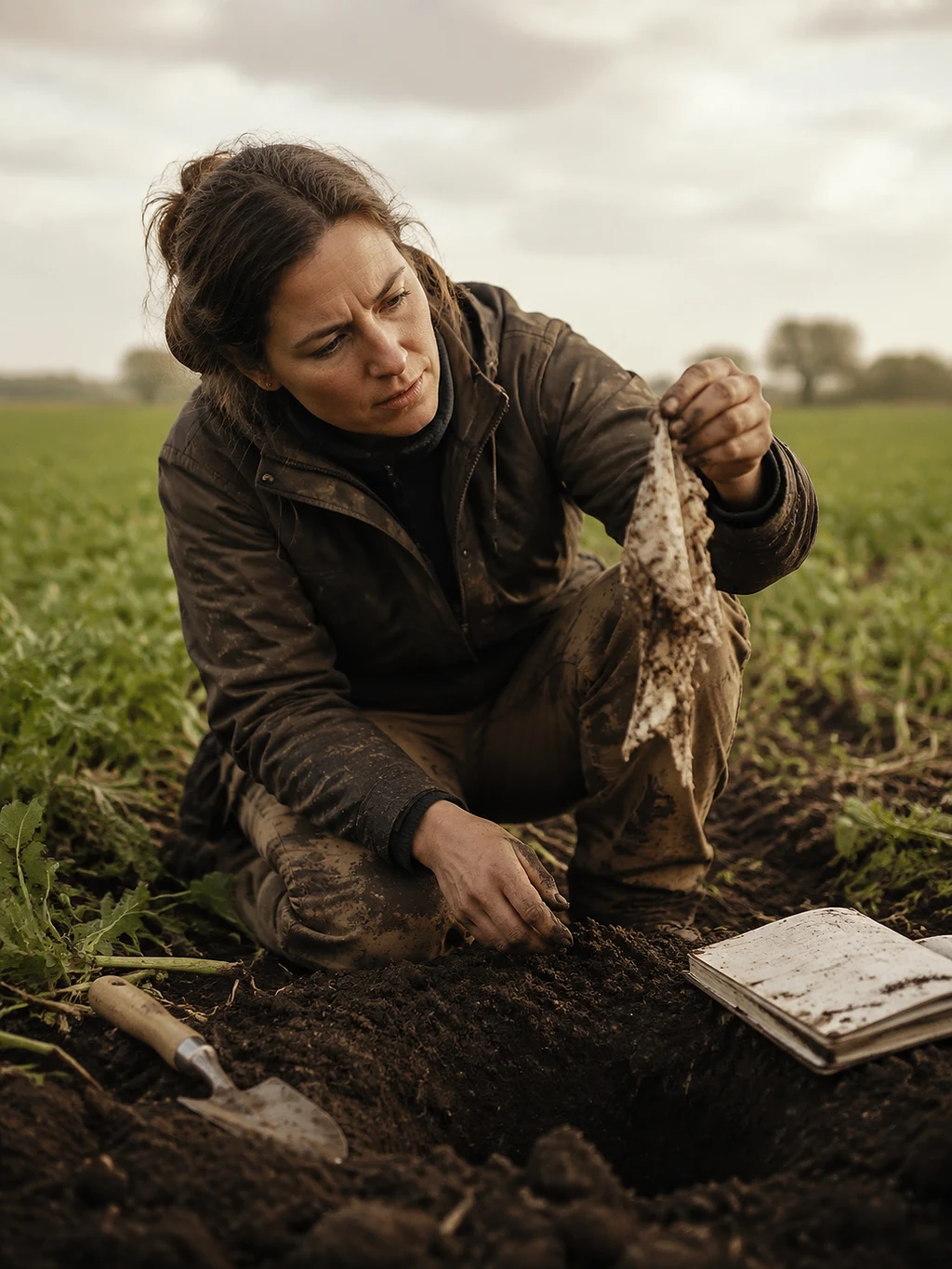
A team bought several thousand pairs of pure cotton white underpants and buried them in the ground.
Across twenty-five countries and over a thousand sites, they buried them by the same method.
After two full months, they went back and dug them up one by one, and weighed them.
It sounds like a prank, but it is a very clever way of measuring something.
Here is the logic.
Soil holds vast numbers of microbes invisible to the eye, and they break down organic matter without stopping.
Cotton is organic matter.
The healthier the soil, the more active the microbes, and the faster the cotton fibre gets eaten.
Dig them up two months later: if only a few threads remain, this ground is full of life.
If the underpants are still basically intact, the biological activity in this ground is very low.
The great advantage of the method is that it is cheap.
Measuring soil microbial activity normally means a laboratory, instruments, money.
A pair of underpants costs a few coins, and any farmer can bury them, dig them up and look for himself.
A design that looks like a joke is solving a genuinely practical problem.
Several of this year's other prizes follow exactly the same pattern.
One team studied the body odour of infants and teenagers; the conclusion was that parents generally find babies pleasant to smell, and teenagers not.
Another analysed the composition of cockroach "milk" and found its protein carries three times the energy density of cow's milk.
And a group of physicists used fluid dynamics to work out the shape of a urinal that does not splash back.
Every one of them makes you laugh first.
And every one of them makes you add: that does actually seem useful.
Someone will ask: does making jokes about science make people trust science less?
The organisers' answer has never changed.
They say what gets laughed at was never the research itself.
What gets laughed at is the assumption we carry that only serious questions deserve to be studied.
A pair of underpants buried in the ground and an expensive instrument are measuring the same thing.
There is one more change this year worth mentioning.
For the past thirty-five years, the prize was always held in America.
This year, for the first time, it moved to Europe.
A prize famous for American humour has moved to a country famous for its rigour.
That fact by itself has something of the Ig Nobel about it.
Think about it: when did you last hear something, laugh out loud, and then a moment later find yourself thinking it actually makes sense?
Listen again
Try it without the transcript and notice what sounds clearer.
What vocabulary does this episode teach?
词汇HSK 3. The claim the whole episode defends: 每一个背后都是真的、发表过的研究。
HSK 3. What the smell study produced, and what makes people laugh.
HSK 3. 这个方法最大的好处是便宜 — the point of the underpants.
HSK 3. 土壤越健康,微生物越活跃 — the variable being measured.
HSK 2. The whole argument for the method rests on it.
HSK 3. The tension the episode holds: it sounds like a joke, the scientists are serious.
The technical word, as against the everyday 土 used at lower levels.
肉眼看不见的微生物,一刻不停地在分解有机物 — the thing doing the measuring for you.
The expensive alternative: 测土壤微生物活性,本来要送实验室。
The comparison the episode lands on: a pair of underpants and an instrument measure the same thing.
听上去像恶作剧,但这是一个非常聪明的测量方法。
How every Ig Nobel sounds on first hearing — and the word the episode then argues with.
* beyond level超纲词
What grammar patterns appear in this episode?
语法越……,越……
The more of one thing, the more of another. The cleanest way to state a proportional relationship, which is exactly what the soil method is.
土壤越健康,微生物越活跃,棉纤维被吃掉得越快。
听上去像……,但……
Concedes how something sounds, then overturns it. This is the rhetorical engine of the whole episode.
听上去像恶作剧,但这是一个非常聪明的测量方法。
每一个听上去都很荒唐,但每一个背后都是真的、发表过的研究。
本来要……,而……
Contrasts what a thing normally requires against what this approach needs instead. Useful for any cost or effort comparison.
测土壤微生物活性,本来要送实验室、要仪器、要钱。而一条内裤几块钱。
Proper nouns
专有名词Sources
来源Free account
Keep learning from this story
Create a free account to keep saved words and your preferred level together.
- Keep words with their story context
- Remember your preferred level
- Build your vocabulary over time