
A Chinese podcast · Same story, 4 levels
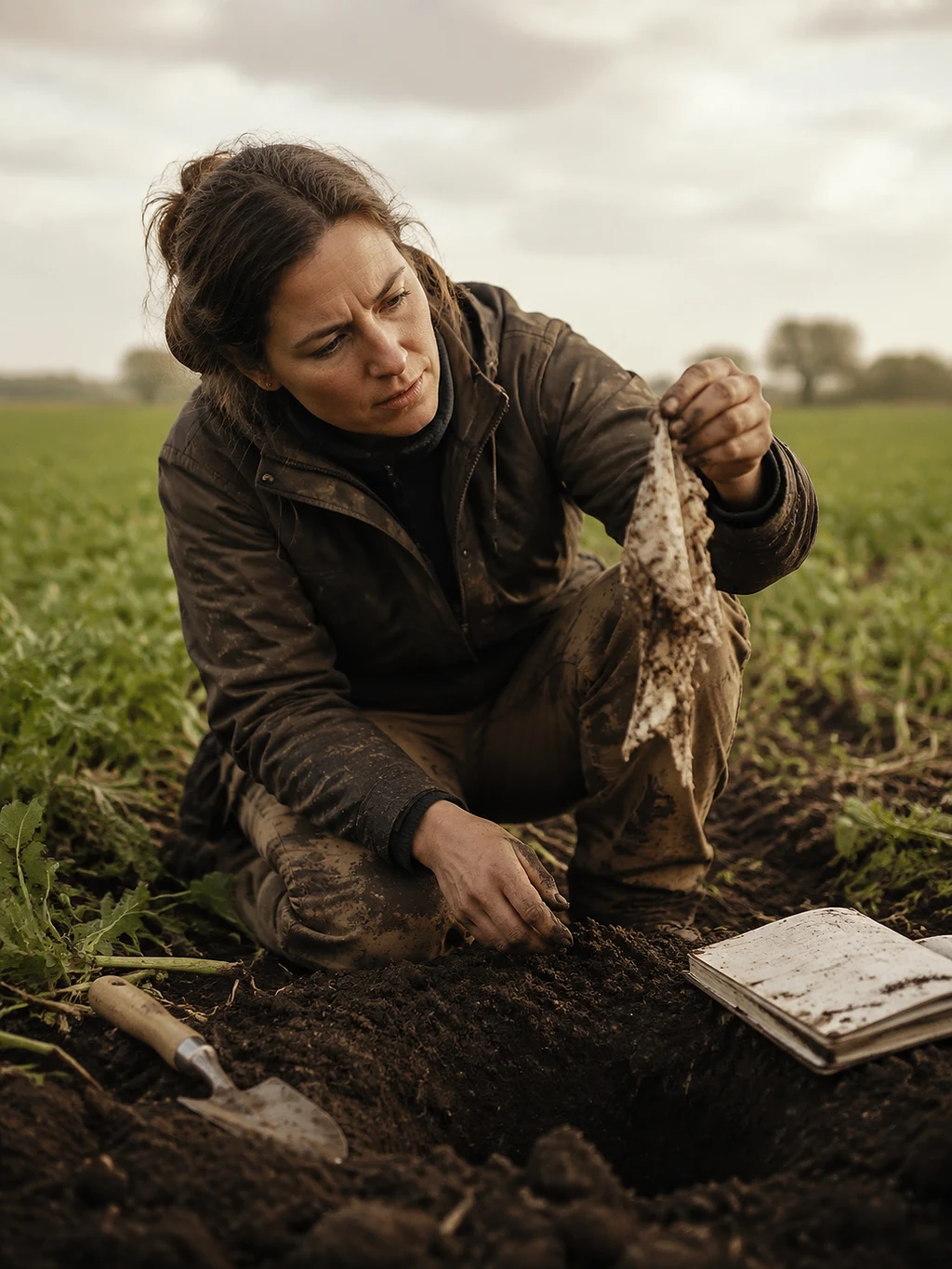
他们把几千条内裤埋进二十五个国家的土里:这项研究拿了今年的搞笑诺贝尔奖
Buried Underpants Reveal Soil Health in 25 Countries
About this story
A team buried thousands of pairs of cotton underpants across 25 countries for two months, then dug them up to measure soil health — and won a 2026 Ig Nobel Prize, awarded in Zurich for the first time in 35 years. Chinese listening practice at four levels. HSK 1 Chinese listening practice.
This is an HSK 1 Chinese listening episode that runs about 3 minutes. The full Mandarin script is shown with tap-for-pinyin and a line-by-line English translation, so you can listen and read at once — comprehensible input in the sense of Stephen Krashen's i+1 theory. It teaches 12 key vocabulary words such as 衣服、想、知道 and walks through 3 grammar patterns, each explained in English with examples. The same news story is retold at 4 difficulty levels — use the level selector above to find the version that is challenging but still understandable for you.
Read at your level
原文Read the complete story in Chinese. Reveal pinyin and English only when you need them.
English transcript reference
Today we are talking about a prize.
What is a prize?
You do something good, and people give you something.
That thing is a prize.
Some prizes are big, and everybody knows them.
The prize we are talking about today is a little different.
This prize goes to things that are funny.
You hear about it, and you laugh.
You laugh, and then you think.
Laugh first, then think.
That is what this prize is.
On September the third, someone gave out ten prizes like this.
Today we will talk about two of them.
The first prize is very funny.
Some scientists did something.
A scientist is a person who thinks about questions all day.
They bought a lot and a lot of clothes.
The clothes were all small.
They put those clothes into the soil.
What is soil?
Look down at the ground.
Vegetables grow in soil, and fruit grows in soil.
In twenty-five countries, they put clothes in the ground.
They left them for two months.
For two months, they did not look.
After two months they went back, and took the clothes out.
Why did they do that?
Listen.
There are very, very small things living in soil.
You cannot see them, but they are in there.
Those small things eat the clothes.
If the soil is good, there are more of them.
More of them, and the clothes disappear fast.
If the soil is poor, there are fewer of them.
Fewer of them, and the clothes are still there.
So by looking at the clothes, you know if the soil is good.
They put one piece of clothing in, and come back in two months.
The clothes are gone: the soil is good.
The clothes are still there: the soil is not so good.
The second prize is funny too.
Some scientists asked a question:
Do small children smell nice?
Do big children smell nice?
They asked a lot of mothers and fathers.
A lot of them said small children smell lovely.
And big children?
They said big children do not.
A lot of people laughed when they heard it.
But this is science too.
They asked many people, and they wrote it all down.
These two prizes are the same kind of thing.
First you laugh: you can do that as research?
Then you think: that is actually useful.
Clothes in the soil can tell you if the soil is good.
Whether someone smells nice can be asked too.
Something funny can also be science.
Think about it: what made you laugh first, and think after?
Listen again
Try it without the transcript and notice what sounds clearer.
What vocabulary does this episode teach?
词汇HSK 1. What went into the ground — the episode keeps it at 衣服 so the scene stays concrete.
HSK 1. Half of the prize's motto: 先笑,再想。
HSK 1. The point of the whole experiment: 看衣服,就知道土好不好。
HSK 1. Used to make soil concrete without new words: 菜在土里,水果也在土里。
HSK 1. The other half of that grounding line.
HSK 1. The waiting period the experiment turns on: 放了两个月。
Taught with floor words in the opening: 你做了很好的事,人们给你一个东西。这个东西,就是奖。
HSK 2. The first half of the motto, repeated all through: 先笑,再想。
Glossed in-band: 科学家,是天天想问题的人。
Taught by pointing at it: 你看看地上。菜在土里,水果也在土里。
The whole second prize is one question: 小孩子香不香?
HSK 3, above the floor. The scale of the study: 他们在二十五个国家,都放了衣服。
* beyond level超纲词
What grammar patterns appear in this episode?
语法先……,再……
First do one thing, then the other. It is the prize's entire motto, so this episode repeats it until it sticks.
先笑,再想。
你先笑:这个也可以做?
你想一想:什么事,你先笑,再想?
A 好,B 就多
Linked conditions — when A holds, B follows. The episode stacks four of these in a row to walk through the science one step at a time.
土好,小东西就多。
小东西多,衣服很快就没有了。
土不好,小东西就少。
把 + object + verb
Puts the object before the verb to focus on what happens to it. Very common with physically moving something.
他们把这些衣服,放到土里。
两个月,他们回去,把衣服拿出来。
Proper nouns
专有名词Sources
来源Free account
Keep learning from this story
Create a free account to keep saved words and your preferred level together.
- Keep words with their story context
- Remember your preferred level
- Build your vocabulary over time