
A Chinese podcast · Same story, 4 levels
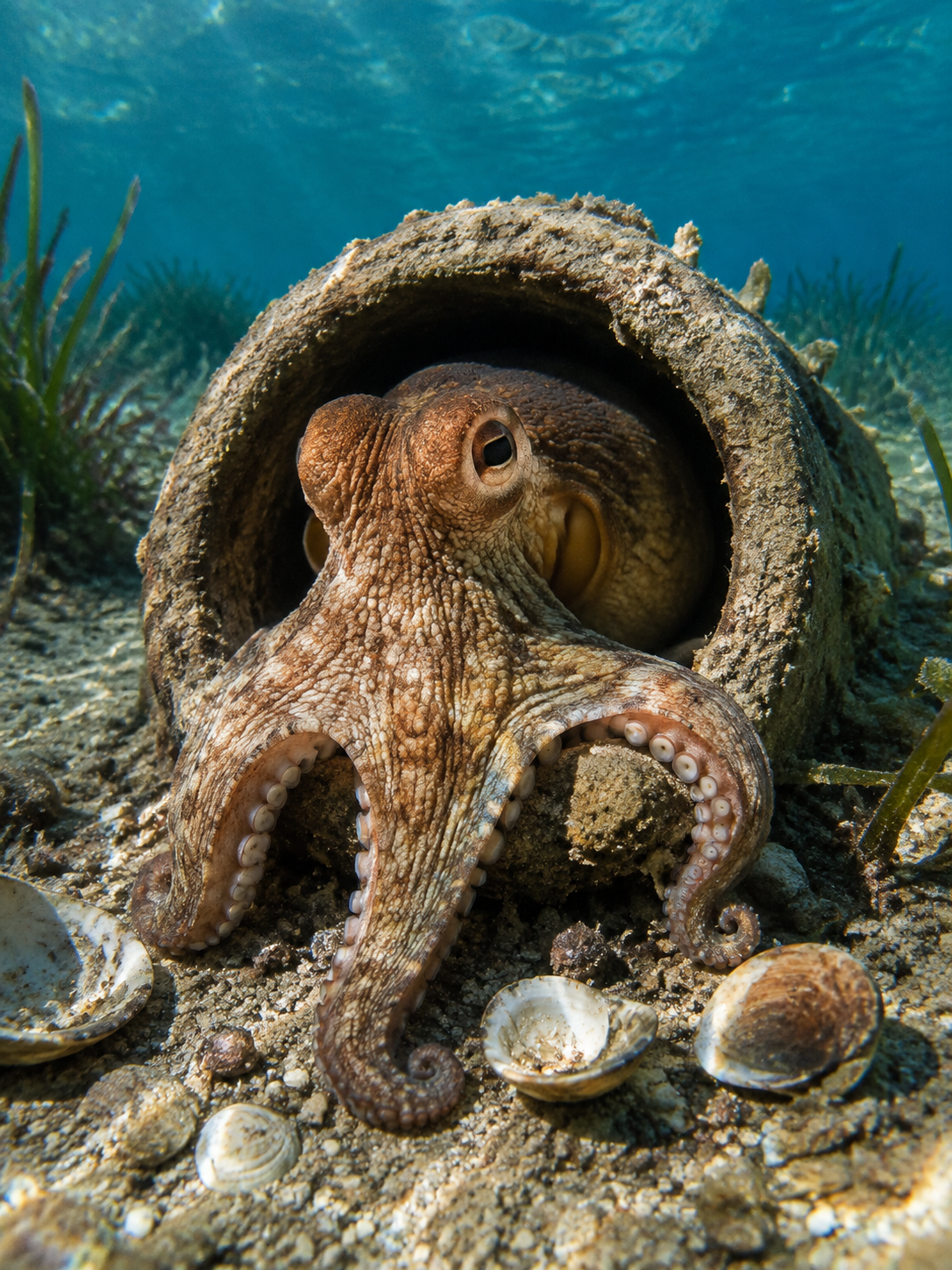
蓝蟹搭压舱水来到意大利,吃光了蛤蜊。他们放了八万只小章鱼下去——但章鱼可能不肯去。
Italy Releases 80,000 Octopuses to Fight Blue Crabs
About this story
Italy Releases 80,000 Octopuses to Fight Blue Crabs. HSK 2 Chinese listening practice.
This is an HSK 2 Chinese listening episode that runs about 2 minutes. The full Mandarin script is shown with tap-for-pinyin and a line-by-line English translation, so you can listen and read at once — comprehensible input in the sense of Stephen Krashen's i+1 theory. It teaches 6 key vocabulary words such as 船、水、怎么办 and walks through 2 grammar patterns, each explained in English with examples. The same news story is retold at 4 difficulty levels — use the level selector above to find the version that is challenging but still understandable for you.
Read at your level
原文Read the complete story in Chinese. Reveal pinyin and English only when you need them.
English transcript reference
There is a place in Italy that farms clams better than anywhere else.
Clams live in the sea, and on the outside they have a shell.
Then a crab arrived in that sea, called the blue crab.
The blue crab is not from Italy; its home is in a sea very far away.
How did it get here?
It came by ship.
When a big ship sails, it puts a great deal of water inside the ship.
When the blue crabs were small they were in that water, travelling with the ship, and crossed the sea.
A blue crab has a pair of large blue claws.
Those claws are exactly right for opening a clam shell.
So as soon as the blue crab arrived, the clams began to disappear.
People there did the sums: seventeen million euros.
What now?
Italians thought of a plan: farm octopuses.
In a small town by the sea, they raise baby octopuses in white tanks.
Once they are big enough they are released into the sea; eighty thousand have gone in already.
They also built a lot of small dens for the octopuses on the seabed.
Why octopuses?
Because in the sea, an octopus is already the crab’s natural enemy.
Is the plan working?
Nobody knows yet.
The people doing it named the problem themselves: the water with the most blue crabs is warm, and shallow.
And octopuses happen not to like that kind of water, so they may not go.
Think about it:
Something arrives that should not be here, and you release something else to eat it. Is that a good plan?
Listen again
Try it without the transcript and notice what sounds clearer.
What vocabulary does this episode teach?
词汇The crab did not swim; it came by 船.
Both the ballast 水 that carried them and the shallow 水 they live in.
The pivot of the episode: 怎么办?
What the region farms, and what is disappearing.
The blue crab’s pair of 钳子 open shells the way pliers do.
天 natural, 敌 enemy. The octopus is the crab’s 天敌.
* beyond level超纲词
What grammar patterns appear in this episode?
语法……的时候
When / at the time that. The clause comes first.
大船开的时候,会在船里放很多水。 — When a big ship sails, it puts a lot of water inside.
正好
Exactly right, as it happens — marks an uncanny fit.
那对钳子,正好能开蛤蜊的壳。 — Those claws are exactly right for opening a clam shell.
Proper nouns
专有名词Sources
来源Free account
Keep learning from this story
Create a free account to keep saved words and your preferred level together.
- Keep words with their story context
- Remember your preferred level
- Build your vocabulary over time