
A Chinese podcast · Same story, 4 levels
拉萨:走得很慢
Lhasa: 3,650 Metres, and the Body Decides
About this story
At 3,650 metres you learn to walk slowly, look up at a 117-metre palace, and drink your first salty butter tea. HSK 1 Chinese listening practice.
This is an HSK 1 Chinese listening episode that runs about 3 minutes. The full Mandarin script is shown with tap-for-pinyin and a line-by-line English translation, so you can listen and read at once — comprehensible input in the sense of Stephen Krashen's i+1 theory. It teaches 8 key vocabulary words such as 布达拉宫、大昭寺、酥油茶 and walks through 3 grammar patterns, each explained in English with examples. The same news story is retold at 4 difficulty levels — use the level selector above to find the version that is challenging but still understandable for you.
Read at your level
原文Read the complete story in Chinese. Reveal pinyin and English only when you need them.
English transcript reference
Today I'm in Lhasa.
Lhasa is very high.
When I arrived, I walked fast.
And my head went bad.
My friend said: in Lhasa, you have to walk slowly.
My friend said: today, don't do anything at all.
I slept in my room and drank a lot of water.
Later, I felt a bit better.
My friend said: Lhasa is three thousand six hundred and fifty metres up.
My friend said: there's far less air here than down below.
In Lhasa, everyone walks slowly.
In the morning, I went to see a very big building.
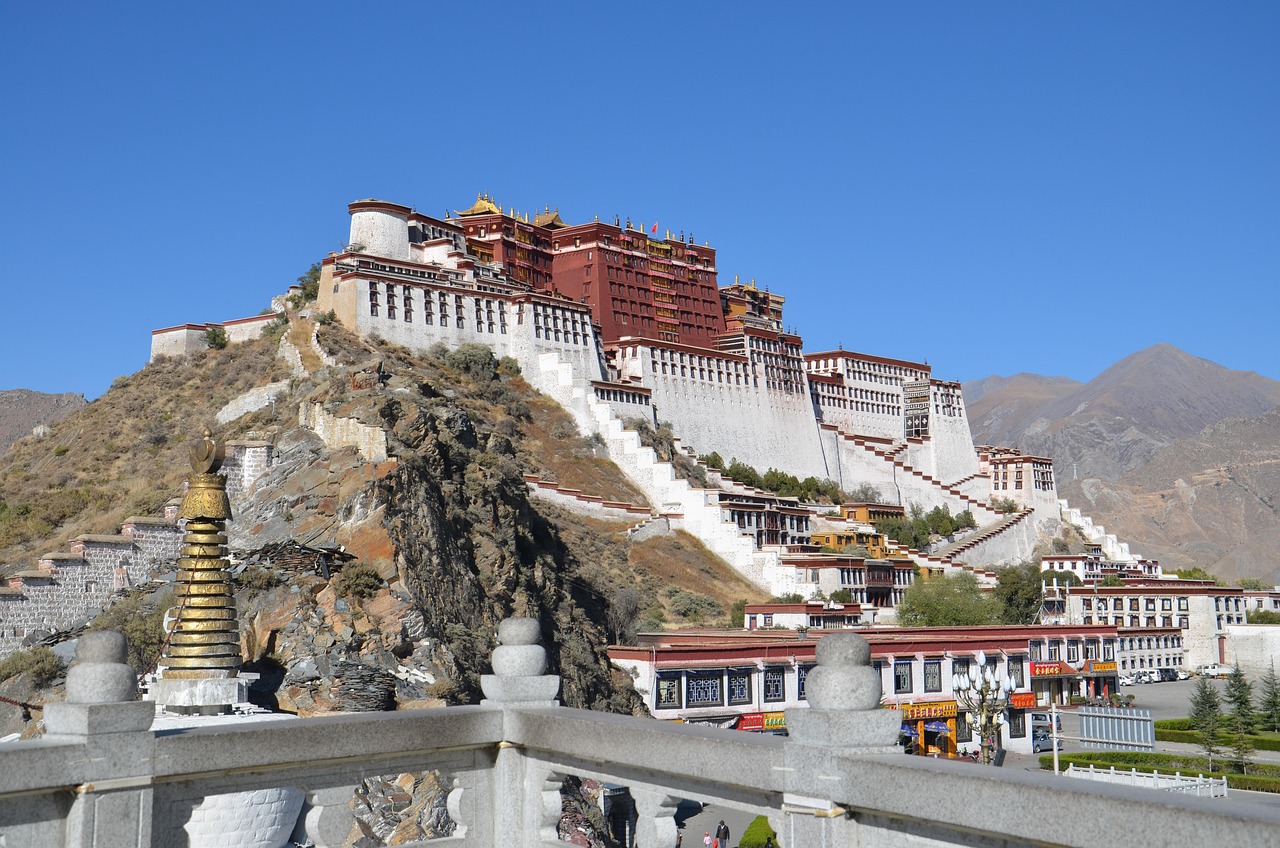
This building is called the Potala Palace.
The Potala is on a hill.
The Potala is one hundred and seventeen metres tall.
It has thirteen floors.
I said: when was it built?
My friend said: it was built in 1645.
I said: over three hundred years ago.
My friend said: yes.
In the afternoon, I went to the Barkhor.
The Barkhor is a road.
This road is a circle.
The circle is one kilometre around.
Inside the circle there's a building.
This building is called the Jokhang Temple.
The Jokhang was built in 647.
I said: 647?
My friend said: yes, more than one thousand three hundred years ago.
A lot of people are walking on this road.
Nobody comes back the other way.
I said: where are they going?
My friend said: they aren't going anywhere.
They walk this circle.
Some people walk it five times a day.
Some people are here by five in the morning.
I walked the circle too.
One kilometre isn't long.
But I walked very slowly, and I was still tired at the end.
I sat down.
Someone invited me to drink tea.
The tea is white, and a little salty.
I took a mouthful.
I took another mouthful.
My friend said: this is butter tea.
It's high here, and cold, so people drink this.
I finished it.
I wasn't cold any more.
Now, I look at the Potala.
One hundred and seventeen metres, thirteen floors, over three hundred years.
And the Jokhang below it, over one thousand three hundred years.
This one-kilometre road, walked by someone every single day.
And here, I walk very slowly.
When you go somewhere very high, will you walk fast, or slowly?
Listen again
Try it without the transcript and notice what sounds clearer.
What vocabulary does this episode teach?
词汇HSK 1. Slowly, here, whether you like it or not.
HSK 1. The whole point of the episode.
HSK 1. Why people drink what they drink.
117 metres tall, thirteen floors, begun in 1645.
Built in 647 — a thousand years older than the palace.
Salty and oily, and exactly what a cold high place calls for.
The Barkhor is one kilometre around, walked one way only.
3,650 metres — the one fact that governs everything else.
* beyond level超纲词
What grammar patterns appear in this episode?
语法verb + 得 + adverb
得 links a verb to how it is done.
朋友说:在拉萨,你要走得很慢。
没有人 + verb
States that nobody does something.
没有人回来。
Proper nouns
专有名词Free account
Keep learning from this story
Create a free account to keep saved words and your preferred level together.
- Keep words with their story context
- Remember your preferred level
- Build your vocabulary over time