
A Chinese podcast · Same story, 4 levels
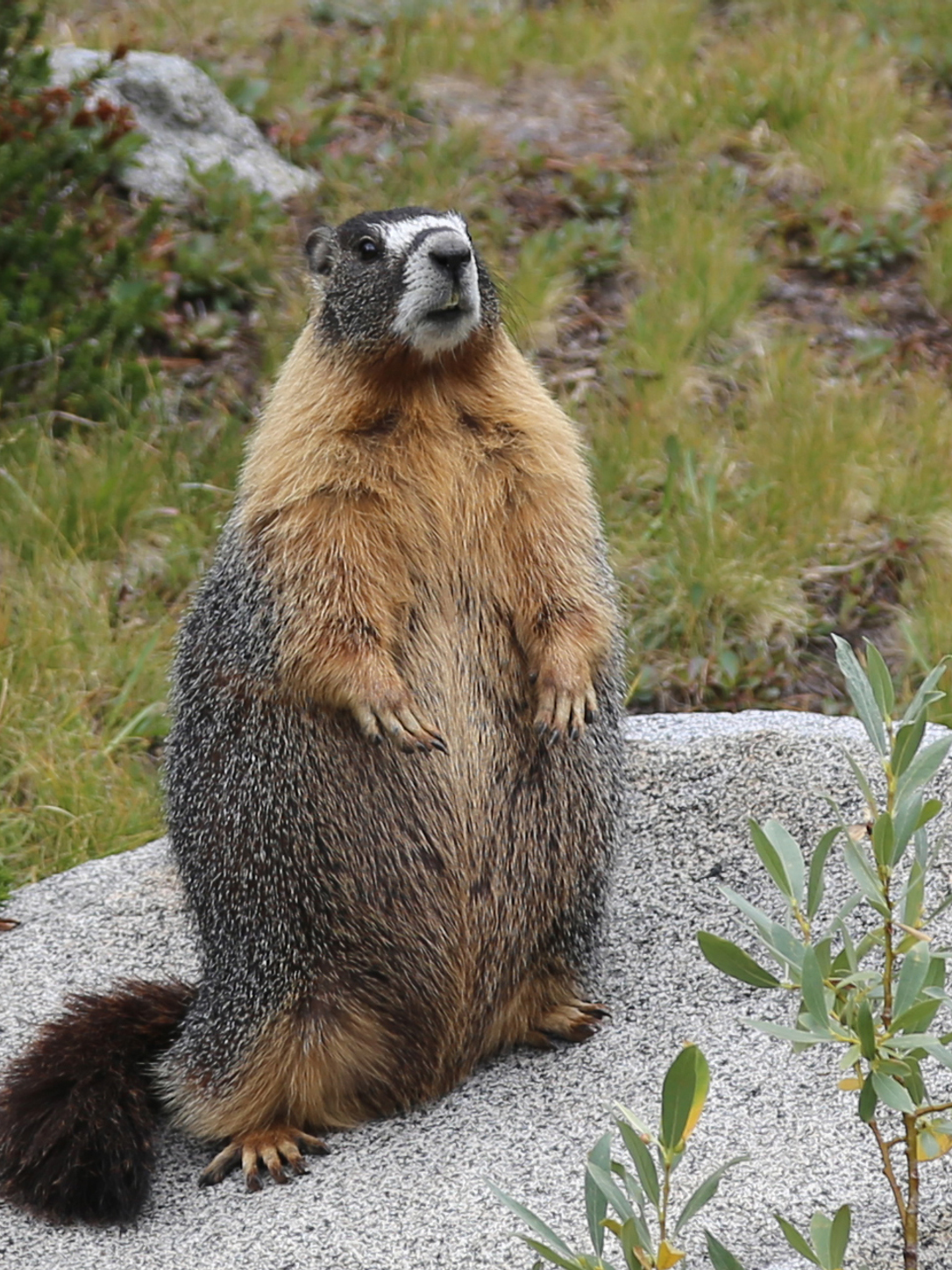
Photo: Dcrjsr · CC BY 4.0
六十四年的土拨鼠研究没钱了,老师把照片放上 OnlyFans
Marmot Study Turns to OnlyFans After Funding Cut
About this story
Marmot Study Turns to OnlyFans After Funding Cut. HSK 1 Chinese listening practice.
This is an HSK 1 Chinese listening episode that runs about 2 minutes. The full Mandarin script is shown with tap-for-pinyin and a line-by-line English translation, so you can listen and read at once — comprehensible input in the sense of Stephen Krashen's i+1 theory. It teaches 13 key vocabulary words such as 住、看、写 and walks through 3 grammar patterns, each explained in English with examples. The same news story is retold at 4 difficulty levels — use the level selector above to find the version that is challenging but still understandable for you.
Read at your level
原文Read the complete story in Chinese. Reveal pinyin and English only when you need them.
English transcript reference
Let us talk about a small thing.
It is not big.
It is not a cat, and not a dog.
It lives up on a mountain.
It is a small animal.
This small animal is called a marmot.
Marmots live on the mountain, eat what is on the mountain, and run about on the mountain.
On mountains in America there are a lot of marmots.
There are some teachers who watch these marmots on the mountain.
How many years have they been watching?
Sixty-four years.
Sixty-four years ago, your mum and dad were still very small.
Back then, there were already people on that mountain watching marmots.
One year, one year, one year.
They watch: how many marmots are on the mountain?
What do marmots eat?
Where do marmots go?
They watch, they write, they record it.
Sixty-four years of it, all written down.
But doing this takes money.
Going up the mountain takes money, staying on the mountain takes money, and people take money too.
Someone used to give them money.
Later, that someone stopped giving.
With no money, this sixty-four-year thing could not carry on.
One of the teachers thought: we have no money.
But we do have marmots.
We have a great many photographs of marmots.
So they did something.
There is a website where people can sell photographs on it.
On this website, what gets sold is not animal photographs.
But up they went.
They said: we have marmots here.
A great many marmots.
Give us money, and we will let you look at marmots.
So — what happened next?
They took in four thousand.
Four thousand is not a lot.
But this four thousand came from marmots.
Think about it: what do you have that someone might want to look at?
Listen again
Try it without the transcript and notice what sounds clearer.
What vocabulary does this episode teach?
词汇它,住在山上 = it lives up on a mountain.
在山上看这些土拨鼠 = watch these marmots on the mountain.
他们看,他们写 = they watch, they write.
做这个事要钱 = doing this takes money.
它不是猫,也不是狗 = it is not a cat, and not a dog.
这个小动物,叫土拨鼠 = this small animal is called a marmot.
它是一个小动物 = it is a small animal.
它,住在山上 = it lives on the mountain.
做这个事要钱 = doing this takes money.
很多土拨鼠的照片 = a great many marmot photographs.
人可以在上面卖照片 = people can sell photographs on it.
有一个网站 = there is a website.
你给我们钱 = you give us money.
What grammar patterns appear in this episode?
语法不是……,也不是……
Rules out two familiar things before naming an unfamiliar one.
它不是猫,也不是狗。
……要钱
"X costs money". Repeated to build the whole problem of the story.
做这个事要钱。
上山要钱,住在山上要钱。
你……,我们就……
"if you do X, then we will do Y". A plain conditional offer.
你给我们钱,我们就给你看土拨鼠。
Proper Nouns
专有名词Sources
来源Free account
Keep learning from this story
Create a free account to keep saved words and your preferred level together.
- Keep words with their story context
- Remember your preferred level
- Build your vocabulary over time