
A Chinese podcast · Same story, 4 levels
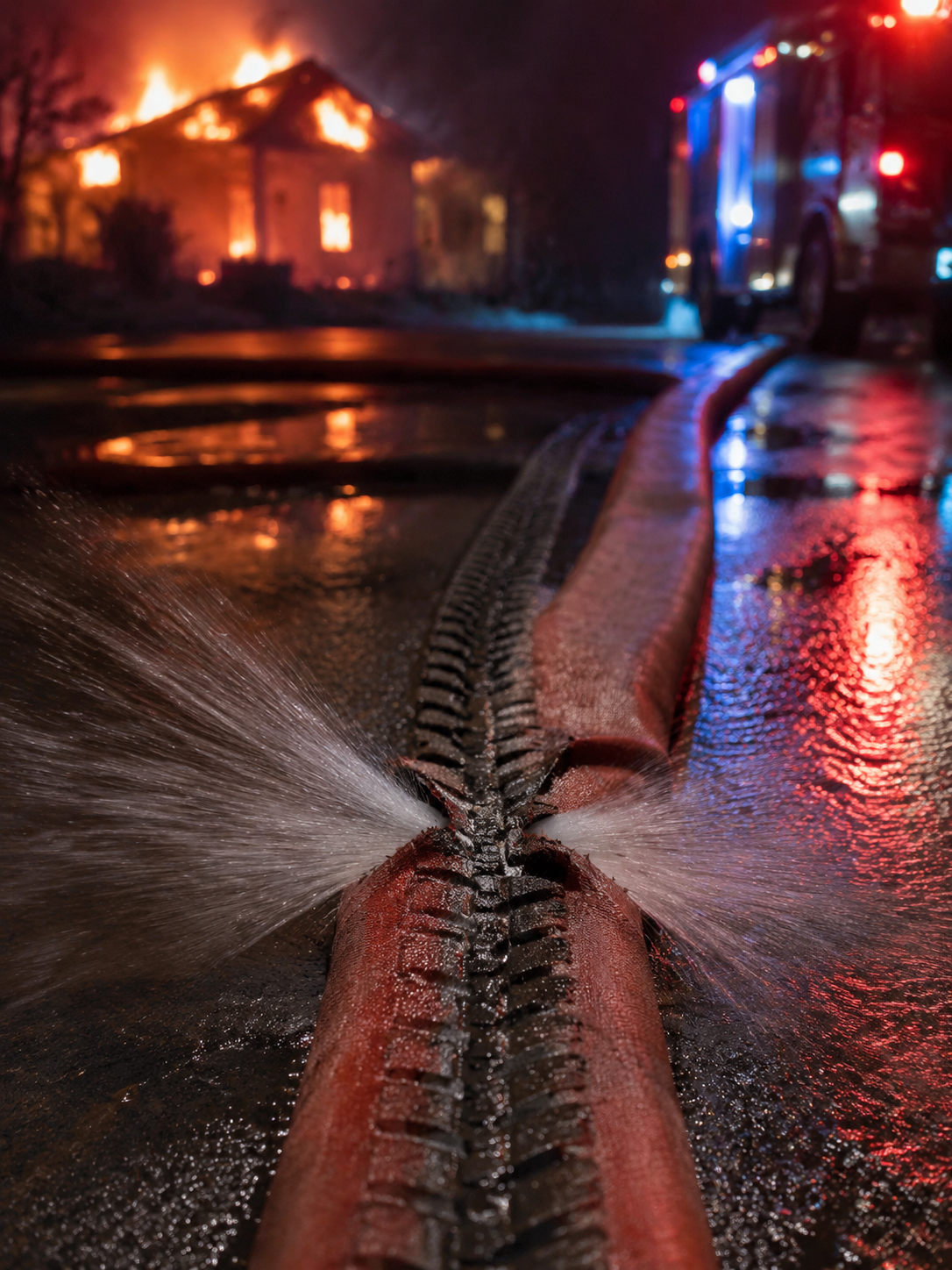
半夜四点房子着火,他开走了来救他的消防车,还碾过了正在给他家浇水的水带。
Man Steals Fire Truck at His Own House Fire
About this story
Man Steals Fire Truck at His Own House Fire. HSK 3 Chinese listening practice.
This is an HSK 3-4 Chinese listening episode that runs about 2 minutes. The full Mandarin script is shown with tap-for-pinyin and a line-by-line English translation, so you can listen and read at once — comprehensible input in the sense of Stephen Krashen's i+1 theory. It teaches 6 key vocabulary words such as 水、正在、辆 and walks through 3 grammar patterns, each explained in English with examples. The same news story is retold at 4 difficulty levels — use the level selector above to find the version that is challenging but still understandable for you.
Read at your level
原文Read the complete story in Chinese. Reveal pinyin and English only when you need them.
English transcript reference
Last Tuesday, at four in the morning, in the small town of Dalton in New Hampshire, a house caught fire.
The owner of the house was a thirty-year-old man.
The fire trucks came.
The most time-consuming part of fighting a fire is not spraying water. It is laying the hose.
The water is not on the truck; it has to be drawn from a source some distance away.
Firefighters couple the hose lengths together and lay them along the ground, all the way to the edge of the fire.
So that night, there were several hose lines lying along that road.
Inside every one of them was the water going onto his house.
What happened next is hard to explain.
This man got into a rescue truck and drove it away.
At four in the morning, he drove away a truck that had come to save his home.
As he drove, he struck another engine that was actively fighting the fire.
He also ran his wheels over the hose lines on the ground, one after another.
Those hose lines were supplying water to his own house.
Three firefighters on scene were nearly hit by him.
Later, the truck went into another family’s yard and was wrecked.
He got out, walked to that family’s door, and started taking things.
When the state police arrived he was still standing at that door, and he was arrested right there.
He now faces several charges: stealing the truck, the collisions, and taking things at someone else’s door.
Gather it up and the shape is clear.
The truck that came to save his house — he drove it away.
The hoses that were saving his house — he crushed them under his wheels.
Every single thing he damaged was, at that moment, helping him.
Think about it:
Why would a person dismantle, with his own hands, the thing that is saving him?
Listen again
Try it without the transcript and notice what sounds clearer.
What vocabulary does this episode teach?
词汇正在浇他家的水 — the water pouring onto his house.
正在灭火的消防车 — the engine that is in the middle of fighting the fire.
一辆救援车 — one rescue truck. All wheeled vehicles take 辆.
接下来的事,很难解释 — what happened next is hard to explain.
Literally "water belt" — the flat hose firefighters lay along the ground.
他面对好几条罪名 — he faces several charges. Counted with 条.
* beyond level超纲词
What grammar patterns appear in this episode?
语法最……的,不是 A,是 B
Overturns the obvious answer. Common in explanatory writing.
救火最花时间的,不是浇水,是水带。 — The most time-consuming part of firefighting is not the spraying, it is the hose.
把 + object + verb + 在……
The 把 construction with a resulting location.
被他压在车轮下面 — crushed by him under the wheels.
一根接一根
"One after another" — 接 links the repetitions into a chain.
他还从地上的水带上碾了过去,一根接一根。 — He ran over the hose lines, one after another.
Proper nouns
专有名词Sources
来源Free account
Keep learning from this story
Create a free account to keep saved words and your preferred level together.
- Keep words with their story context
- Remember your preferred level
- Build your vocabulary over time