
A Chinese podcast · Same story, 4 levels
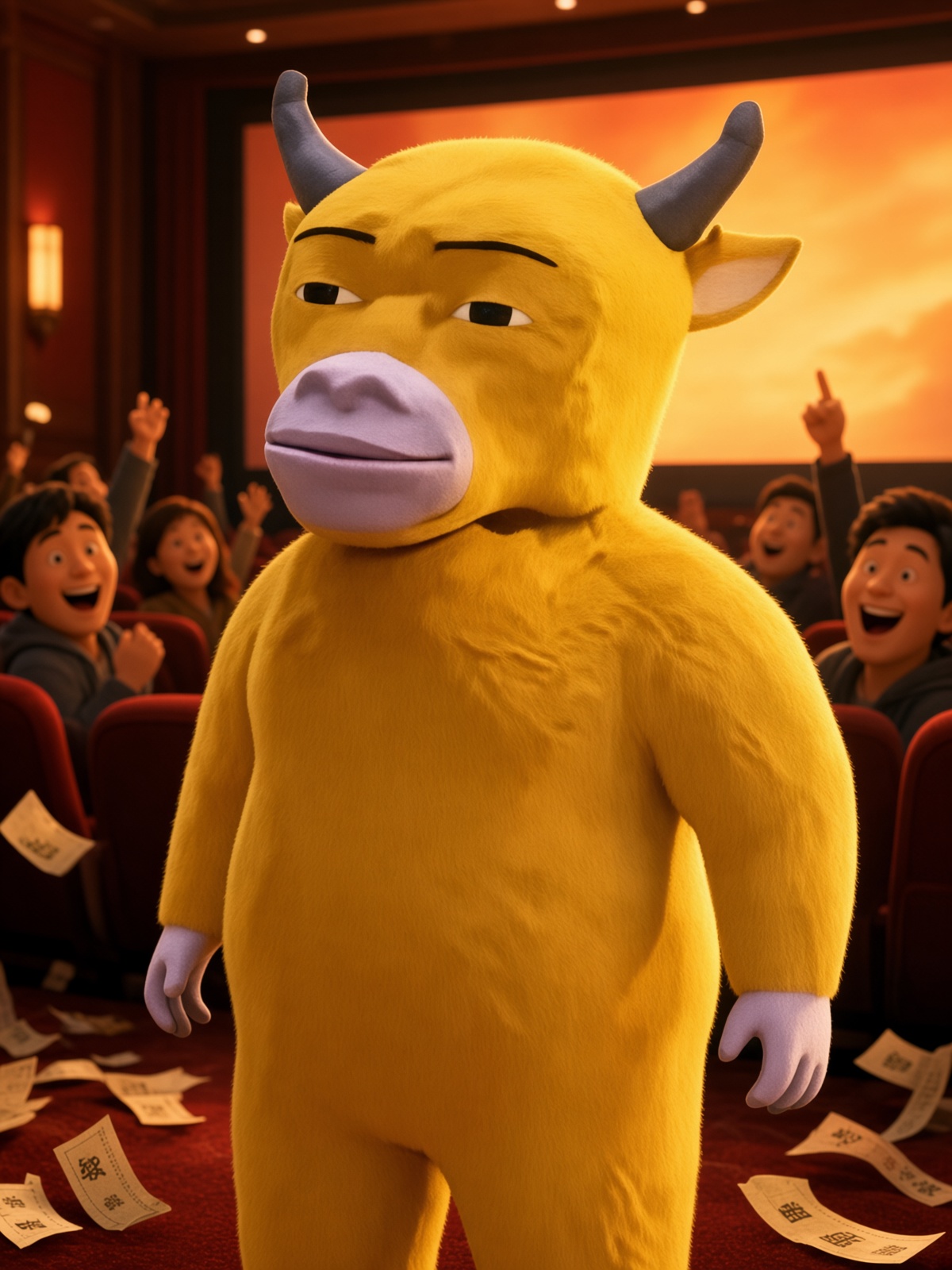
《牛来》:网上的嘲笑,把一部做得很差的动画电影送上了两千多万票房
Niu Lai Mockery Drives 20-Million-Yuan Box Office
About this story
Niu Lai’s box-office reversal: mocked animation, shareable flaws, and tickets bought to see how bad it really was. HSK 5-6 Chinese listening practice.
This is an HSK 5-6 Chinese listening episode that runs about 3 minutes. The full Mandarin script is shown with tap-for-pinyin and a line-by-line English translation, so you can listen and read at once — comprehensible input in the sense of Stephen Krashen's i+1 theory. It teaches 12 key vocabulary words such as 观众、导演、作品 and walks through 3 grammar patterns, each explained in English with examples. The same news story is retold at 4 difficulty levels — use the level selector above to find the version that is challenging but still understandable for you.
Read at your level
原文Read the complete story in Chinese. Reveal pinyin and English only when you need them.
English transcript reference
Why did an animated film mocked as terribly made suddenly sell more than 20 million yuan in tickets?
Niu Lai's viewers gave the answer: they wanted to see with their own eyes how bad it could be.
The film opened on August 5; in its first ten days, fewer than 300 people watched it, and the box office was only 7,000 yuan.
Viewers then cut its low-detail models, stuttering movements, and incoherent story into clips and uploaded them to social platforms.
The little cow's unnatural walk and the stiff faces were easier to share than simply saying the film was bad.
Many people laughed at the rough images first, then sent the clips to friends, spreading the discussion.
The clips created a powerful entry point for curiosity.
The reason viewers bought tickets was to test the question repeated online: how bad could it really be?
A few seconds on a phone showed only part of the effect, so people who wanted the full experience went to cinemas.
For them, buying a ticket was both watching a film and joining a group event that had begun online.
The cinema made that event even bigger.
Viewers laughed together at the walk and strange dialogue; some recorded reactions and sent new clips and jokes back to the platform.
Online mockery brought cinema viewers, and cinema laughter created more online content.
Private viewing became a shared spectacle that could be reposted again and again.
As the topic grew, some cinemas added screenings and the box office jumped from thousands to more than 20 million yuan.
Niu Lai follows a little cow growing in a dream. Director Xin Yumeng had worked in landscape design, spent about five years completing it, and his mother Sun Lifang helped with writing, voice work, and the ending song.
That background explains where the film came from, but it was not the direct reason for the box-office reversal.
The direct reason was that the film's roughness became visible.
Some criticized the images, some copied clips, and some turned their viewing experiences into jokes; each criticism became new material to spread.
The film did not become more polished because it was popular, nor did it receive universal praise because the box office rose.
It simply made wanting to see how bad it was into a reason strong enough to buy a ticket.
So Niu Lai is not a film that was misunderstood and later proved excellent.
It followed another path: flaws became shareable content, sharing created group curiosity, group curiosity brought tickets, and tickets kept the discussion going.
Viewers did not change their judgment of the production quality, but together they turned an unnoticed film into a news event.
Listen again
Try it without the transcript and notice what sounds clearer.
What vocabulary does this episode teach?
词汇HSK 3. 《牛来》的观众给出了答案。
HSK 4. 导演辛雨萌此前从事景观设计。
HSK 4. 花了约五年完成作品。
HSK 4. 观众并未改变对制作质量的判断。
HSK 3. 购票又让更多人继续讨论。
HSK 4. 不是一部先被误解、后来证明优秀的电影。
HSK 4. 后来证明优秀的电影 — the path this film did not take.
HSK 3. 购票既是看电影,也是参加一个已经在网上开始的集体事件。
票房从几千元跃升到两千多万元。
这些制作背景……却不是票房逆转的直接原因。
有人把观影经历写成段子。
原本的个人观看,变成了可以被反复转发的共同围观。
* beyond level超纲词
What grammar patterns appear in this episode?
语法Names two identities at once. Buying a ticket was both watching a film and joining an online event.
购票既是看电影,也是参加一个已经在网上开始的集体事件。
不是……。它走的是……
Rejects the expected story, then names the real path: flaws became shareable content.
《牛来》不是一部先被误解、后来证明优秀的电影。它走的是另一条路径:缺陷成为可分享的内容。
As the topic grew, some cinemas added screenings and the box office jumped.
随着话题变大,部分影院临时增加场次,票房从几千元跃升到两千多万元。
Proper nouns
专有名词Sources
来源Free account
Keep learning from this story
Create a free account to keep saved words and your preferred level together.
- Keep words with their story context
- Remember your preferred level
- Build your vocabulary over time