
A Chinese podcast · Same story, 4 levels
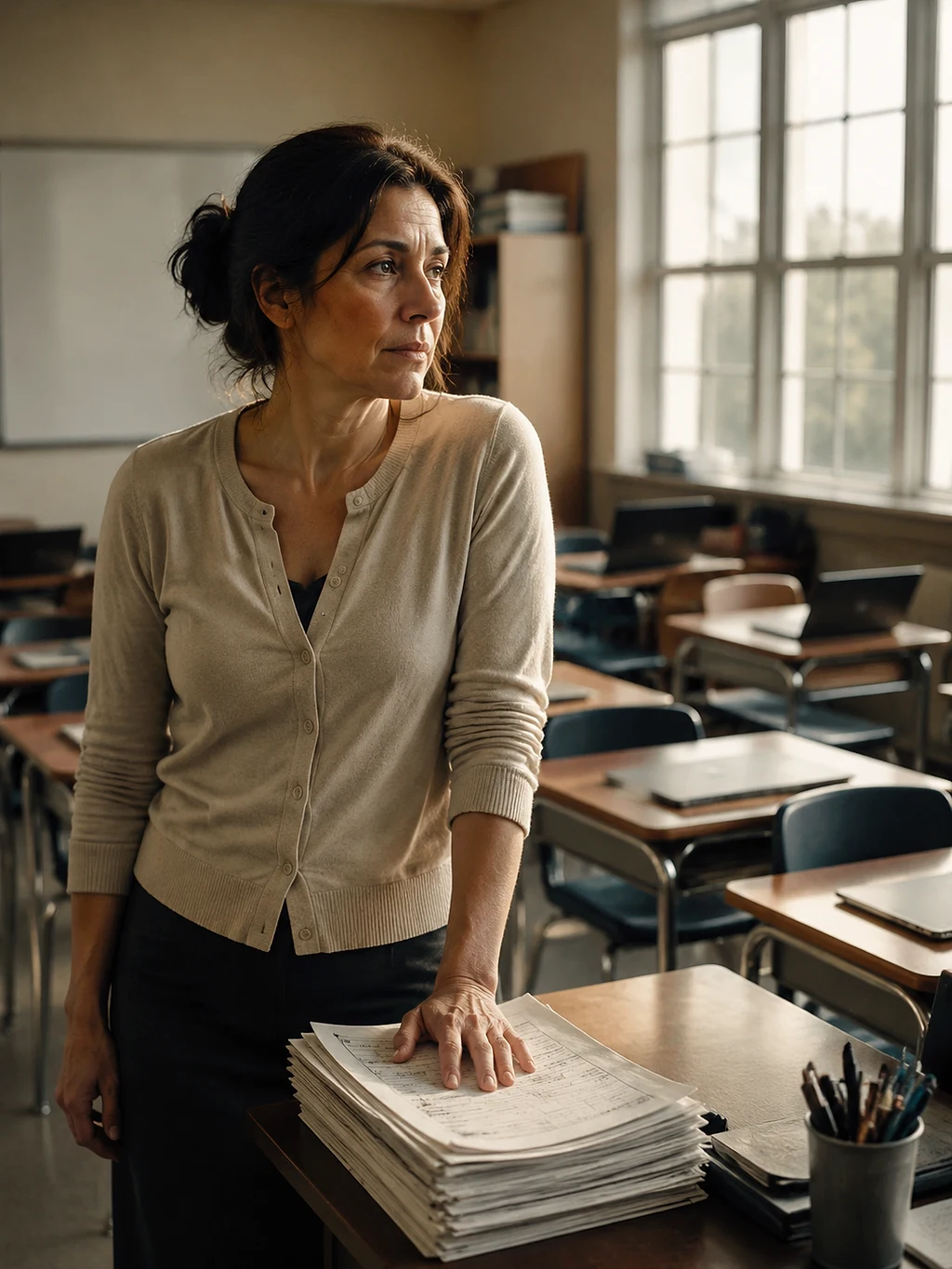
纽约禁止六十万中小学生在校用 AI:反对的人说,这还不够
NYC Bans AI in Schools for 600,000 Children
About this story
New York City, the largest school district in America, has banned generative AI for 600,000 students from pre-K through 8th grade — while letting teachers keep using it. The loudest objection is that one year is too short. Chinese listening practice at four levels. HSK 3 Chinese listening practice.
This is an HSK 3-4 Chinese listening episode that runs about 4 minutes. The full Mandarin script is shown with tap-for-pinyin and a line-by-line English translation, so you can listen and read at once — comprehensible input in the sense of Stephen Krashen's i+1 theory. It teaches 12 key vocabulary words such as 技术、危险、组织 and walks through 3 grammar patterns, each explained in English with examples. The same news story is retold at 4 difficulty levels — use the level selector above to find the version that is challenging but still understandable for you.
Read at your level
原文Read the complete story in Chinese. Reveal pinyin and English only when you need them.
English transcript reference
Let's start with a number: six hundred thousand.
On September the second, New York City announced that six hundred thousand primary and middle school students may no longer use AI at school.
New York runs the largest school system in America, and those six hundred thousand are roughly two-thirds of it.
From pre-K all the way to eighth grade, everyone is covered.
In scale, this is the furthest any American district has gone so far.
To understand it, you first need to know what has been happening in schools these past two years.
AI arrived in schools fast.
Some products teach children to read, correcting a mispronounced word on the spot.
Some are chat companions — a child with something on their mind can tell it to the machine.
And when there is homework, you ask, the answer appears, and it will write it up for you as well.
The companies selling these products have had one line for years: this is the future of education, and it cannot be stopped.
The mayor, announcing the policy, answered that line head-on.
He said: the tech industry wants us to believe that AI-powered early education is not only inevitable, but necessary.
He said: we do not see it that way.
So what exactly got switched off?
First, the AI tools schools issued to students are shut down entirely.
One reading-tutor AI that had been running a long while was stopped along with the rest.
Second, companion chatbots that talk with students may not be installed on school devices at all.
Even one large company's general AI assistant was disabled on school computers.
Third, screen time got pulled in as well.
Eight to ten-year-olds: thirty minutes a day recommended.
Eleven to thirteen: forty-five minutes.
For younger children, one-to-one screen time is tighter still.
There is one arrangement here that sounds strange the first time you hear it.
Students cannot use it; teachers can.
Teachers may use AI to prepare lessons and handle administrative work, as long as the tool itself is safe.
Why the difference?
New York's logic is actually quite clear.
A teacher's judgement is already formed; AI saves them time, and that time goes back to the students.
An eight-year-old's judgement is still forming.
What they need to practise at this stage is learning how to think a thing through.
If AI finishes a seven-year-old's homework, what exactly did the seven-year-old practise?
It is not a blanket ban either.
Several groups of students may still use it.
Students with disabilities use AI as assistive technology — it reads for them, it speaks for them.
Students who have just arrived in America and whose English is still weak may use it.
And older students taking computing courses, who may go into the field, are unaffected.
Over the coming year, New York has taken on a fairly laborious job.
Every technology product in use in the schools gets reviewed again.
The standard is whether the thing is genuinely essential to learning.
Anything that is not essential gets dropped.
The review looks at whether the vendor is accountable, whether there are ethical problems, whether it actually helps teaching, whether there is research behind it, and what teachers and students say after using it.
Five pilots have been kept at high school level, running only vetted tools.
And this last point may run against your instinct.
The people criticising New York are objecting from a direction you might not expect.
They say a year is too short.
One group opposed to AI in schools says that keeping high school pilots at all is dangerous in itself.
They say those products still have no clear evaluation, and parents have no clear way to opt out.
So the two sides of this are: tech companies saying it cannot be stopped, and parent groups saying it has not been stopped nearly enough.
New York has put itself in the middle, and given itself one year.
Think about it: when you were small there was a problem you thought about for a long time before it came clear.
If something had been sitting right there that gave you the answer the moment you asked, would you have thought about it that long?
Listen again
Try it without the transcript and notice what sounds clearer.
What vocabulary does this episode teach?
词汇HSK 3. What the year-long review covers: 每一个技术产品,都要重新审一遍。
HSK 3. The critics' word for the remaining high-school pilots.
HSK 3. 一个反对 AI 进校园的组织 — the parent group that says a year is not enough.
HSK 3. One of the review criteria: 有没有研究支持。
HSK 2. The pivot of the teacher/student distinction.
HSK 3. 身体不方便的学生 — the assistive-technology exemption.
The bottom of the age range covered: 从幼儿园一直到八年级。
Where the argument becomes concrete: 作业让 AI 写完了,他到底练了什么?
陪伴型机器人 — the companion chatbots banned from school devices.
The word that makes the teacher/student line make sense: 老师的判断力已经长好了。
The five kept at high school level — and the thing critics call dangerous.
One of the review dimensions: 有没有伦理问题。
* beyond level超纲词
What grammar patterns appear in this episode?
语法不是……一刀切
一刀切 is "one cut fits all" — a blanket rule applied without exceptions. Extremely common in Chinese policy talk, and here it introduces who is still allowed to use AI.
也不是一刀切。
有几类学生仍然可以用。
非……不可
Must, cannot do without. 非用不可 = genuinely essential. It is the exact threshold the review sets.
标准是:这个东西对学习是不是非用不可。
不是非用不可的,就下架。
一边是……,一边是……
Lays out two opposing positions side by side. It is how the episode holds both sides without picking one.
一边是科技公司说挡不住,一边是家长团体说停得还不够。
Proper nouns
专有名词Sources
来源Free account
Keep learning from this story
Create a free account to keep saved words and your preferred level together.
- Keep words with their story context
- Remember your preferred level
- Build your vocabulary over time