
A Chinese podcast · Same story, 4 levels
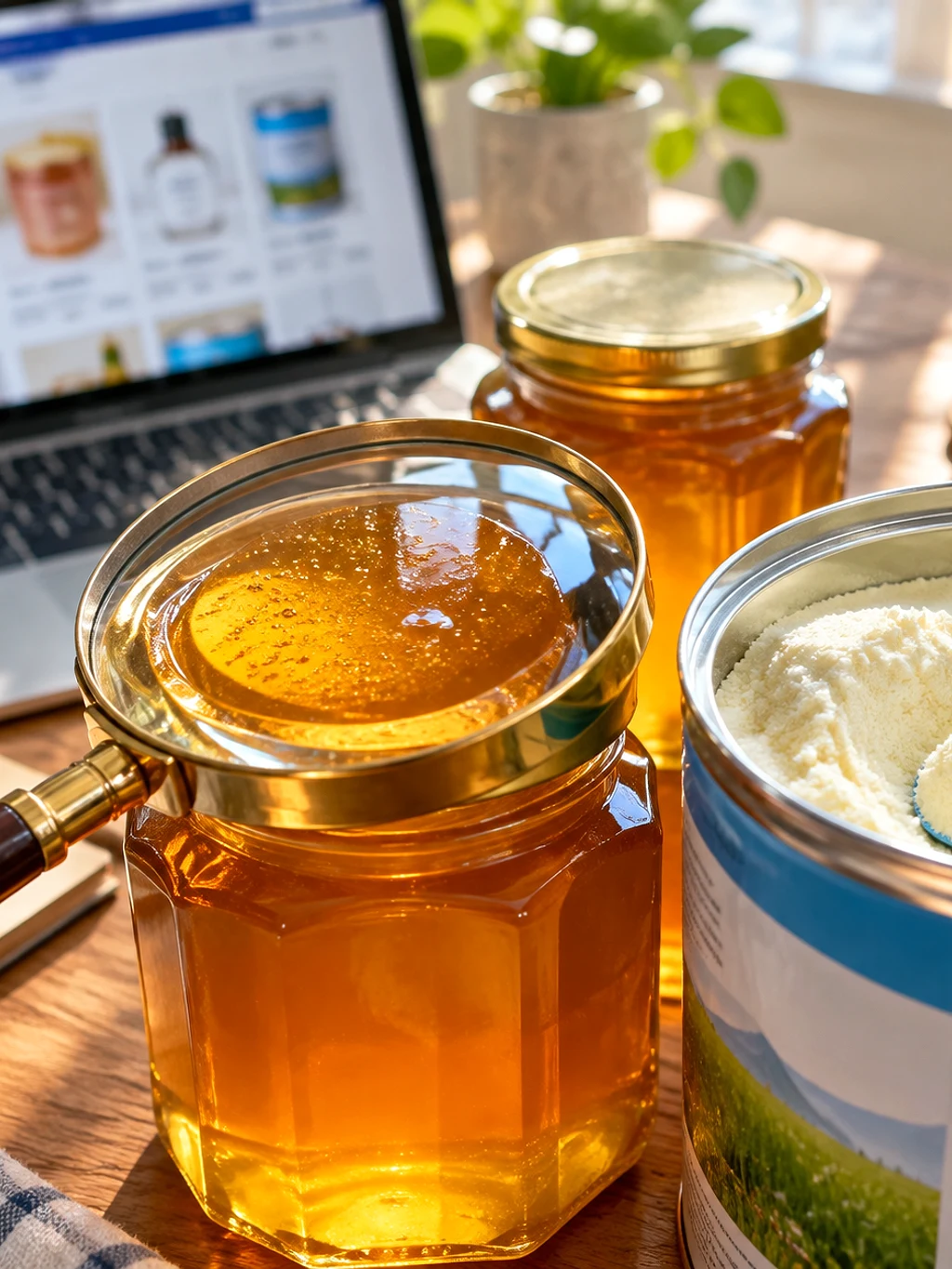
假蜂蜜、假驼奶、减肥糖和“幽灵外卖”:最高法公布网络食品安全犯罪典型案例
Fake Honey, Fake Camel Milk, Diet Sweets and 'Ghost Takeout': China's Top Court Publishes Typical Online Food-Safety Crimes
About this story
Syrup sold as imported linden honey at six yuan a jin, 1,200 orders a day; fake camel milk powder aimed at the elderly; diet sweets laced with a diuretic; 3,961 forged licences behind 'ghost' delivery restaurants. China's Supreme People's Court and Procuratorate published these typical online food-safety cases and the sentences, up to 15 years. Chinese listening practice at four levels. HSK 5-6 Chinese listening practice.
This is an HSK 5-6 Chinese listening episode that runs about 4 minutes. The full Mandarin script is shown with tap-for-pinyin and a line-by-line English translation, so you can listen and read at once — comprehensible input in the sense of Stephen Krashen's i+1 theory. It teaches 12 key vocabulary words such as 平台、标准、禁止 and walks through 3 grammar patterns, each explained in English with examples. The same news story is retold at 4 difficulty levels — use the level selector above to find the version that is challenging but still understandable for you.
Read at your level
原文Read the complete story in Chinese. Reveal pinyin and English only when you need them.
English transcript reference
These days, lots of people are used to buying food online, and ordering on impulse while watching a livestream is common too.
But the honey you buy might be made of sugar water, and the diet sweets you buy might contain drugs.
Recently, China's Supreme People's Court and Supreme People's Procuratorate published several typical cases of online food crime.
The first case is about fake honey.
In 2023, someone surnamed Huang in Changge, Henan province, mixed fake honey from syrup, glucose powder and flavourings in a workshop at home.
This person stuck foreign-language labels on the bottles, marked with "country of origin" and "importer," pretending it was imported linden honey.
The fake honey sold very cheaply online, only about six yuan a jin, with the promise "buy one bottle, get five."
This person also used other people's identity details to open several shops on different e-commerce platforms.
Helped by the platforms' recommendations, the fake honey sold twelve hundred orders a day, more than two million yuan in total.
One of the fake honey products sold more than 34,000 orders in just two months.
Tests found no honey protein in it at all.
The court sentenced this person to fifteen years in prison and a fine of 1.2 million yuan.
The court said platforms recommend cheap, good-value products to help consumers, but that is also easily exploited by bad actors.
The second case is about fake camel milk powder.
Three people bought cheap, low-quality milk powder online, repackaged it in a rented flat and stuck on fake foreign brand labels.
They opened three shops on an e-commerce platform, paid for traffic, and claimed the powder boosted immunity and lowered blood sugar.
They deliberately sold the powder to older people and students, four hundred thousand yuan's worth in total.
Tests found that the calcium, fat and protein in the powder all failed national standards.
The three were sentenced to three years and two years ten months respectively.
The third case is about toxic diet sweets.
Someone opened a shop on a livestreaming platform and hired a host to sell so-called diet tablet sweets on livestreams.
Some consumers felt dizzy and weak after eating them.
The host said it was because they were taking them the wrong way, or because everyone's body is different.
Later tests found the sweets contained a drug called buthiazide, a diuretic that should never be in food.
The host was also good at dodging the platform's checks, never saying "lose weight" on the livestreams, only "get prettier" and "slim figure."
In the end, the two were sentenced to one year and nine months respectively.
Another case took place in Inner Mongolia, and involved diet coffee.
A shopkeeper surnamed Zhang, with no food business licence and without checking the supplier's quality certificates, bought stock online, sold it on social media and recruited downstream sales agents.
Some customers had palpitations, nausea and sweating after drinking it, and someone sent it for testing on their own and found sibutramine in the coffee.
Sibutramine raises the risk of serious heart problems, and the country banned adding it to food long ago.
But even after learning this, the seller kept selling, and was eventually sentenced to two years ten months.
The court said private chats, haggling and transfers on social media are more hidden than open e-commerce platforms, and harder to regulate.
The fourth case involves "ghost takeout."
"Ghost takeout" means shops you can find on food-delivery platforms that have no real address or legitimate licences.
Someone surnamed Luo used photo-editing software to make more than 3,900 fake business licences and food business permits.
Each sold for fifty to three hundred yuan, to many places across the country, earning more than 360,000 yuan.
Some people bought these fake certificates, registered shops on delivery platforms and sold them on for others to run.
This person was sentenced to six years.
The court said that with food sold online, problems spread faster and wider than offline, and the harm is greater.
Next time you buy food online, how will you judge whether it's safe?
Listen again
Try it without the transcript and notice what sounds clearer.
What vocabulary does this episode teach?
词汇HSK 4. 电商平台 = e-commerce platform.
HSK 4. 都不符合国家标准.
HSK 4. 国家早就禁止在食品里添加.
HSK 3. 严重的心血管风险.
HSK 3. 西布曲明会增加风险.
HSK 4. 假装是从外国进口的椴树蜜.
典型案例 = typical cases, published as examples.
检测发现 = tests found.
没有蜂蜜的蛋白质.
利尿药 = a drug that makes you urinate more.
比公开的电商平台更隐蔽.
更难监管.
* beyond level超纲词
What grammar patterns appear in this episode?
语法靠着……
Relying on…, thanks to…
靠着平台的推荐,假蜂蜜每天能卖出一千二百单,一共卖了两百多万元。
分别
Respectively — pairs people with their results in order.
三个人分别被判了三年和两年十个月。
比……更……,也更……
More… than…, and also more…
法院说,在社交平台上私聊、讲价、转账,比公开的电商平台更隐蔽,也更难监管。
Proper Nouns
专有名词Free account
Keep learning from this story
Create a free account to keep saved words and your preferred level together.
- Keep words with their story context
- Remember your preferred level
- Build your vocabulary over time