
A Chinese podcast · Same story, 4 levels
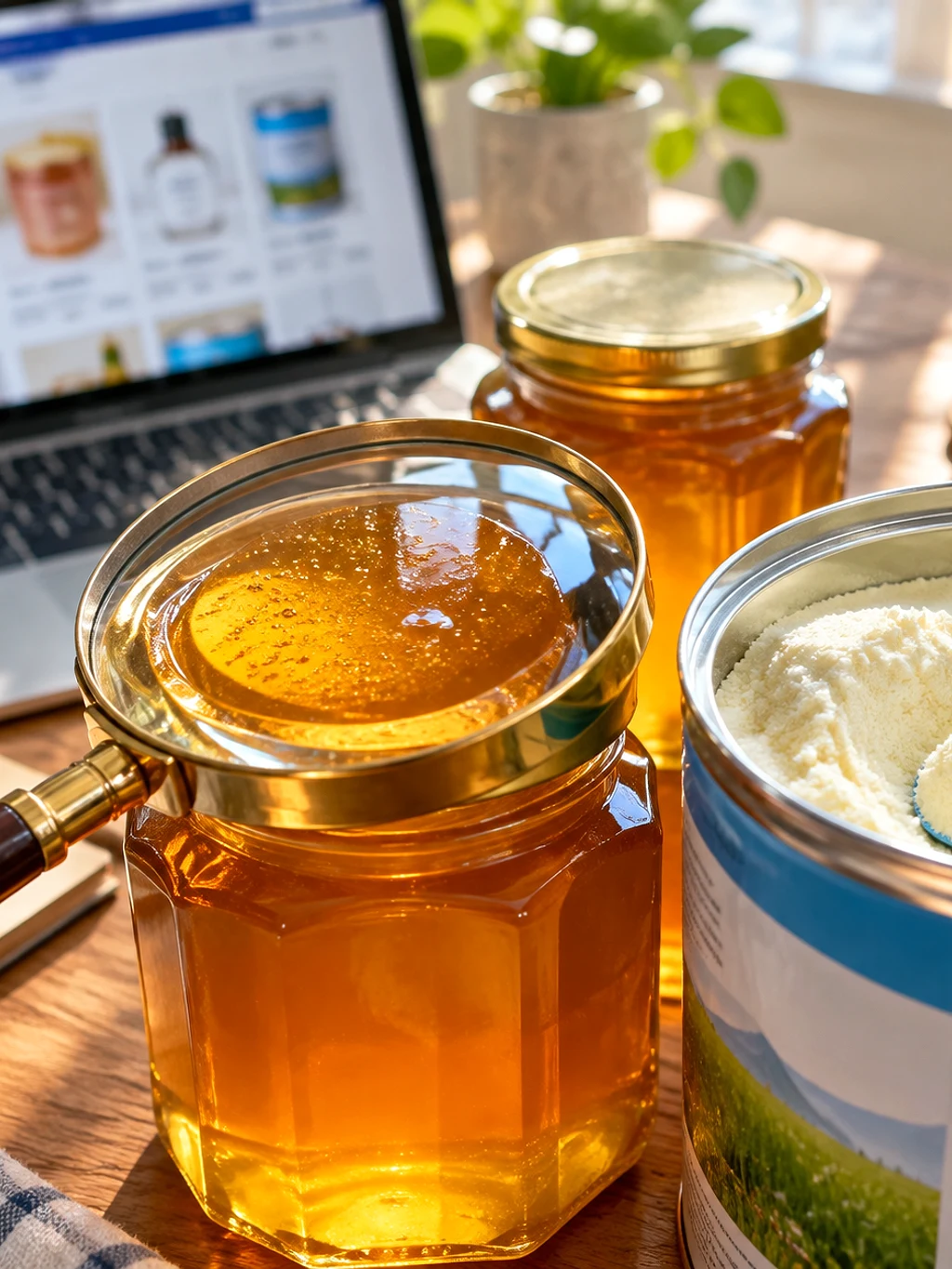
假蜂蜜、假驼奶、减肥糖和“幽灵外卖”:最高法公布网络食品安全犯罪典型案例
Fake Honey, Fake Camel Milk, Diet Sweets and 'Ghost Takeout': China's Top Court Publishes Typical Online Food-Safety Crimes
About this story
Syrup sold as imported linden honey at six yuan a jin, 1,200 orders a day; fake camel milk powder aimed at the elderly; diet sweets laced with a diuretic; 3,961 forged licences behind 'ghost' delivery restaurants. China's Supreme People's Court and Procuratorate published these typical online food-safety cases and the sentences, up to 15 years. Chinese listening practice at four levels. HSK 1 Chinese listening practice.
This is an HSK 1 Chinese listening episode that runs about 2 minutes. The full Mandarin script is shown with tap-for-pinyin and a line-by-line English translation, so you can listen and read at once — comprehensible input in the sense of Stephen Krashen's i+1 theory. It teaches 12 key vocabulary words such as 吃、水、电脑 and walks through 3 grammar patterns, each explained in English with examples. The same news story is retold at 4 difficulty levels — use the level selector above to find the version that is challenging but still understandable for you.
Read at your level
原文Read the complete story in Chinese. Reveal pinyin and English only when you need them.
English transcript reference
What do you like to eat?
Do you buy food online?
I've bought lots of food online.
Buying things online is quick, and it's nice.
But is everything online good?
Today we're talking about a few cases of food sold online.
These cases were announced by China's courts.
The first case is about honey.
Someone made honey at home.
But this honey was fake.
This person's honey was made of sugar and water.
This person said online: this is good honey from abroad.
The fake honey was very cheap.
Lots of people bought the fake honey online.
About twelve hundred people bought it every day.
This person sold more than two million yuan of fake honey.
The court said: this person has to spend fifteen years in prison.
The second case is about diet sweets.
Someone sold sweets online, saying: eat these sweets and you'll be beautiful.
But there was medicine in the sweets.
Some people felt very unwell after eating them.
The person selling the sweets said: you didn't take them the right way.
Later, the two people who sold the sweets went to prison too.
The third case is about restaurants online.
When you buy food online, which restaurant does it come from?
To open a restaurant, you need a licence to open a restaurant.
Someone made more than 3,900 fake licences on a computer.
Each fake licence sold for fifty to three hundred yuan.
Some people bought fake licences and opened restaurants online.
Where these restaurants were and who cooked the food, nobody knew.
The person who made the fake licences has to spend six years in prison.
The court said: when bad things are sold online, lots and lots of people buy them very quickly.
When you buy food online, what do you look at?
Listen again
Try it without the transcript and notice what sounds clearer.
What vocabulary does this episode teach?
词汇HSK 1. 你喜欢吃什么?
HSK 1. 蜂蜜是糖和水做的.
HSK 1. 一个人在电脑上,做了很多假的许可.
HSK 1. 网上的饭馆.
HSK 1. 吃了这个糖,你会很漂亮.
HSK 1. 五十块到三百块钱.
蜂 (bee) + 蜜 (honey).
这个蜂蜜是假的.
减肥的糖 = diet sweets.
这个假蜂蜜很便宜.
在监狱里住十五年.
开饭馆,要有开饭馆的许可.
* beyond level超纲词
What grammar patterns appear in this episode?
语法是 + material + 做的
Is made of…
这个人的蜂蜜,是糖和水做的。
要在 + place + 住 + time
Has to stay somewhere for a length of time.
法院说:这个人要在监狱里住十五年。
……,没有人知道
Nobody knows… — put the unknown first.
这些饭馆在哪里,菜是谁做的,没有人知道。
Proper Nouns
专有名词Free account
Keep learning from this story
Create a free account to keep saved words and your preferred level together.
- Keep words with their story context
- Remember your preferred level
- Build your vocabulary over time