
A Chinese podcast · Same story, 4 levels
「一个没有科学部门的科学馆,还能叫科学馆吗?」安大略科学馆裁掉三十人,整个科学部门一个不留
"How Can You Have a Science Centre With No Science Unit?" The Ontario Science Centre Cut Thirty Jobs and Eliminated Its Entire Science Department
About this story
On 10 September 2026 the Ontario Science Centre laid off 30 people including its entire science department, along with live exhibits, business development and security. The union says that is over 540 combined years of service. The building has been shut since 2024 over a roof report, and a $1-billion replacement is being built. Chinese listening practice at four levels. HSK 2 Chinese listening practice.
This is an HSK 2 Chinese listening episode that runs about 3 minutes. The full Mandarin script is shown with tap-for-pinyin and a line-by-line English translation, so you can listen and read at once — comprehensible input in the sense of Stephen Krashen's i+1 theory. It teaches 12 key vocabulary words such as 经验、计划、安全 and walks through 3 grammar patterns, each explained in English with examples. The same news story is retold at 4 difficulty levels — use the level selector above to find the version that is challenging but still understandable for you.
Read at your level
原文Read the complete story in Chinese. Reveal pinyin and English only when you need them.
English transcript reference
Today's story happened last week, in Canada.
First, the place.
The Ontario Science Centre opened in 1969, in Toronto.
A child walks in and does not want to leave.
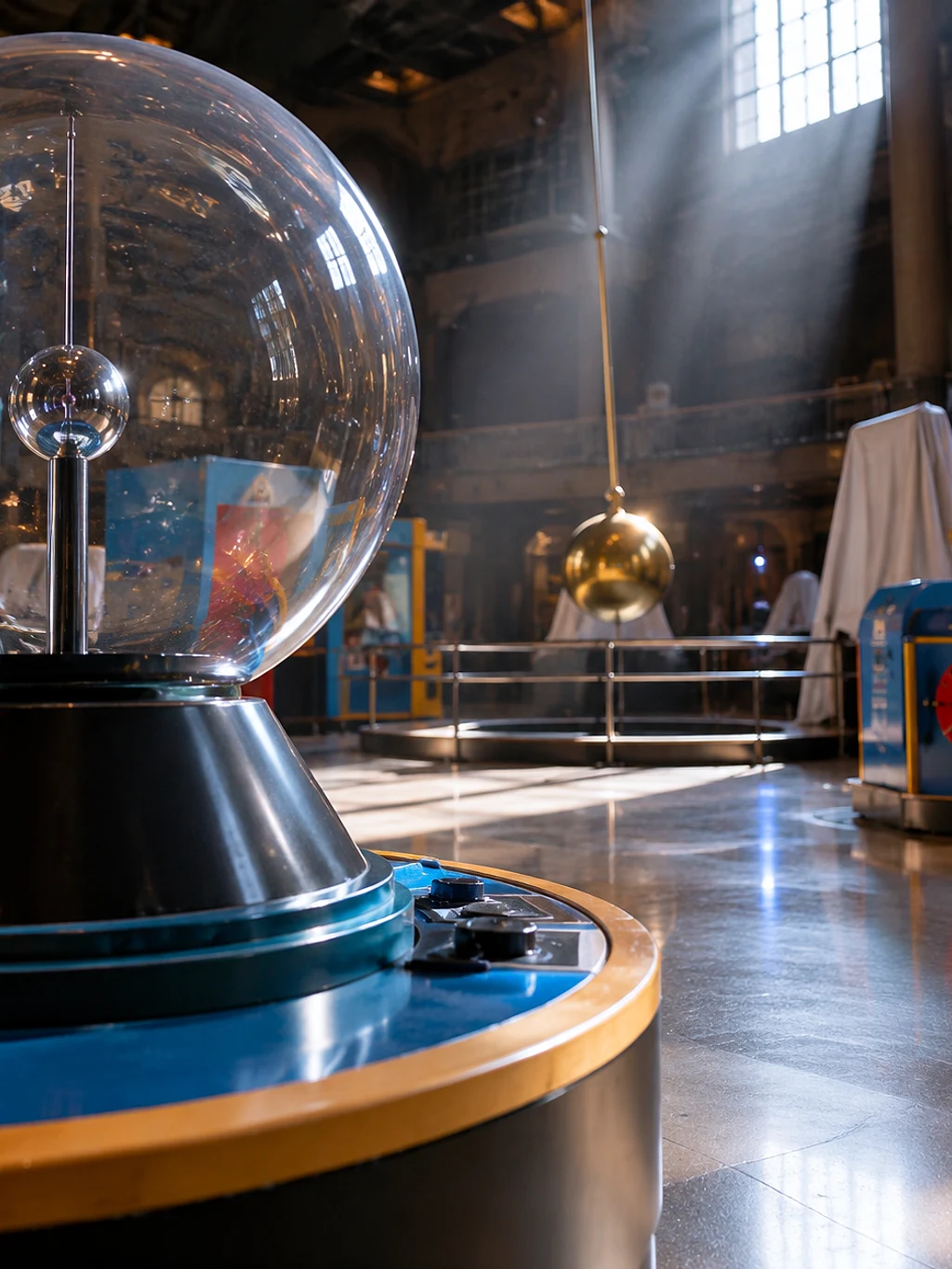
Inside there are exhibits that move, and things you can play with yourself.
And there are people who do experiments for you.
They do them right in front of you, and you stand beside them and watch.
A lot of people first found science interesting there.
A lot of students went there for lessons too.
Now, the last few years.
In 2024, the government closed it.
The reason was a problem with the roof.
A report said the roof was not safe.
After it closed, it never opened again.
By now that is more than two years.
The government's plan is to build a new one somewhere else.
The new science centre will cost a billion.
A billion is a very large sum of money.
Until the new one is built, the old one stays closed.
Last week there was new news.
The science centre is cutting thirty people.
Which people are being cut?
This is where it gets interesting.
Among those being cut is the entire science department.
Not part of it — the whole department, with nobody kept on.
Also the people who do the live experiments, the business people, and security.
The union says those thirty people have worked at the science centre for more than five hundred and forty years put together.
Five hundred and forty years of experience, gone in one go.
The head of the union asked a question.
She asked: a science centre with no science department — can you still call it a science centre?
It sounds like a joke, but it is a very practical question.
Those exhibits in a science centre are not something you buy and then forget.
Who thinks up the new exhibits?
Who checks whether the old exhibits are still right?
Who does the live experiments?
Who takes the school groups?
All of that was the science department's job.
The director's account is: this is a restructuring.
Restructuring means rearranging things.
But the new building is still a few years away.
For those few years, the building is shut and the people are gone.
When the new one opens, who is going to build what goes inside it?
Here is what I think makes this worth telling.
Putting up a building and making the content are two different things.
A building can be paused and finished later.
People cannot.
When people leave, the experience leaves with them.
Think about it:
You want to replace something, and the old one has to stop for a while.
During that time, would you keep the people inside it?
Listen again
Try it without the transcript and notice what sounds clearer.
What vocabulary does this episode teach?
词汇HSK 4. 五百四十年的经验,一次走完 — the number the union chose to publish.
HSK 4. 政府的计划是在另一个地方盖一个新的。
HSK 4. 报告说,屋顶不安全 — the stated reason for shutting it.
HSK 5. 这是一个很实际的问题 — the joke turns out to be an operations question.
HSK 5. The actor behind both the closure and the replacement.
HSK 5. 盖房子和做内容,是两件不一样的事 — the closing distinction.
Opened 1969 in Toronto; a place children walk into and do not want to leave.
不是买回来就完事的 — someone has to keep designing, fixing and updating them.
Done live, in front of you — and the live experiments team was cut too.
整个科学部门 — not a portion of it, the whole thing.
科学馆要裁三十个人 — the verb for it, used plainly.
Who published the 540-year figure, and who asked the question.
* beyond level超纲词
What grammar patterns appear in this episode?
语法不是……,是……,一个不留
Corrects the scale, then closes it off. 一个不留 is the phrase that makes "the whole department" concrete.
不是一部分人,是整个部门,一个不留。
谁来……?
Who is going to do it? Stacked four times in a row, it turns an abstract restructuring into a list of jobs with nobody left to do them.
谁来想新的展品?
谁来做现场实验?
谁来带学校的学生?
本来就是……在做
That was their job all along. 本来就 marks something as having been the case from the start, not a new claim.
这些事,本来就是科学部门在做。
Proper Nouns
专有名词Sources
来源Free account
Keep learning from this story
Create a free account to keep saved words and your preferred level together.
- Keep words with their story context
- Remember your preferred level
- Build your vocabulary over time