
A Chinese podcast · Same story, 4 levels
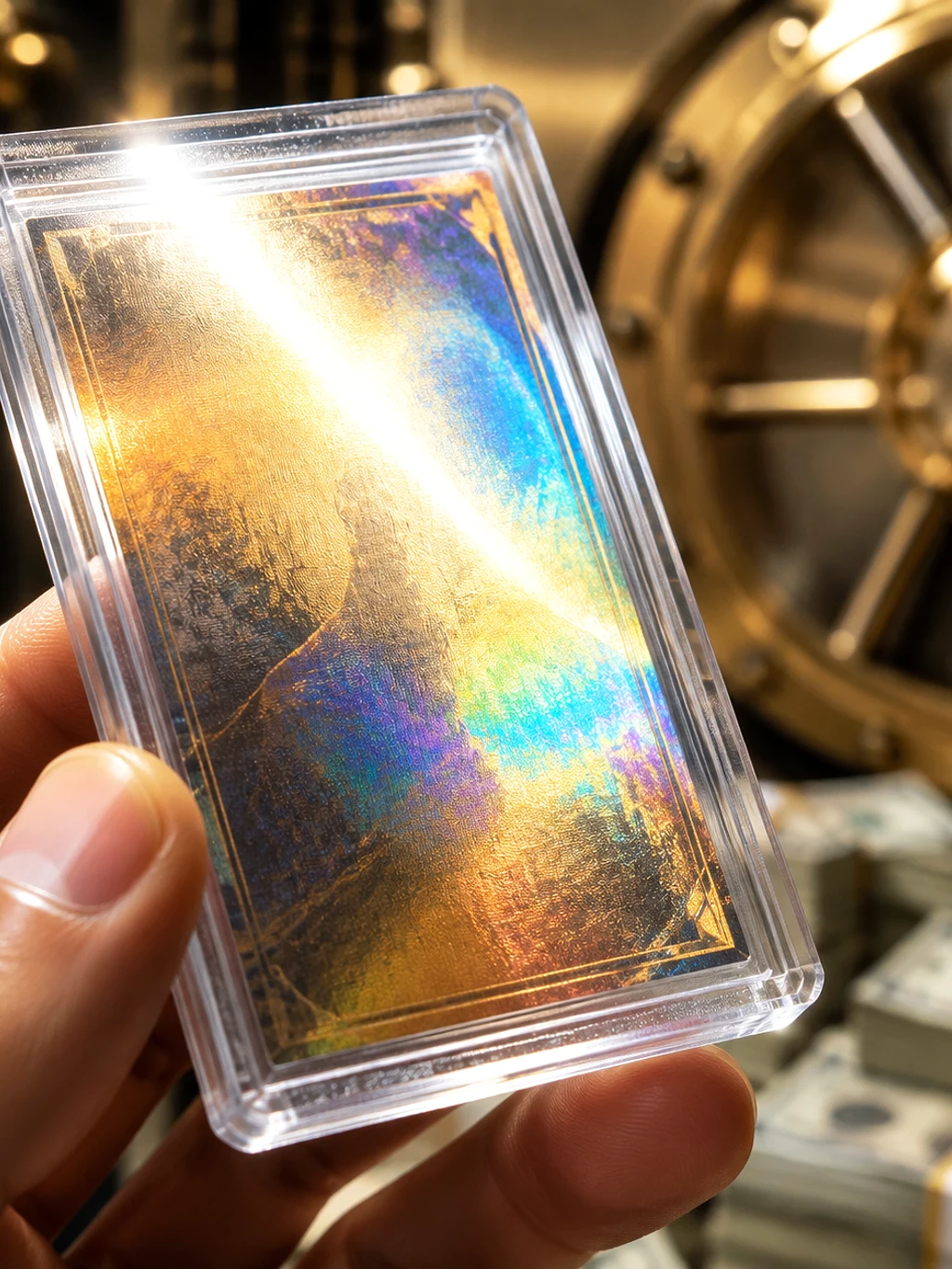
「如果明天世界完了,第二天全球的货币就是宝可梦卡」:一个手握五十万张卡的投资人是认真的,而他说错的地方比说对的地方更有意思
Pokémon Cards as Doomsday Money
About this story
A games-fund co-founder who owns well north of half a million Pokemon cards told The Hollywood Reporter that after an apocalypse the global currency would be Pokemon cards. Tested against the three standard conditions for money, his consensus argument is genuinely strong - and the two things wrong with it say more about money than the claim does. Chinese listening practice at four levels. HSK 2 Chinese listening practice.
This is an HSK 2 Chinese listening episode that runs about 3 minutes. The full Mandarin script is shown with tap-for-pinyin and a line-by-line English translation, so you can listen and read at once — comprehensible input in the sense of Stephen Krashen's i+1 theory. It teaches 12 key vocabulary words such as 钱、买、要 and walks through 3 grammar patterns, each explained in English with examples. The same news story is retold at 4 difficulty levels — use the level selector above to find the version that is challenging but still understandable for you.
Read at your level
原文Read the complete story in Chinese. Reveal pinyin and English only when you need them.
English transcript reference
Today we are talking about money.
What is money?
You will say: money is money.
You give someone money, and they give you something.
That is money.
But why?
Why can this thing buy things?
Have a think.
Money is made of paper.
You cannot eat paper.
You cannot drink paper.
And you cannot live in paper.
So why is it money?
Because everyone says it is money.
Everyone wants it.
So you want it too.
All right, now about a man.
This man is in America.
This man has a great many little cards.
These little cards are for playing with.
Children love playing with them.
There are lots of little things on them, all different.
Some of the cards, a lot of people have.
Some of the cards, very few people have.
The ones very few people have are expensive.
How many cards does this man have?
More than five hundred thousand.
More than five hundred thousand cards.
That is a very great many.
Last week, someone asked him a question.
That person asked: this is a thing children play with, isn't it?
He said: no.
He said: think about it — tomorrow, everything is gone.
He said: at that point, nobody wants money any more.
He said: at that point, what is money?
He said: it is the cards.
A lot of people heard that and laughed.
But he did not laugh.
Why does he think that?
Because some people really want these cards.
And those people are in a lot of countries.
Not one country — many countries.
One card can buy things here.
And in another country, it can too.
He said: there are not many things like that.
Here is what I want to say.
We use money every day.
But we have never thought: why is it money?
Think about it:
Tomorrow, nobody wants money any more.
At that point, what would you want?
Listen again
Try it without the transcript and notice what sounds clearer.
What vocabulary does this episode teach?
词汇HSK 1. Said in the first line and interrogated for the rest of the episode.
HSK 1. 这个东西为什么可以买东西?— the question the whole episode is.
HSK 1. 大家都要它,所以你也要它 — how value actually propagates.
HSK 1. 很少人有的,就很贵 — scarcity, in six characters.
HSK 2. 因为大家都说它是钱 — the only reason there is.
HSK 1. The whole thought experiment hangs on one word.
钱是纸做的。纸不能吃。 — the episode's way into the question.
The thing an investor thinks could replace money, and half a million of them.
HSK 2. 很少人有的,就很贵 — rarity and price, linked in one line.
HSK 3. 不是一个国家,是很多国家 — the actual strength of his argument.
五十多万张 — Chinese counts in 万, so this is how the number is said.
HSK 4. 很多人听了,都笑了。可是他没有笑。
* beyond level超纲词
What grammar patterns appear in this episode?
语法为什么……?因为……
Asks and answers in consecutive lines. The episode uses this to walk a beginner through an abstract argument one step at a time.
那它为什么是钱?
因为大家都说它是钱。
有的……,有的……
Some are X, others are Y. The standard Chinese frame for splitting a group, used here for common and rare cards.
有的小卡,很多人有。
有的小卡,很少人有。
什么都没有了
Everything is gone. 什么 plus 都 plus a negative sweeps the whole category — the plainest possible way to say apocalypse.
你想一想,明天什么都没有了。
Proper nouns
专有名词Sources
来源Free account
Keep learning from this story
Create a free account to keep saved words and your preferred level together.
- Keep words with their story context
- Remember your preferred level
- Build your vocabulary over time