
A Chinese podcast · Same story, 4 levels
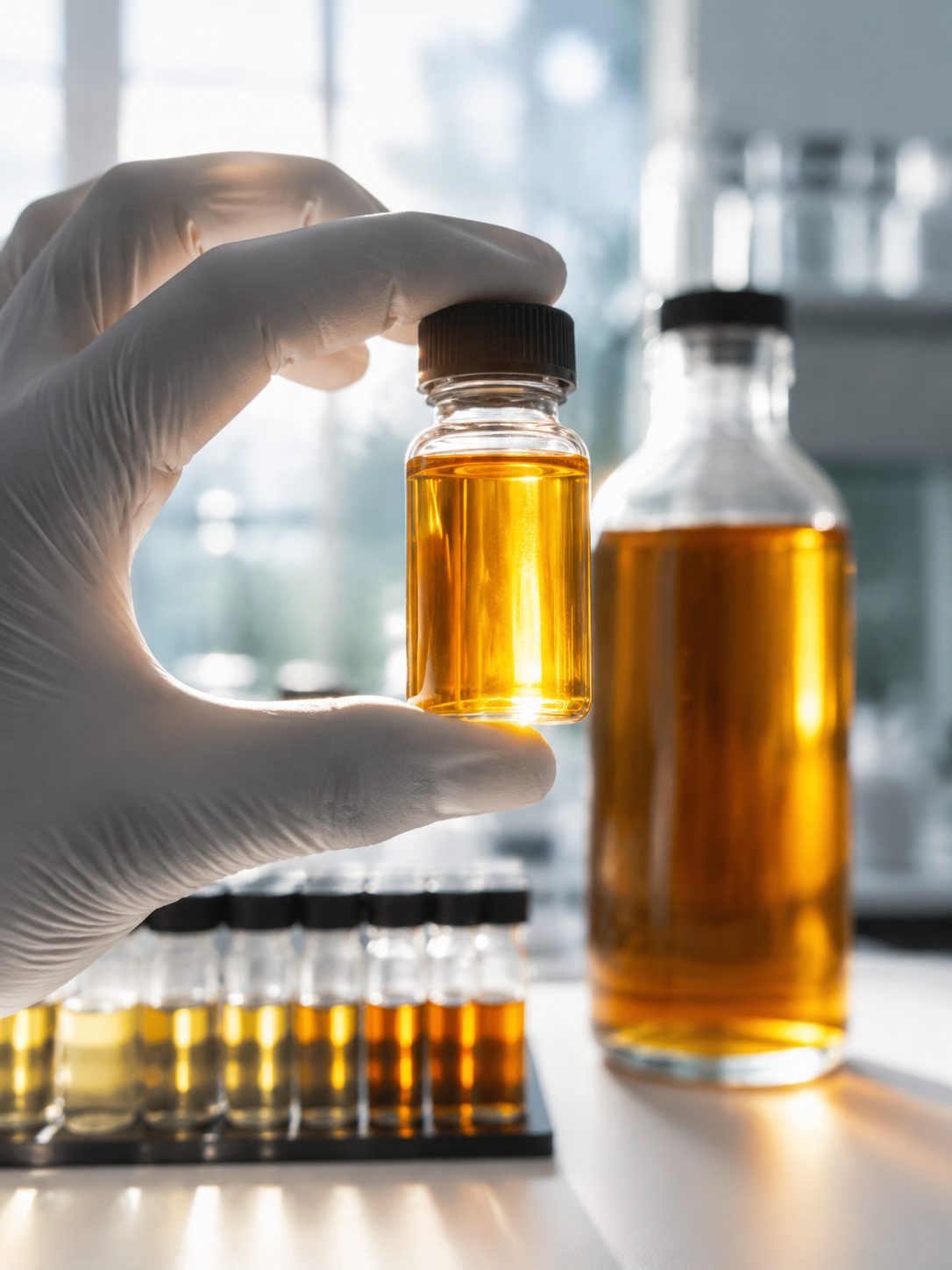
魁北克的枫糖浆被兑了甘蔗糖,一半都不是枫的。农业部查过一次,说没问题。
Quebec Maple Syrup Found Diluted With Cane Sugar
About this story
Quebec Maple Syrup Found Diluted With Cane Sugar. HSK 5-6 Chinese listening practice.
This is an HSK 5-6 Chinese listening episode that runs about 5 minutes. The full Mandarin script is shown with tap-for-pinyin and a line-by-line English translation, so you can listen and read at once — comprehensible input in the sense of Stephen Krashen's i+1 theory. It teaches 9 key vocabulary words such as 树、压力、所以 and walks through 3 grammar patterns, each explained in English with examples. The same news story is retold at 4 difficulty levels — use the level selector above to find the version that is challenging but still understandable for you.
Read at your level
原文Read the complete story in Chinese. Reveal pinyin and English only when you need them.
English transcript reference
Let us be clear about why this stuff is expensive, because the rest only makes sense afterwards.
Maple syrup comes from maple trees, and a maple tree will only give you sap under a very narrow set of conditions.
Early spring, thawing by day and freezing by night; it is between that freeze and that thaw that pressure inside the trunk pushes the sap out.
You collect the sap and taste it, and it is almost water — barely sweet.
Then comes the boiling.
Forty buckets of sap, boiled down, leave one bucket of syrup.
So what is truly expensive is not the raw material. It is the thirty-nine buckets of water boiled away, and a window only a few weeks long.
Canada produces most of the world’s maple syrup, and the overwhelming majority of that comes from Quebec.
There, this is not merely a business. It is a point of pride.
This year, the business had a problem.
A batch of maple syrup on supermarket shelves had been cut — and not cut a little.
The lab result is stated plainly: at least half of it was cane sugar.
Cane sugar is among the cheapest sugars in the world; maple syrup among the most expensive.
Put the first into the second: the colour is close, the thickness is close, and the price does not change.
The goods came from a Quebec producer selling under several brand names.
But the part of this worth telling is not the man who did it.
It is a more uncomfortable question: who could detect it, and who could not.
Last March, an ordinary consumer reported it, and Quebec’s agriculture ministry checked. Its conclusion: no abnormality found.
This year, a television investigation went and checked too.
What they did was almost plain: they bought five cans off a supermarket shelf and sent them to the industry’s reference laboratory for testing.
The result: all five adulterated, every can at least half cane sugar.
Five cans, and not a real one among them.
Same goods. The government could not detect it; the laboratory detected all of it.
Why?
This is worth a little science, because it explains that "could not detect it" precisely.
Maple and sugar cane run two different photosynthetic pathways.
That difference travels all the way into the sugar molecules, and shows up as a difference in carbon isotope ratios.
The maple pathway lands in roughly one range; cane lands in another, and the two are far apart.
So in principle, one isotope test and adulteration is obvious at a glance.
The problem is the threshold.
The line the industry uses to judge was set decades ago.
By that line, a can with around thirty percent cane sugar in it may still be judged "within normal range".
In other words, the testing method itself has a blind spot — and the person committing the fraud was living precisely inside it.
The later improvement was to add an internal reference: use the malic acid naturally present in the syrup as a control, compare the two, and the sensitivity rises immediately.
So the conclusion is not "it cannot be measured". The ruler was not fine enough, and nobody went and changed the ruler.
That is more worrying than the fraud itself.
A country can have the strictest industry body in the world, the most complete grading system, the strongest professional reputation.
But if the line used to check the goods has not moved in decades, then anyone committing fraud need only stay below that line to stay there legally, indefinitely.
The producer’s own account is that he did not do the cutting — the raw material arrived from his suppliers already wrong.
Here is what has happened over the past few months.
The maple producers’ industry body filed suit to take away his production quota — and in Quebec, a quota is very nearly the right to practise the trade.
A class action was filed at the Superior Court, naming him and the company in his name.
On the third of August, that class action was amended: the supermarkets that sold the syrup were named as defendants too.
Four of them, all among the largest chains in Canada.
The grounds are written without politeness: negligence, recklessness, carelessness, or serious indifference.
In plain speech: you had it on your shelves for years — you should have known.
Several of the chains have said they intend to contest, and the case still needs the court’s authorisation to proceed.
So as of today, nobody has legally been found guilty of anything.
But one thing needs no verdict.
An ordinary consumer noticed something was wrong first; the government checked once and said it was fine; and in the end a television programme paid for five cans itself and sent them to a laboratory.
Think about it:
The food you put in your mouth today — on what basis do you believe it is the thing it says it is?
Listen again
Try it without the transcript and notice what sounds clearer.
What vocabulary does this episode teach?
词汇Everything begins with what the 枫树 will and will not give you.
Pressure inside the trunk is what pushes the sap out during the freeze-thaw.
Carries most of the argument in this episode.
Used here for 那条判定线 — that line of judgement.
举报过 — has reported; 查过一次 — checked it once.
What the tree gives, and what is almost water before boiling.
The key verb of the whole story.
The gap in the standard test that the fraud lived inside.
In Quebec a production 配额 is very nearly the right to practise the trade.
* beyond level超纲词
What grammar patterns appear in this episode?
语法只在……的条件下
Only under certain conditions — used to state a narrow requirement.
枫树,只在一个很窄的条件下给你汁液。
如果……,那么……只要……就……
Chains a condition to a consequence with a minimum requirement inside it.
如果验货的那条线几十年没有动过,那么造假的人只要待在线以下,就可以一直合法地待着。
凭什么
On what basis / what gives you the right — a pointed rhetorical question.
你凭什么相信它就是它说的那个东西?
Proper nouns
专有名词Sources
来源Free account
Keep learning from this story
Create a free account to keep saved words and your preferred level together.
- Keep words with their story context
- Remember your preferred level
- Build your vocabulary over time