
A Chinese podcast · Same story, 4 levels
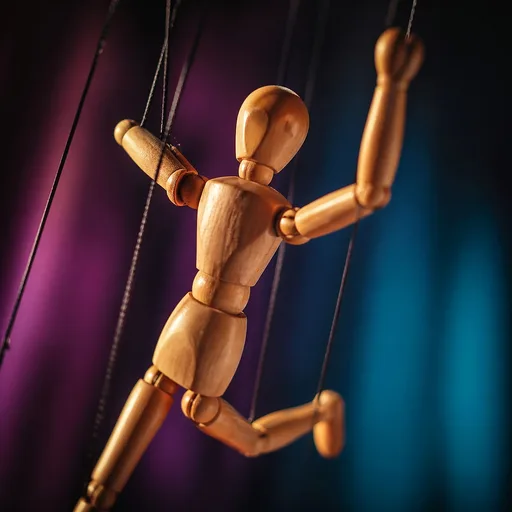
AI视频太疯狂:明星变成了数字木偶
ByteDance Seedance AI Videos Spark Copyright Fight
About this story
ByteDance's Seedance 2.0 floods TikTok with AI clips of Kanye West and Hollywood stars — and a copyright fight. HSK 3 Chinese listening practice.
This is an HSK 3-4 Chinese listening episode that runs about 7 minutes. The full Mandarin script is shown with tap-for-pinyin and a line-by-line English translation, so you can listen and read at once — comprehensible input in the sense of Stephen Krashen's i+1 theory. It teaches 16 key vocabulary words such as 吃惊、引起、动作 and walks through 5 grammar patterns, each explained in English with examples. The same news story is retold at 4 difficulty levels — use the level selector above to find the version that is challenging but still understandable for you.
Read at your level
原文Read the complete story in Chinese. Reveal pinyin and English only when you need them.
English transcript reference
Speaking of technology that has surprisingly recently, that would be Seedance 2.0.
This is a new video tool released by ByteDance.
Everyone probably knows TikTok; this new tool was also made by them.
It was just released last week and immediately caused a huge sensation.
Simply put, this is software that can use AI to make videos.
But it is completely different from previous AI tools.
In previous AI videos, human faces always looked a bit strange.
This strange feeling is what we call the "Uncanny Valley" effect.
But the videos produced by this Seedance 2.0 are very realistic.
The people's movements in the video are very natural, and the lighting is also beautiful.
The most impressive thing is that their mouths and voices match very well.
If you don't look carefully, you can't tell at all that this was made by a computer.
This kind of technology makes Hollywood movie companies feel very afraid.
Why would they be so afraid?
Let's first take a look at some videos that are currently popular online.
Someone made a video of the American singer Kanye West.
In the video, he appears in an ancient Chinese palace.
He is wearing ancient clothes and singing an old Chinese song.
Although this sounds very funny, the image looks just like it's real.
Someone else made a video of Jackie Chan and Jet Li fighting.
These two kung fu stars look very young, like they are filming an old movie.
There are even big Hollywood stars Brad Pitt and Tom Cruise.
Someone made a short video that is only fifteen seconds long.
These two big stars are fighting on a roof, and their movements are very fast.
Their hair moves with the wind, and their clothes are also very natural.
Even the expressions on their faces match their speaking voices exactly.
This is simply the level of a big Hollywood movie.
However, this was not filmed by a movie company spending hundreds of millions of dollars.
This was just made by ordinary people at home using computers.
Making videos like this is actually very simple.
You don't need to know how to write complex computer code.
You only need to provide the software with some photos and audio.
For example, you can upload a few photos of a celebrity.
Then upload a piece of voice or music you want.
Finally, you write a text to tell the AI what you want.
For example, "I want this person to dance on a rainy street."
In just a few minutes, the AI can create the video.
Moreover, this software is currently free to try out.
Even if it charges fees in the future, the price will be very cheap.
It will probably only cost a dozen or so dollars a month.
This has made many people who work in movies start worrying about their jobs.
A screenwriter for the movie "Deadpool" felt despair after watching these videos.
He said online: "We are doomed."
Because if AI can do it so well, who still needs to hire real actors?
For ordinary people, this might be a very fun thing.
We can make many interesting videos and post them online.
But for movie companies, this is a huge danger.
Big companies like Disney and Paramount have already started to take action.
They sent lawyer's letters to ByteDance.
They demanded that ByteDance immediately stop using their content.
These big companies believe that this AI software stole their stuff.
Because AI needs to watch a lot of videos to learn how to make videos.
These AIs may have watched many movies starring Jackie Chan and Jet Li.
It learned these stars' movements and expressions.
However, ByteDance did not give money to the movie companies.
This involves very complex legal issues.
First is the issue regarding movie copyright.
Movies are artistic works protected by law.
You cannot just take other people's movies to train your AI.
Second is the issue regarding the stars' "portrait rights."
That is, the right of stars to control their own photos and image.
For a big star like Tom Cruise, his face is a brand.
His face and name are very valuable.
If you use AI to make a movie he never acted in, what does that count as?
You make him say things he never said.
This not only infringes on his rights but might also deceive the audience.
What if someone uses AI to make fake videos of stars to sell things?
Or makes the star say something bad to ruin his reputation?
This is the biggest problem right now.
Although there are many legal debates, the technology is already out.
It's like pouring water on the ground; it's hard to take it back.
Besides ByteDance, many other companies are also developing similar technology.
This will have a huge impact on the future movie industry.
On one hand, making videos has become easier and easier.
Any creative person, as long as they have a computer, can be a director.
You don't need a lot of money, nor do you need to hire many actors.
This is a good opportunity for many young people who want to make movies.
You can turn your dreams into real videos.
But on the other hand, this will also bring many ethical problems.
The videos we see online in the future might mostly be fake.
We might not be able to distinguish what is real news and what is made by AI.
Moreover, original actors and directors might lose their jobs.
If computers can act better, why pay money to stars?
Current laws cannot keep up with the speed of technological development.
Future laws might stipulate that AI can only be used with the star's consent.
Or, using these AI software programs requires paying the movie companies.
But right now, these regulations have not been fully established yet.
So now is a very chaotic but also very interesting period.
Everyone is frantically downloading and using this software.
Because everyone feels that maybe after a while it won't be usable anymore.
Lawyers will definitely figure out a way to restrict the use of this technology.
So, the internet is currently full of these AI videos.
Some people have made deceased stars "resurrect" in videos.
Some people make different anime characters fight each other.
Some people have even created the perfect movie in their minds.
This is indeed an era full of imagination.
Although we don't know what the future will be like, it is very interesting right now.
If you are interested in making videos, now is the best opportunity.
You can go try it and see if you can make a Hollywood-level video.
However, we must also be careful when watching these videos.
Remember, seeing is not necessarily believing.
The star you see might just be a clever digital puppet.
This is the joy and annoyance that technology brings us.
It makes the world more wonderful, and also more complex.
Listen again
Try it without the transcript and notice what sounds clearer.
What vocabulary does this episode teach?
词汇A common verb/adjective meaning to be shocked or startled.
Often used with abstract nouns like attention, sensation, or debate.
Refers to physical movements or motions.
Used to describe average people or common things.
Literally 'exempt from fee'.
Can be a noun or an adjective.
To place limits on something.
Opposite of simple (简单).
A great stir or sensation caused by an event.
A specific term in aesthetics/robotics describing the eerie feeling when something looks almost, but not quite, human.
To lose all hope.
Legal right to print, publish, perform, etc.
The legal right to control the commercial use of one's identity/image.
Often used with rights, territory, or sovereignty.
To come back to life.
A doll moved by strings or hands; metaphorically used here for digital avatars.
* beyond level超纲词
What grammar patterns appear in this episode?
语法An emphatic structure meaning 'Even... [is/does]...'. It emphasizes a specific instance that is surprising or extreme.
连他们脸上的表情都和说话的声音完全一样。
A conditional pattern meaning 'As long as... then...'. It indicates that a certain condition is sufficient for a result.
只要几分钟,AI 就能把视频做出来。
任何有创意的人,只要有一台电脑,就能做导演。
Meaning 'Even if... still...'. It introduces a hypothetical concession, indicating the result remains unchanged despite the condition.
即使以后要收费,价格也非常便宜。
Meaning 'looks like' or 'appears to be'. Used to describe visual impressions.
以前的 AI 视频,人的脸看起来总是有点奇怪。
这两个功夫明星看起来都很年轻。
Used to emphatically negate something, often correcting a wrong assumption. Means 'not at all' or 'certainly not'.
但是,这并不是电影公司花了几亿美元拍出来的。
但是,字节跳动并没有给电影公司钱。
Proper nouns
专有名词Sources
来源Free account
Keep learning from this story
Create a free account to keep saved words and your preferred level together.
- Keep words with their story context
- Remember your preferred level
- Build your vocabulary over time