
A Chinese podcast · Same story, 4 levels
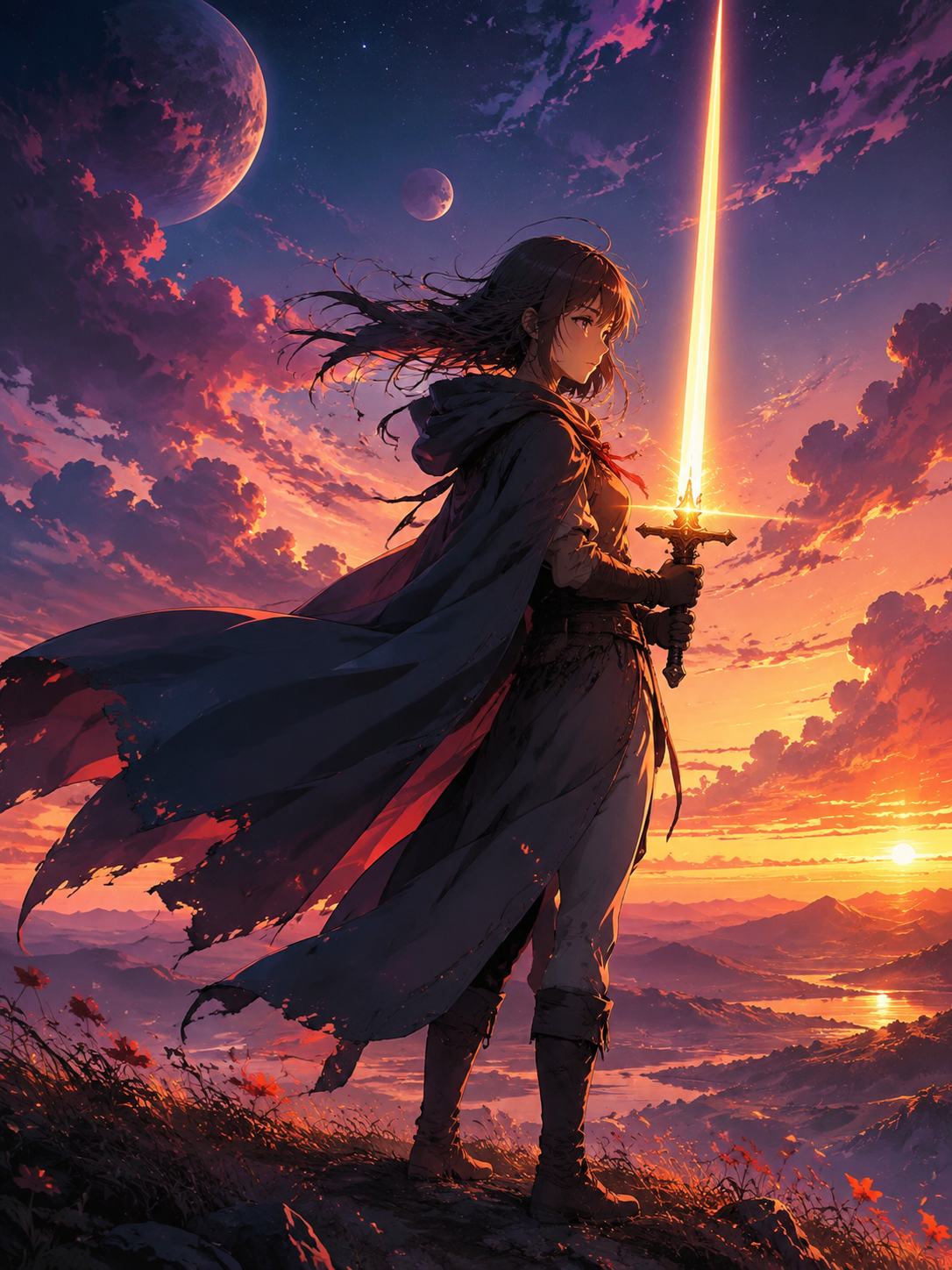
星战新番《第九个绝地》:日本动画工作室重新演绎星球大战
Star Wars: The Ninth Jedi Gets New Anime
About this story
Star Wars: The Ninth Jedi Gets New Anime. HSK 3 Chinese listening practice.
This is an HSK 3-4 Chinese listening episode that runs about 3 minutes. The full Mandarin script is shown with tap-for-pinyin and a line-by-line English translation, so you can listen and read at once — comprehensible input in the sense of Stephen Krashen's i+1 theory. It teaches 11 key vocabulary words such as 自由、系列、主角 and walks through 3 grammar patterns, each explained in English with examples. The same news story is retold at 4 difficulty levels — use the level selector above to find the version that is challenging but still understandable for you.
Read at your level
原文Read the complete story in Chinese. Reveal pinyin and English only when you need them.
English transcript reference
Eight episodes of animation, a girl, and a sword that glows.
Star Wars has put out something new these past few days, but it is not a film.
It is called The Ninth Jedi, and it went up on Disney's platform on August 5th.
First, what this actually is.
Star Wars has been going since 1977 — almost fifty years.
In those fifty years it has produced films, produced TV series, and in recent years produced an animated line called Visions.
What makes Visions interesting is that it handed Star Wars over to Japanese animation studios to make.
Star Wars drawn by Japanese artists tastes completely different from Star Wars shot by Americans.
More importantly, the studio says the stories in Visions do not count as canon.
What does that mean?
It means these stories do not have to obey the rules laid down over the past few decades. They can rewrite them.
For the people making them, that is a lot of freedom.
This time, The Ninth Jedi is the first Visions story to be pulled out on its own and made into a full series.
It was made by Japan's Production I.G studio, directed by Kenji Kamiyama.
The main character is a girl named Kara.
Her father is a smith who makes lightsabers specifically.
A lightsaber is that glowing weapon from Star Wars.
In the era this story is set in, the Jedi who use lightsabers are almost all gone.
The Jedi are a group of people in Star Wars who can sense an invisible force.
There used to be many Jedi; then they were killed off one by one, and now only a very few are still alive.
Someone wants to gather them back and rebuild the Jedi Order.
He asks Kara's father to make a batch of new lightsabers, and then calls the scattered survivors together.
Because Kara delivers the swords, she gets pulled into all of it.
And she slowly discovers that she too may have some connection to that force.
At this point, you may feel this setup sounds familiar.
Yes — people who have watched it say the same.
The reviews split roughly in half.
The ones praising it say this is the best-looking Star Wars in years: every duel more beautiful than the last, and it dares to blur the line between Jedi and villain.
The ones criticising it say the pacing is too slow and the plot too familiar — a young person who does not know they have power, pulled into a larger war. We have heard that one many times.
Both sides are actually right.
It looks good, but it is not new.
Still, for Star Wars, the fact of it may matter more than the show itself.
A nearly fifty-year-old franchise willing to hand itself to people in another country to redraw, and to let them ignore the source canon — that is not common at a company this size.
Think about it: a very old, very famous story — would you rather it kept being told exactly as it was, or let someone else tell it again?
Listen again
Try it without the transcript and notice what sounds clearer.
What vocabulary does this episode teach?
词汇这是很大的自由 = that is a lot of freedom — for the creators.
动画系列 = an animated series. 一个快五十年的系列 = a nearly 50-year-old franchise.
故事的主角 = the protagonist of the story.
Literally "ear-familiar" — 这个设定有点耳熟.
重新编 / 重新画一遍 = rewrite it / redraw it from scratch.
还允许他们不管原著设定 = and lets them ignore the source canon.
Glossed in the episode: people who can sense an invisible force.
光 (light) + 剑 (sword). Glossed on first use.
不算正史 = does not count as canon — the whole premise of the Visions line.
Kara's father, who forges the lightsabers.
散在各处的幸存者 = the survivors scattered everywhere.
* beyond level超纲词
What grammar patterns appear in this episode?
语法……的地方在于……
"what is X about it is that …" — introduces the salient point.
Visions 有意思的地方在于,它把 Star Wars,交给了日本的动画工作室去做。
"for X / from X's point of view". Frames whose perspective it is.
对创作的人来说,这是很大的自由。
不过对 Star Wars 来说,这件事本身可能比这部动画更重要。
一……比一……
"each one more … than the last". Escalation.
打斗一场比一场漂亮。
Proper Nouns
专有名词Sources
来源Free account
Keep learning from this story
Create a free account to keep saved words and your preferred level together.
- Keep words with their story context
- Remember your preferred level
- Build your vocabulary over time