
A Chinese podcast · Same story, 4 levels
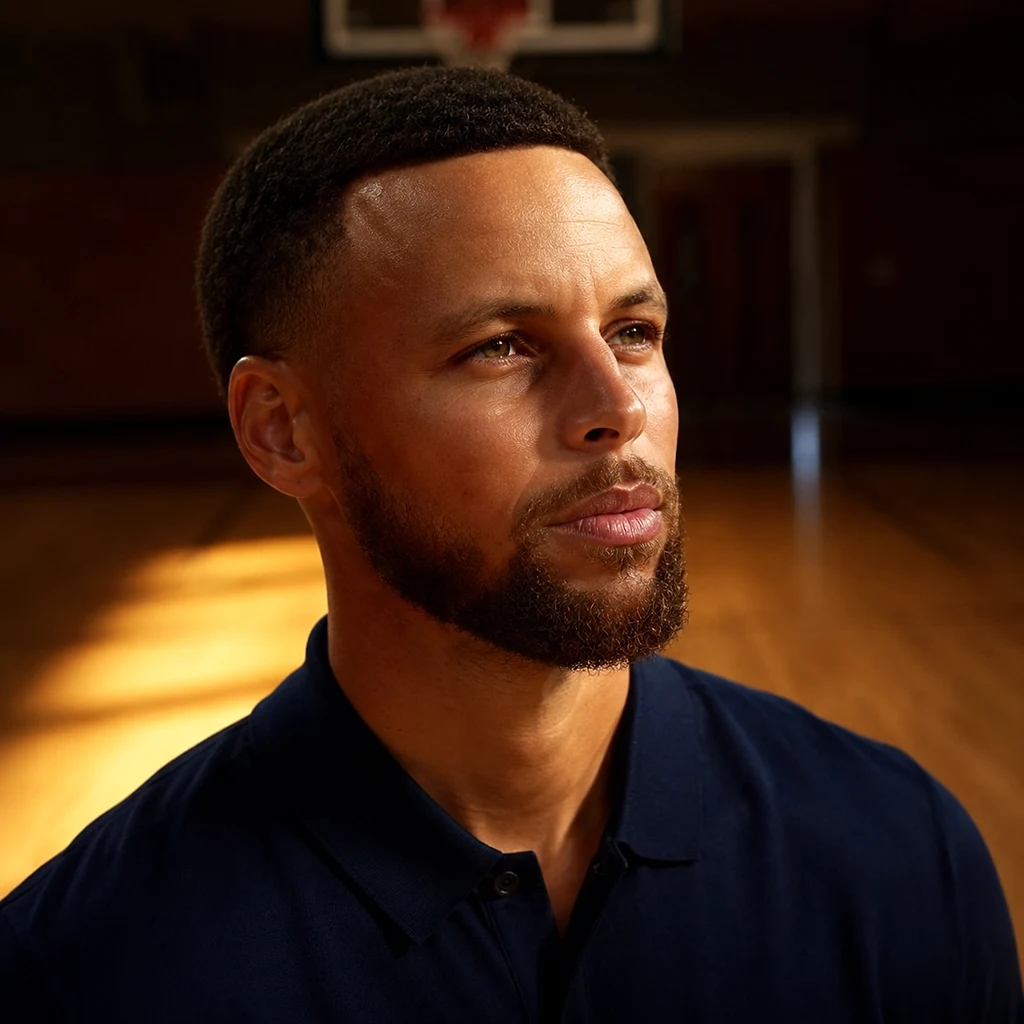
库里穿了李宁的鞋
Curry Now Wears Li-Ning Shoes
About this story
The story of American basketball star Steph Curry switching from an American shoe company to the Chinese brand Li-Ning, told one slow step at a time using only beginner-level Chinese. HSK 1 Chinese listening practice.
This is an HSK 1 Chinese listening episode that runs about 6 minutes. The full Mandarin script is shown with tap-for-pinyin and a line-by-line English translation, so you can listen and read at once — comprehensible input in the sense of Stephen Krashen's i+1 theory. It teaches 12 key vocabulary words such as 时候、分、没关系 and walks through 7 grammar patterns, each explained in English with examples. The same news story is retold at 4 difficulty levels — use the level selector above to find the version that is challenging but still understandable for you.
Read at your level
原文Read the complete story in Chinese. Reveal pinyin and English only when you need them.
English transcript reference
Today we'll talk about a thing.
This thing is about a person.
Let's talk about this person.
He is American.
He is not in China.
He is in America.
He is called Curry.
His name is Curry.
Do you know him?
It's okay if you don't.
We'll go slowly.
Curry is thirty-eight years old.
Not too big, not too small.
In America, many people know him.
In China, many people also know him.
You can know him too.
So what does Curry do?
What Curry does is play ball.
What is 'playing ball'?
Playing ball means: using your hands to play with a ball.
People who play ball run back and forth.
They run very fast.
Curry runs very fast.
He plays ball, and he plays very well.
He has played ball for many, many years.
American people all like watching him play.
Chinese people also like watching him play.
You can also watch him play.
So what kind of ball does Curry play?
The ball Curry plays is called 'basketball'.
What is 'basketball'?
Because there is a basket.
The basket is up high.
High up, above.
The players put the ball into the basket.
The ball goes into the basket.
Then you get a point.
The side with more points wins.
The side with fewer points doesn't win.
This is basketball.
Okay.
Now you know Curry.
Curry is American.
Curry plays basketball.
He plays very well.
We've met Curry.
Now we'll talk about something new.
Curry has many shoes.
You have shoes too.
I have shoes too.
We all have shoes.
But Curry's shoes are not regular shoes.
His shoes are basketball shoes.
He wears them when he plays basketball.
He wears them every day.
Every single day he wears them.
So where do his shoes come from?
Curry doesn't make his own shoes.
He doesn't make shoes.
His shoes are made by someone else.
Who makes them?
They are made by a big 'company'.
A company is like this:
Many people work together.
They make one kind of thing together.
They sell it together.
This is what a company is.
For example:
Some companies make phones.
Some companies make televisions.
Some companies make clothes.
Some companies make shoes.
Curry's shoes are made by a company.
This company used to be in America.
It is an American company.
Curry really liked this American company.
He wore this company's shoes.
He wore them for thirteen years.
That's a long time.
He wore this company's shoes every day.
Every single day.
But, last year.
Curry and this American company parted ways.
He stopped wearing this American company's shoes.
He doesn't wear them anymore.
Whose shoes does he wear now?
Many companies wanted to make shoes for Curry.
American companies wanted to.
Chinese companies also wanted to.
They all wanted to make shoes for Curry.
They all wanted to give Curry money.
Curry was also thinking.
He thought for several months.
Today, we know the answer.
Curry changed.
He no longer wears the American company's shoes.
He now wears a Chinese company's shoes.
A Chinese company!
This is the most interesting part of the story.
So who is this Chinese company?
This Chinese company is called 'Li-Ning'.
Li-Ning makes shoes.
It also makes clothes.
Chinese people all know Li-Ning.
But American people don't really know it.
Now things are different.
Curry wears Li-Ning.
So American people now know Li-Ning too.
Finally, let's think.
Why is everyone talking about this?
Because: this kind of thing has not happened before.
Before, famous American people wore American shoes.
Famous Chinese people wore Chinese shoes.
Now it is different.
A famous American person wears Chinese shoes.
It is a new thing.
Some people like it.
Some people don't like it.
Today we won't say who is right and who is wrong.
Today we only say: this thing happened.
Finally, take a look at your own shoes.
Where are your shoes made?
Are they made in China?
Or somewhere else?
Take a look and you'll know.
Listen again
Try it without the transcript and notice what sounds clearer.
What vocabulary does this episode teach?
词汇Pattern: V + 的时候 = when V-ing. 打篮球的时候穿的 = worn when playing basketball.
球到篮子里,就有分 = the ball goes in the basket, you get a point. 分多的那一边赢了 = the side with more points wins.
HSK 1. it doesn't matter.
HSK 1. we; us.
HSK 1. they; them.
HSK 1. what.
Used many times: 我们说一个事 = let's talk about a matter. Most common HSK 2 word for 'thing/event' (not a physical object).
库里有很多鞋 = Curry has many shoes. The whole story is about whose shoes Curry wears.
Glossed inline: 公司就是很多人一起工作,一起做一种东西,一起卖 = a company is many people working together to make and sell one kind of thing.
Glossed inline: 有一个篮子在上面,把球放到篮子里,就有分 = there is a basket up high, put the ball in the basket, you get a point.
Glossed inline: 打球就是用手玩球 = playing ball means using your hands to play with a ball.
Central to the story: 库里换了 = Curry switched. He stopped wearing one company's shoes and started wearing another's.
* beyond level超纲词
What grammar patterns appear in this episode?
语法Subject + 是 + Noun
The most basic identity sentence: 'X is Y'. Used many times here to introduce who Curry is.
他是美国人。
他叫库里。
库里是美国人。
Subject + 有 + Object
'X has Y'. Used to introduce possessions/existence at the most basic level.
库里有很多鞋。
你也有鞋。
有一个篮子。
Subject + 不 / 没 + Verb
Negation. 不 for general/habitual, 没 for completed actions (introduced later).
他不在中国。
他不做鞋。
他不穿了。
都 / 也 (universal / also)
都 = all; 也 = also. Both come BEFORE the verb. Used heavily here to build parallel statements.
美国人都喜欢看他打球。
中国人也喜欢看他打球。
都想给库里做鞋。
Verb + 得 + Adjective (degree complement)
Describes HOW well/poorly an action is done. 打 + 得 + 很好 = plays very well.
他打球,打得很好。
库里跑得很快。
跑得很快。
Verb + 的时候 (when V-ing)
Marks the time during an action. Comes before the main clause.
打篮球的时候穿的。
什么是 X 呢? (rhetorical question)
Used to ask 'what is X?' before defining X yourself. The 呢 softens the question.
什么是打球?
什么是"篮球"呢?
Proper nouns
专有名词Free account
Keep learning from this story
Create a free account to keep saved words and your preferred level together.
- Keep words with their story context
- Remember your preferred level
- Build your vocabulary over time