
A Chinese podcast · Same story, 4 levels
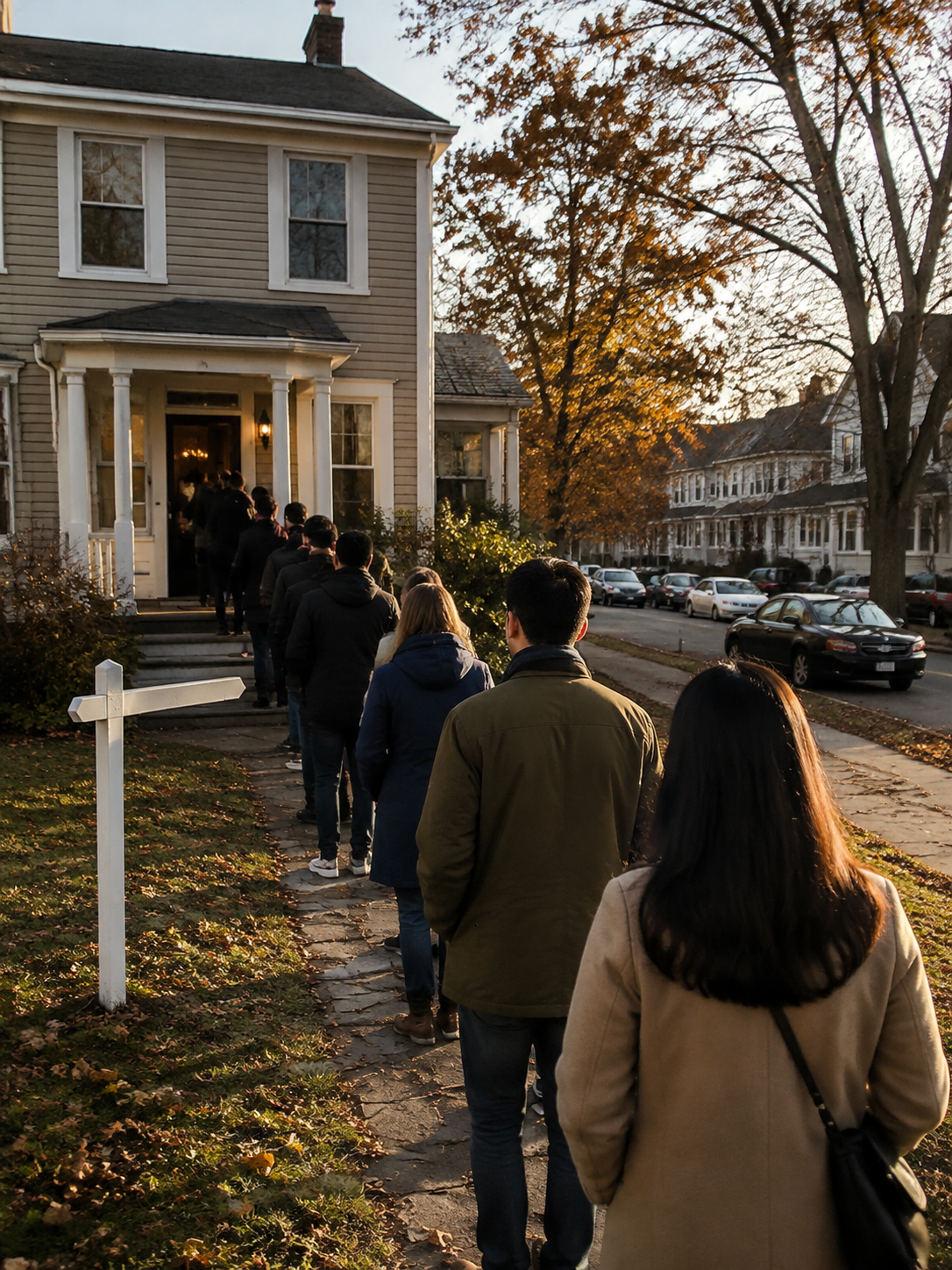
全美最抢手的十个地方,房子一点都不便宜——因为几乎没有房子在卖
Housing Shortage Drives America's Hottest ZIPs
About this story
Housing Shortage Drives America's Hottest ZIPs. HSK 2 Chinese listening practice.
This is an HSK 2 Chinese listening episode that runs about 1 minute. The full Mandarin script is shown with tap-for-pinyin and a line-by-line English translation, so you can listen and read at once — comprehensible input in the sense of Stephen Krashen's i+1 theory. It teaches 10 key vocabulary words such as 房价、房源、郊区 and walks through 3 grammar patterns, each explained in English with examples. The same news story is retold at 4 difficulty levels — use the level selector above to find the version that is challenging but still understandable for you.
Read at your level
原文Read the complete story in Chinese. Reveal pinyin and English only when you need them.
English transcript reference
This year, houses in America have got expensive again.
In roughly eighty percent of places, prices are higher than last year.
The biggest rise was in the Northeast.
There, an ordinary house costs five hundred and forty thousand dollars.
So where do Americans most want to buy?
The cheap places?
No.
In the places people most want to buy, houses are not cheap at all.
So why does everyone still want to go there?
Because in those places there is almost nothing for sale.
In these areas, the houses for sale are sixty percent fewer than before the pandemic.
Across America the average is only ten percent fewer.
Few listings, many buyers — and things change.
One house comes on the market, a lot of people go and see it together, and bid together.
In nine cases out of ten, the final price is higher than the asking price.
Across America, houses generally sell for less than the asking price.
That is the difference.
Where are these areas?
Not in the south, and not in the west.
All in the Northeast, and all in the suburbs of big cities.
What they have in common: not far from the city, easy to commute, and bigger houses than in town.
Think about it: would you move further out from the city for a bigger house?
Listen again
Try it without the transcript and notice what sounds clearer.
What vocabulary does this episode teach?
词汇这,就是差别 = that is the difference.
全美国平均 = the average across America.
一套普通的房子 = an ordinary house.
一般卖得比要价低 = generally sells below asking.
上班方便 = an easy commute.
房价都比去年高 = prices are higher than last year.
房源少 = few listings. The whole explanation rests on this word.
大城市的郊区 = the suburbs of big cities.
比疫情以前少了六成 = sixty percent fewer than before the pandemic.
一起出价 = bidding at the same time.
* beyond level超纲词
What grammar patterns appear in this episode?
语法差不多……成
Chinese counts proportions in 成 (tenths). 八成 = 80%, 六成 = 60%.
差不多八成的地方,房价都比去年高。
比疫情以前少了六成。
十个里有九个
"nine out of ten". The frame goes container-first in Chinese.
十个里有九个,最后卖的钱比要的钱还多。
为了……,……
"for the sake of …". States the purpose before the action.
你会为了大一点的房子,搬到离城远的地方吗?
Proper Nouns
专有名词Sources
来源Free account
Keep learning from this story
Create a free account to keep saved words and your preferred level together.
- Keep words with their story context
- Remember your preferred level
- Build your vocabulary over time