
A Chinese podcast · Same story, 4 levels
有人把成人用品扔进 WNBA 球场,一家虚拟币公司承认是他们找人扔的。被打中的是小孩。
Crypto Stunt Sends Sex Toys Onto WNBA Courts
About this story
Crypto Stunt Sends Sex Toys Onto WNBA Courts. HSK 5-6 Chinese listening practice.
This is an HSK 5-6 Chinese listening episode that runs about 2 minutes. The full Mandarin script is shown with tap-for-pinyin and a line-by-line English translation, so you can listen and read at once — comprehensible input in the sense of Stephen Krashen's i+1 theory. It teaches 9 key vocabulary words such as 场、观众、手 and walks through 3 grammar patterns, each explained in English with examples. The same news story is retold at 4 difficulty levels — use the level selector above to find the version that is challenging but still understandable for you.
Read at your level
原文Read the complete story in Chinese. Reveal pinyin and English only when you need them.
English transcript reference
The WNBA is the women’s basketball league in America, and its audience has been growing fast.
Last summer, in the middle of WNBA games, someone began throwing an adult product from the stands onto the court.
The first time it was taken as an absurd joke; then came a second, a third, a fourth.
Within two weeks, several arenas had the same thing happen.
Why were so many people performing the same action?
The answer is not in the stands. It is online.
There is a crypto-currency company whose name is taken from that object, and it openly admitted that it was them, paying people to throw them.
The purpose was stated in the open: take WNBA games and use them as your own advertising space.
Up to that point, it is still only silly.
What genuinely changed the nature of it was the following two things.
One time, the thrown object landed in the stands and hit a twelve-year-old girl.
The thrower was thirty-two, was arrested afterwards, and was charged on two counts of assault.
Another time, a man and his nine-year-old niece were hit by one of the same objects.
The ones doing it were adult men; the ones hit were children.
The players spoke up too: we are running at full speed on that court, and you are throwing hard objects onto it. This is a safety question, not a question of humour.
The WNBA then set a rule: deliberately throwing an object means removal from the arena on the spot, a minimum one-year ban, and referral to the police.
This August it came back — but this time the ending was different.
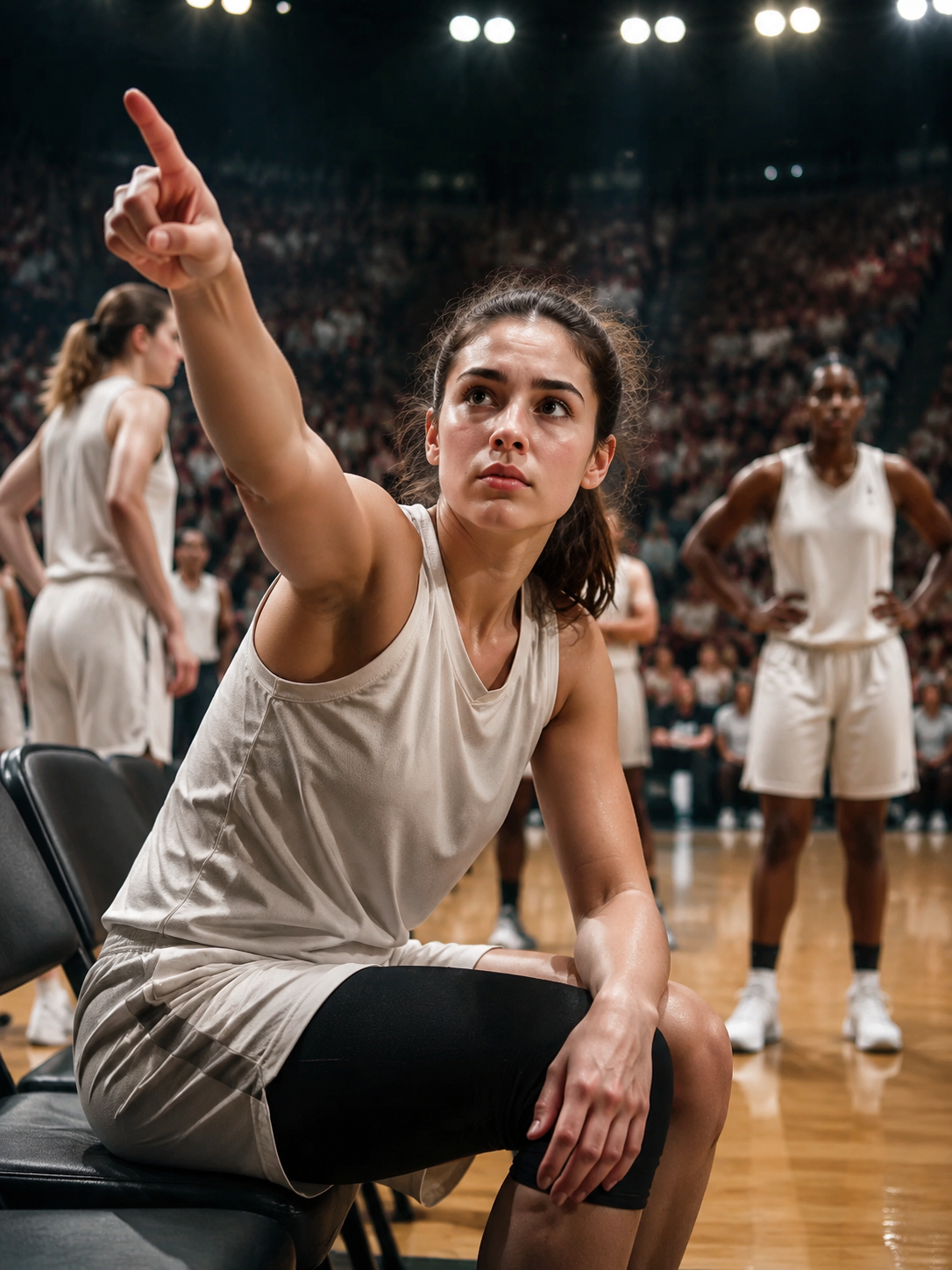
Angel Reese was sitting on the bench, saw the man, raised a hand to point, and picked him out.
Security took him away immediately; he was arrested and permanently banned from WNBA and NBA events.
One player, sitting courtside, ended it with a single finger.
The thing worth talking about at the end is not the punishment. It is that turning point.
A joke, while it still belongs to only one person, is a joke.
When it becomes an action a crowd performs together, when a company is paying to push it, when it starts hitting twelve-year-old children — the nature of it changed long ago, and only the shape stayed the same.
Telling the difference usually does not come from arguing the principle. It comes from someone being the first to raise a hand and point.
Think about it:
Something a lot of people are laughing at — would you laugh along?
Listen again
Try it without the transcript and notice what sounds clearer.
What vocabulary does this episode teach?
词汇往场内扔 — onto the court; 清出球馆 — removed from the arena.
答案不在观众席上,在网上 — the answer was not in the stands.
The ending rests on one: 抬手一指 — raising a hand to point.
十二岁,九岁,三十二岁 — the ages are the argument.
The closing question turns entirely on this word.
The company that paid for the stunt.
起诉罪名是两项伤害 — charged on two counts of assault.
指 to point, 认 to recognise. Exactly what she did from the bench.
Where she was sitting when she saw him.
* beyond level超纲词
What grammar patterns appear in this episode?
语法真正让……的,是……
Identifies the actual cause, as opposed to the apparent one.
真正让它换了性质的,是下面两件事。
不靠……,靠……
Not by means of X, but by means of Y.
分辨这一点,通常不靠讲道理,靠有人第一个抬手,指一下。
早就……,只是……
It had already changed long ago; only the surface stayed.
性质早就变了,只是外形没变。
Proper nouns
专有名词Sources
来源Free account
Keep learning from this story
Create a free account to keep saved words and your preferred level together.
- Keep words with their story context
- Remember your preferred level
- Build your vocabulary over time