
A Chinese podcast · Same story, 4 levels
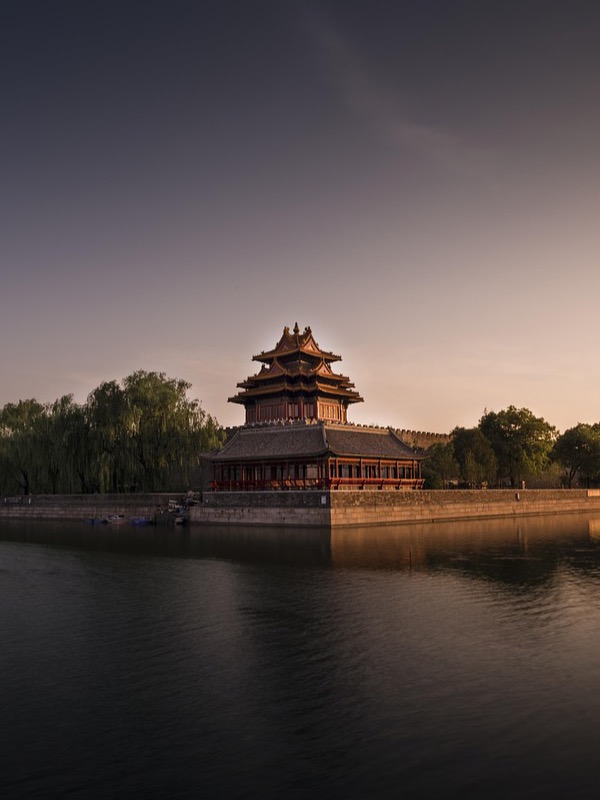
北京:山是故宫的土
Beijing: The Hill Made From the Palace's Own Moat
About this story
980 buildings, 24 emperors, and a 45.7-metre hill made entirely from the earth dug out beside the Forbidden City. HSK 1 Chinese listening practice.
This is an HSK 1 Chinese listening episode that runs about 3 minutes. The full Mandarin script is shown with tap-for-pinyin and a line-by-line English translation, so you can listen and read at once — comprehensible input in the sense of Stephen Krashen's i+1 theory. It teaches 8 key vocabulary words such as 故宫、景山、皇帝 and walks through 3 grammar patterns, each explained in English with examples. The same news story is retold at 4 difficulty levels — use the level selector above to find the version that is challenging but still understandable for you.
Read at your level
原文Read the complete story in Chinese. Reveal pinyin and English only when you need them.
English transcript reference
Today I'm in Beijing.
Beijing has a very big building.
This building is called the Forbidden City.
The Forbidden City is very big.
Inside the Forbidden City there are nine hundred and eighty buildings.
I say: nine hundred and eighty?
My friend says: yes.
She says: the Forbidden City was built in 1406.
It was finished in 1420.
I say: over six hundred years ago.
She says: yes.
She says: twenty-four emperors lived here.
I say: twenty-four?
She says: yes, twenty-four.
I go inside the Forbidden City.
Behind one gate there is another gate.
I walk for a long time.
I see a lot of big buildings.
These buildings are all on one line.
In the afternoon, we go behind the Forbidden City.
Behind the Forbidden City there's a hill.
This hill is called Jingshan.
Jingshan is forty-five point seven metres high.
I say: has this hill always been here?
My friend says: no.
She says: this hill was made by people.
I say: made by people?
She says: yes.
She says: in 1420, when they were building the Forbidden City, they had to dig water around it.
The earth they dug out became this hill.
I say: so this hill is the earth from under the Forbidden City?
She says: yes.
We walk up Jingshan.
Looking down from up here, I can see the Forbidden City.
All those gates I walked through this morning — now I can see them.
They're all on one line.
My friend says: this line is seven point eight kilometres long.
She says: this line is called the Beijing Central Axis.
She says: in 2024, a lot of people came to know about it.
I look at this line.
A lot of things in Beijing are on this line.
I think: this hill I'm standing on is the earth from under the Forbidden City.
I'm standing on that earth, looking at the Forbidden City.
In the afternoon, we come down the hill and go into a small lane.
This kind of small lane is called a hutong.
In the hutong some people are eating, and some are working.
The Forbidden City is very big; the hutong is very small.
Emperors used to live in the Forbidden City.
Beijing people live in the hutong now.
Both of them are on this seven-point-eight-kilometre line.
When you come to Beijing, would you see the Forbidden City first, or a hutong first?
Listen again
Try it without the transcript and notice what sounds clearer.
What vocabulary does this episode teach?
词汇HSK 1. From the top, all the morning's gates at once.
HSK 1. Where you stand to understand the line.
HSK 1-2. Emperors then, Beijing residents now.
980 buildings, finished in 1420.
45.7 metres, and every gram of it came out of the ground next door.
Twenty-four of them lived inside.
Dug from the moat, piled into a hill, used to look back at the palace.
What made both the moat and the hill.
* beyond level超纲词
What grammar patterns appear in this episode?
语法是 … 做的
Says who or what made something.
她说:这个山是人做的。
…,就 …
就 marks the direct result.
挖出来的土,就做了这个山。
都在 …
States that all of a group share one location.
这些房子都在一条路上。
Proper nouns
专有名词Sources
来源Free account
Keep learning from this story
Create a free account to keep saved words and your preferred level together.
- Keep words with their story context
- Remember your preferred level
- Build your vocabulary over time