
A Chinese podcast · Same story, 4 levels
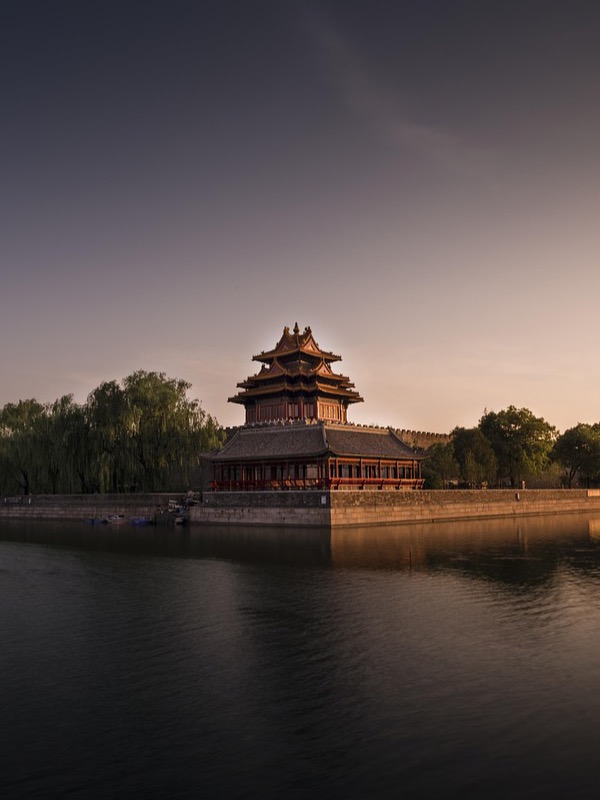
北京:一条七点八公里的线
Beijing: The Hill Made From the Palace's Own Moat
About this story
1406 to 1420, 24 emperors, a museum since 1925, and a 7.8-kilometre line that became World Heritage in July 2024. HSK 2 Chinese listening practice.
This is an HSK 2 Chinese listening episode that runs about 4 minutes. The full Mandarin script is shown with tap-for-pinyin and a line-by-line English translation, so you can listen and read at once — comprehensible input in the sense of Stephen Krashen's i+1 theory. It teaches 8 key vocabulary words such as 护城河、宫殿、博物馆 and walks through 3 grammar patterns, each explained in English with examples. The same news story is retold at 4 difficulty levels — use the level selector above to find the version that is challenging but still understandable for you.
Read at your level
原文Read the complete story in Chinese. Reveal pinyin and English only when you need them.
English transcript reference
I only had one day in Beijing.
My friend asked me: what do you want to see?
I said: I want to see the Beijing of the past, and the Beijing of today.
She said: then let's walk one line.
In the morning, we started at the Forbidden City.
The Forbidden City is big — seven hundred and twenty thousand square metres.
Inside there are still nine hundred and eighty buildings.
There are more than eight thousand seven hundred rooms in total.
I said: over eight thousand seven hundred?
She said: yes.
She said: construction started in 1406 and finished in 1420.
After that, twenty-four emperors in total lived here.
Fourteen in the Ming dynasty, ten in the Qing.
I said: for how many years?
She said: nearly five hundred.
After 1912, there were no more emperors.
On 10 October 1925, this place became a museum.
I said: so a place you couldn't enter before, you can now walk into with a ticket.
She said: yes.
We went in through the Meridian Gate on the south side.
Behind one gate there was another gate.
Behind one courtyard there was another courtyard.
All the big halls were on that line down the middle.
My friend said: the important things are all in the middle — did you notice?
I said: I noticed.
After midday, we came out through the Gate of Divine Prowess on the north.
Outside the gate there's a hill, called Jingshan.
Jingshan is forty-five point seven metres high.
I said: was this hill always here?
She said: no.
She said: in 1420, when they were building Beijing, workers dug the moat around the Forbidden City.
The earth they dug out, plus rubble from demolishing the Yuan-dynasty palace, was piled up into this hill.
I said: so the hill I'm about to climb is the earth from the hole beside the Forbidden City?
She said: you could put it that way.
We climbed to the top.
There's a pavilion up there, called the Wanchun Pavilion.
Looking down from here, the whole Forbidden City is at your feet.
All those gates and courtyards I walked through in the morning now line up straight.
My friend said: this line keeps going south, and keeps going north.
She said: it's seven point eight kilometres long.
She said: this line is called the Beijing Central Axis.
She said: in July 2024, it was inscribed as a World Heritage Site.
I said: a road can be a World Heritage Site?
She said: there are fifteen places on this line — the Bell and Drum Towers, the Forbidden City, Tiananmen and the Temple of Heaven are all on it.
I looked at this line.
Suddenly I understood that the ground I was standing on is also part of the Forbidden City.
It was just dug out and piled up next door.
In the afternoon we came down and walked into a hutong.
The hutong was narrow, with grey houses on both sides.
Someone was washing vegetables in a doorway; someone came out wheeling a bicycle.
An old man sat on a low stool in the sun.
My friend said: the Forbidden City is the centre of a line.
She said: the hutong is the daily life on either side of that line.
I said: those two are very different.
She said: but they're on the same line.
In the evening, I went back to the foot of Jingshan.
In one day I had looked at 1406, 1420, 1925 and 2024.
And also at someone washing vegetables in a hutong today.
When you come to Beijing, would you rather stand at the highest point and see the whole city, or sit in a hutong for an afternoon?
Listen again
Try it without the transcript and notice what sounds clearer.
What vocabulary does this episode teach?
词汇HSK 3. That everything important sits on the middle line.
HSK 2. And therefore, in Beijing, central.
HSK 3. The hill was not originally there.
Dug in 1420; the spoil became the hill you climb.
980 of them survive inside the walls.
What the palace became on 10 October 1925.
The Central Axis was inscribed in July 2024.
Behind one courtyard, another courtyard.
* beyond level超纲词
What grammar patterns appear in this episode?
语法一 … 后面还有一 …
Repetition to convey depth and scale.
一个门后面还有一个门。
加上 …
Adds a second component to what was just named.
挖出来的土,加上拆元朝宫殿的东西,堆成了这座山。
所以 …
Draws the conclusion.
我说:所以以前不能进来的地方,现在买票就能进。
Proper nouns
专有名词Sources
来源Free account
Keep learning from this story
Create a free account to keep saved words and your preferred level together.
- Keep words with their story context
- Remember your preferred level
- Build your vocabulary over time