
A Chinese podcast · Same story, 4 levels
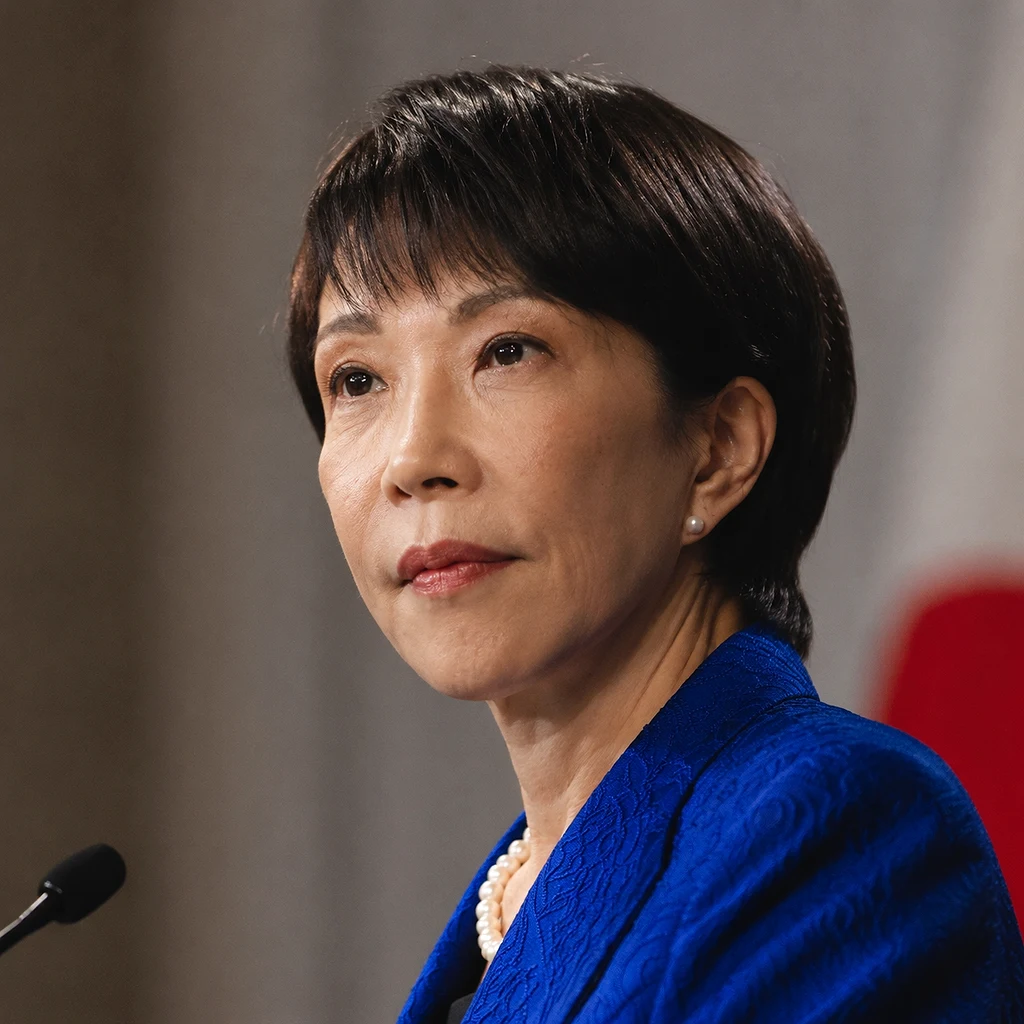
日本大选后的中日商业前景
China-Japan Business Outlook After Sanae Takaichi's Election Win — Tokyo, Beijing and Beyond
About this story
Sino-Japanese trade after Sanae Takaichi's election win — Tokyo-Beijing disputes and how firms plan to recover. HSK 3 Chinese listening practice.
This is an HSK 3-4 Chinese listening episode that runs about 5 minutes. The full Mandarin script is shown with tap-for-pinyin and a line-by-line English translation, so you can listen and read at once — comprehensible input in the sense of Stephen Krashen's i+1 theory. It teaches 12 key vocabulary words such as 选举、改善、争论 and walks through 5 grammar patterns, each explained in English with examples. The same news story is retold at 4 difficulty levels — use the level selector above to find the version that is challenging but still understandable for you.
Read at your level
原文Read the complete story in Chinese. Reveal pinyin and English only when you need them.
English transcript reference
The recent election results in Japan and their impact on the future of business between China and Japan is a topic worth discussing in depth.
Japanese Prime Minister Sanae Takaichi won a huge victory in the recent election, causing many to worry about how relations between Tokyo and Beijing might change.
According to analysts and businesspeople, the likelihood of a significant improvement in relations in the short term has decreased, though some believe tensions may stabilize over time.
Sanae Takaichi's government won more support in Sunday's election, increasing her power.
Because she once stated that Japan would respond if Taiwan were attacked, this has made Beijing very dissatisfied.
Businesses caught in the middle of this dispute must now be very careful, although Beijing is also considering the risks of increasing pressure.
A professor at the University of Tokyo pointed out that Japanese voters gave Sanae Takaichi great support, allowing her to continue pursuing her security and foreign policies.
If China continues to increase pressure on Japan, it might actually strengthen domestic support for her in Japan.
The professor also mentioned that Beijing likely will not use its advantage in resources to create more difficulties.
Although China has not explicitly banned the export of certain important materials, the speed of issuing licenses has slowed down, and this situation is expected not to change after the election.
A professor at Fudan University in Shanghai stated that businesses will likely continue to work as usual, just with more caution.
He said that the usual mindset of businesspeople is that unless the government demands a halt, they will continue doing business.
A Chinese manager working at a Japanese robot manufacturing company also indicated that he is not worried about business suffering new blows.
He believes that the habits of Chinese consumers are changing.
The manager said that since Sanae Takaichi has already won and China's attitude is clear, he thinks she will not act more toughly than before the election.
He also mentioned that after Sanae Takaichi made remarks regarding Taiwan, there was no large-scale boycott of Japanese brands in China.
This proves that Chinese consumers have become more mature and are less easily influenced by political relations.
Beijing considers Taiwan a part of China and will use force to achieve reunification if necessary.
Although most countries do not recognize Taiwan as an independent nation, the United States opposes any attempts to use force and provides weapon support.
According to data from China Customs, trade volume between China and Japan grew by 4.5 percent in 2025, reaching 322 billion US dollars.
This reversed the situation of a 3 percent decline in 2024.
However, after Sanae Takaichi made her remarks, Beijing reimposed a ban on Japanese seafood imports and restricted the export of some special products.
In terms of tourism, it is expected that travel activities between the two countries will continue to decrease in 2026.
This decline started last November, when China issued a travel warning and many flights were cancelled.
According to a forecast by a tourism market platform, Japan might receive 4.8 to 5.8 million Chinese tourists this year, a significant decrease from the 9.3 million in 2025.
During the Spring Festival holiday, 140,000 to 160,000 Chinese tourists may visit Japan, with spending estimated between 266 million and 304 million US dollars.
A manager of a travel agency in Shandong Province agreed with this view, believing that Sanae Takaichi's victory might affect the tourism industry.
But he also said that once everyone calms down, travel to Japan might slowly recover.
He said that although this is bad news for relations between the two countries and China's restrictive measures may continue, tourism demand remains stable.
Because the two countries are close to each other, and Japan has a unique appeal.
However, the tourism industry does not expect an immediate recovery, as current numbers are already at their lowest level in years.
Although the overall situation is not good, the manager also mentioned that performance in some areas is relatively stable, such as business travel and repeat visitors to Japan.
Many young Chinese people who are not interested in politics will still go to Kyoto or Mount Fuji, sometimes transferring through Hong Kong or Seoul.
However, this impact can be felt in other ways.
The CEO of a travel agency organizing tours to China stated that their Japanese clients have decreased by more than half.
He said that due to previous disputes between Beijing and Tokyo and other challenges, the numbers were already low, and there is no hope for growth in sight.
However, the scholar from the University of Tokyo believes that China hosting the APEC forum in 2026, especially the leaders' meeting in Shenzhen in November, may help repair relations.
He believes that this meeting is a good opportunity for Beijing to reduce tensions, and perhaps a meeting between Prime Minister Sanae Takaichi and President Xi Jinping can be arranged.
In summary, while the political environment is relatively complex, economic and commercial ties still exist, and future development depends on how both sides resolve issues through communication.
Listen again
Try it without the transcript and notice what sounds clearer.
What vocabulary does this episode teach?
词汇To elect or an election. Commonly used in political contexts.
To make better; often used with abstract nouns like relations (关系), conditions (条件), or life (生活).
To argue or a controversy. Refers to a heated disagreement.
Can describe fruit ripening or, as in this text, a person or group's mindset becoming more developed.
To set a limit or bound on something.
The power to attract; often used in tourism or business contexts.
To return to a normal or original state (e.g., health, economy, relations).
To connect or communicate ideas/feelings.
Acting with care to avoid danger or mistakes.
A noun referring to an official document giving permission.
Describes an attitude or stance that is firm and not easily influenced.
Refers to the state of affairs, usually regarding politics or military tension.
* beyond level超纲词
What grammar patterns appear in this episode?
语法随着... (suízhe...)
Indicates that one change happens in conjunction with another ('along with', 'as').
不过也有人认为紧张的情况可能会随着时间慢慢稳定下来。
除非...否则... (chúfēi... fǒuzé...)
A conjunction pattern meaning 'Unless [condition], otherwise [result]'.
除非政府要求停止,否则他们就会继续做下去。
既然... (jìrán...)
Used to express 'Since' or 'Now that' regarding a fact that has already happened.
这位经理说,既然高市早苗已经赢了... 他认为高市早苗不会比选举前表现得更强硬。
反而 (fǎn'ér)
Adverb indicating 'on the contrary' or 'instead', showing a result opposite to what was expected.
如果中国继续对日本增加压力,反而可能会让日本国内支持她的声音变得更强。
尽管...但是/也... (jǐnguǎn... dànshì/yě...)
A pattern meaning 'Although/Despite..., but/still...'.
尽管北京也在考虑如果增加压力会有什么风险。
尽管整体情况不好,这位经理也提到,在某些方面表现还算稳定...
Proper Nouns
专有名词Sources
来源Free account
Keep learning from this story
Create a free account to keep saved words and your preferred level together.
- Keep words with their story context
- Remember your preferred level
- Build your vocabulary over time