
A Chinese podcast · Same story, 4 levels
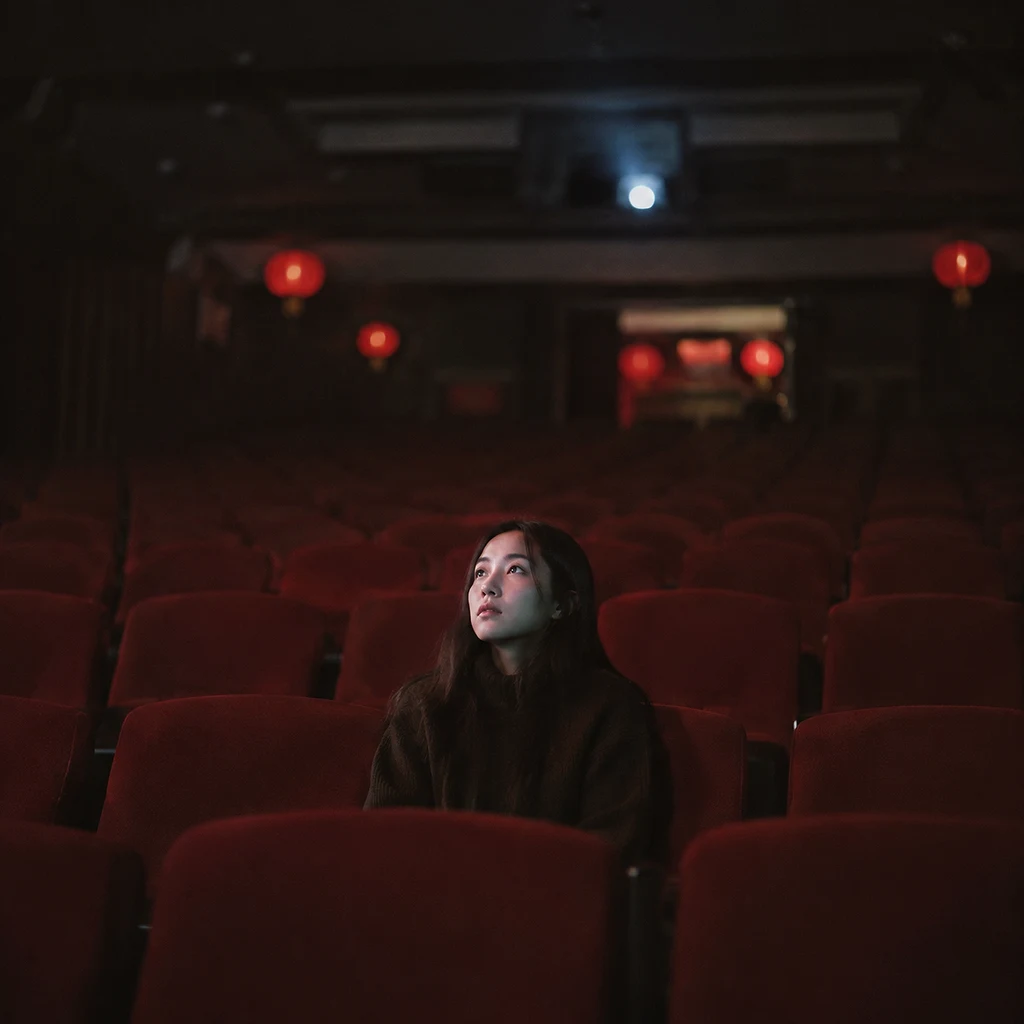
中国春节档:今年电影票卖得怎么样?
China's Spring Festival Box Office: How Did Films Do?
About this story
A simple story about why China's Spring Festival movie tickets are slow — no new Ne Zha and cheap trips instead. HSK 1 Chinese listening practice.
This is an HSK 1 Chinese listening episode that runs about 5 minutes. The full Mandarin script is shown with tap-for-pinyin and a line-by-line English translation, so you can listen and read at once — comprehensible input in the sense of Stephen Krashen's i+1 theory. It teaches 16 key vocabulary words such as 电影、票、去年 and walks through 5 grammar patterns, each explained in English with examples. The same news story is retold at 4 difficulty levels — use the level selector above to find the version that is challenging but still understandable for you.
Read at your level
原文Read the complete story in Chinese. Reveal pinyin and English only when you need them.
English transcript reference
Speaking of what everyone does during the Spring Festival, many people go to the cinema to watch movies.
Watching movies is a very happy thing.
Today is the Spring Festival.
Everyone is not working.
Everyone is at home.
We need to find something to do.
What should we do?
Let's go watch a movie.
I have a few friends.
They also want to go watch a movie.
We all like watching movies very much.
In the cinema, there is a big screen.
There are many people.
Everyone sits together.
This is very interesting.
Let's talk about last year first.
During the Spring Festival last year, there were very many people watching movies.
Really a lot.
Did you want to buy a ticket?
It was very hard to buy.
Because everyone wanted to go.
Last year's movies were very good.
There was a movie called "Nezha".
Everyone liked watching it.
Adults liked it.
Children also liked it.
So last year's tickets sold very well.
There were people everywhere.
The money from ticket sales was also a lot.
The filmmakers were very happy.
Because they earned a lot of money.
That was last year.
Now let's talk about this year.
How is it this year?
This year is different from last year.
This year, I wanted to go buy a ticket.
I turned on the computer.
I took a look.
I became unhappy.
Why?
Because there were very few people buying tickets.
Really very few.
Much fewer than last year.
We can look at the numbers.
If ten people bought tickets last year,
this year there are only three or four people.
Why is this?
Where did everyone go?
Does everyone not love watching movies anymore?
This is a big question.
Let's look at this year's movies.
There are many new movies this year.
There are many kinds of movies.
Some movies are about fighting.
Those are Kung Fu movies.
The people in them do Kung Fu.
Dad likes to watch this kind of movie.
Some movies are funny.
Everyone laughs when watching them.
Mom likes to watch this kind of movie.
Because one should be happy during the Spring Festival.
To be happy, one must laugh.
There are also movies for children.
There are animals in them.
There are bears.
There are cats.
Children like watching them very much.
Since there are so many movies, why are there fewer people?
Let's look at the people in the movies.
Who are the actors in the movies?
They are very famous people.
They are also old friends.
We have known them for decades.
Dad knows them.
Mom also knows them.
But, my son doesn't know them.
Young people nowadays don't know them.
Young people think they are too old.
Young people want to see new things.
Young people want to see young people.
Last year's movies were very new.
So young people liked them.
This year's movies, young people think are uninteresting.
So they don't buy tickets.
This is one reason.
There is another reason.
This Spring Festival, we rest for many days.
We are resting for nine days.
This is a very long time.
We can do many things.
We don't necessarily have to watch movies.
We can go traveling.
We can take a plane.
Go to other places to take a look.
Go see mountains.
Go see water.
Because the time is long, everyone is playing outside.
Everyone doesn't go home.
If not at home, one won't go watch movies.
So there are very few people in the cinema.
The filmmakers are very anxious.
They want people to come.
They want to sell tickets.
So what to do?
They thought of a method.
Which is to make tickets a bit cheaper.
They give you a little money.
This is called a "coupon".
If you have this coupon, you spend less money buying a ticket.
For example, one ticket is fifty yuan.
Now it only costs thirty yuan.
Is this good?
This is a very good thing.
In Hubei, there are many such coupons.
The government gives money.
To let people go watch movies.
They hope everyone can go.
They hope everyone is happy.
You see, this is the situation this year.
We know now.
This Spring Festival, fewer people are watching movies.
Fewer people are buying tickets.
The money is also less.
This is what I wanted to say.
What is this story talking about?
It's talking about Chinese movies.
It's talking about "box office".
Box office is the money from ticket sales.
The news says, before the Spring Festival this year, ticket sales were very low.
More than half less than last year.
This is big news.
Everyone knows last year was very good.
This year is not as good as last year.
This is the current situation.
Listen again
Try it without the transcript and notice what sounds clearer.
What vocabulary does this episode teach?
词汇A very common noun. Measure word is 部 (bù) or 场 (chǎng).
Used for movies, trains, etc. Measure word is 张 (zhāng).
Time word referring to the previous year.
Verb meaning to take a break or have time off work/school.
Verb or noun for traveling for pleasure.
Adjective describing low price.
Used to express an opinion or physical sensation.
Adjective describing a happy mood.
Chinese martial arts.
Usually used with money: 赚钱 (zhuàn qián).
Conjunction indicating a premise. Often used in the pattern '既然..., 就...'.
A specific term for discount tickets or vouchers.
The political administration.
Literally 'ticket room', refers to total ticket sales revenue.
Adjective describing a state of worry or haste.
Noun referring to circumstances or state of affairs.
* beyond level超纲词
What grammar patterns appear in this episode?
语法A + 比 + B + Adjective
This structure is used to make comparisons. It means 'A is more [adjective] than B'.
比去年少了很多。
今年没有去年好。
Verb + 得 + Adjective/Complement
The particle 得 (de) connects a verb to a complement that describes the degree, manner, or result of the action.
去年的票卖得很好。
电影票卖得怎么样
有的... 有的...
This pattern means 'some... others...'. It is used to list different types within a group.
有的电影是打架的。
有的电影是好笑的。
如果... (就)...
This is a conditional pattern meaning 'If... (then)...'. The word 就 is often used in the second clause.
如果去年有十个人买票。
如果你有这个券,买票就少花钱。
Subject + 吧
When 吧 is placed at the end of a sentence, it indicates a suggestion or a proposal ('Let's...').
我们去看电影吧。
Proper Nouns
专有名词Sources
来源Free account
Keep learning from this story
Create a free account to keep saved words and your preferred level together.
- Keep words with their story context
- Remember your preferred level
- Build your vocabulary over time